




 Click it and Unblock the Notifications


Latest Updates
-
 Who Was Mithu Mukherjee? Veteran Bengali Actress Passes Away At 71
 -
 Ahmedabad Police Flag Fraud Risk Behind Viral 'Rent A Garba Partner' Ads
 -
 Vidya Balan’s Jailer 2 Entry As Kantha: From Silk To Manjulika, A Look At Her Unconventional Roles
 -
 Samay Raina Has Now Denied Dating Rumours With Two Women In Three Months
 -
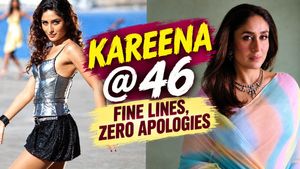 Kareena Kapoor Turns 46: From Size Zero To Fine Lines, The ‘Daayra’ Actress Is Choosing To Age Without Apology
 -
 The Emotional Side of Delayed Parenthood That We Don’t Talk About Enough
 -
 World Alzheimer’s Day 2026: Why Early Diagnosis Matters And What This Year’s Theme Means
 -
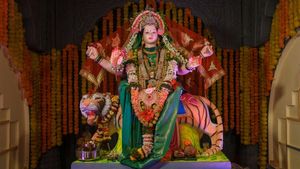 When Is Navratri In 2026? Full Dates, Rituals, Colours, Significance, and Fasting Guide
 -
 Vijay Sethupathi Confirms Maharaja 2, Hollywood Remake In The Works
 -
 Dashavatara Vrat 2026: Everything To Know About Tithi, Rituals, Fasting And The Ten Forms Of Lord Vishnu


Exclusive: Sui Dhaaga's Costume Designer Darshan Jalan Tells Us About The Dystopian Hues In 'Leila'


Suffocating enclosures characterised by subdued colour palette with whitewashed tones is where Shalini (Huma Qureshi) finds herself trapped. The enclosed place is called Aryavarta - the 2040s dystopian land, where puritanical laws are practiced and patriarchy is at its most extreme. Clad in a conservatively-draped unassuming maroon sari, Shalini shows us that she has partially resigned to her fate but well into the first episode, she is seen as a woman desperate to find her missing daughter, 'Leila' - the Netflix show, which talks about the post-apocalyptic world, where a mother is in search of her daughter.
Back in her non-maroon days, Shalini is shown as a woman belonging to the upper strata of society and married to a Muslim man. The couple is seen enjoying with Leila in their indoor pool area. Here, Shalini is seen in a jovial mood and dressed in a pretty mustard-yellow dress and to some extent even her bralet is exposed. This brings us to the point that how costumes and colours served as a contrast and defined different aspects in the show. If yellow dress signified the happier times, the maroon sari symbolised the grim fate.

"We used darker and warmer colours to show impure," said Darshan Jalan, Leila's costume designer, who had also worked with Huma Qureshi in 'Ek Thi Daayan' six years ago. So, the maroon saris were donned by the inmates of Aryavarta, as they had committed acts of impurity - Shalini, by marrying a Muslim man, as specified in the show. He also expressed that how colours also helped differentiate the pure from impure. "The colours went towards beige, off-white, and white for purer characters such as Leila and Dr. Iyer". He further added, 'Purer the characters are in unnati, lighter were the shades."
The colours and structured clothes absolutely blended with totalitarian and dystopian theme of the show. The class and sector-wise division as told by Jalan, came alive because of the colours. "Khakis and military shade outfits we had chosen for workers as it gave a regimental rule effect." Even Shalini wears a khaki brown suit to show a change in the situation.
Jalan also revealed that initially he felt, it would be difficult to express dystopia through clothes, "I thought it would be tough until I spoke with Deepa (Deepa Mehta, Director of the show) ma'am and understood her vision regarding the same." He said, "Deepa ma'am was absolutely clear about the costumes. She wanted the clothes to be simple and to the point." However, the costumes can have an overpowering effect sometimes and can take our mind away from the plot, as was the case in multi-starrer 'Kalank'. But in 'Leila', the ensembles seemed to do justice to the show.
In this regard, Jalan said, "The costumes had to be such that they don't distract the viewers from the frames, tone, or the drama." In 'Leila', though the costumes were humble and subtle, we noticed the outfits impactfully articulated the situations but without affecting the muted dark backdrop of the show. The dystopia had its colours!

 Continue with Google

