




 Click it and Unblock the Notifications


Latest Updates
-
 Hustle Culture Has a Bedroom Problem No One Talks About, Expert Explains
 -
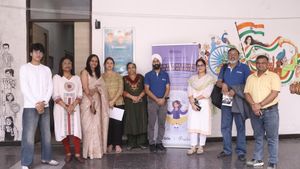 Iris Young Minds Initiative: How A Noida CSR Programme Is Opening Up Talk On Student Stress
 -
 Lal Hit Janta Party Explained: Who Is Behind The Rival to the Cockroach Janta Party
 -
 Barbara Palvin In Victoria’s Secret Fashion Show Six Weeks After Birth
 -
 Maha Navami Significance: Why The Ninth Day Of Navratri Matters Most
 -
 Festive FOMO Is Changing Dating Habits, Survey Finds Nearly Half Of Singles Are Delaying Matches
 -
 Tiger Shroff Firing Incident: What Happened In Mumbai's Juhu? Latest Updates
 -
 Eat, Celebrate, Repeat: 6 Ayurvedic Tips To Keep Your Digestion Happy This Navratri 2026
 -
 Breast Cancer Awareness Month 2026: Expert Explains The Emotional Toll Of Breast Cancer
 -
 Navratri 2026 Food Hopping In Delhi NCR: 7 Places To Explore For A Taste Of Festive Flavours


Thirukkural-On Wealth-On Kingship-Kural 382

Anjaamai eekai arivuookam innaangum Enjaamai vaendhark kiyalpu
Courage, generosity, knowledge and perseverance, in boundless measure
Are four-fold traits natural to kings.
Over the ages these king-becoming graces, as Shakespeare described them, were delineated as the four essential and in-born traits of a person, born and chosen to be a ruler, whether it was the Noble prince of Confucius or the philosopher king of Plato, or even one of the traditional and sometimes charismatic hereditary princes of India.
Fearlessness was so much a part of him and so consistently inculcated in him that a stage was reached when the prince was considered a person, who knew not what fear was. Moral and physical courage was a part of his natural equipment. They were also natural givers; they gave till it hurt. Some like King Sibi or Prince Karna were extreme examples of regal generosity, even to the extent of risking their own lives.
The requisite knowledge too came naturally to them in their environment and more of it was imparted during the systematic training they received for kingship. They were expected also to possess sufficient knowledge in extent and variety, to be able to have recourse, as and when necessary on their own, to the other sources of knowledge that were at their command. Further, they were expected too to possess an out-standing measure of enthusiasm and perseverance to be able to pursue successfully every project and programme they took on their fruition.

 Continue with Google

