




 Click it and Unblock the Notifications


Latest Updates
-
 Eat, Celebrate, Repeat: 6 Ayurvedic Tips To Keep Your Digestion Happy This Navratri 2026
 -
 Breast Cancer Awareness Month 2026: Expert Explains The Emotional Toll Of Breast Cancer
 -
 Navratri 2026 Food Hopping In Delhi NCR: 7 Places To Explore For A Taste Of Festive Flavours
 -
 Why Casual Games Are Perfect for Quick Online Play
 -
 World Menopause Day 2026: Theme, Significance And What Research Reveals About Menopause In India
 -
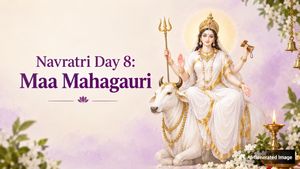 Navratri Day 8: Maa Mahagauri Puja, Colour, Rituals And Significance
 -
 Dussehra 2026: The Difference Between Vijayadashami And Ravana Dahan
 -
 Veteran Musician Deva Dies At 75: Life And Legacy Of Thenisai Thendral
 -
 Navratri Fasting Diet: How To Stay Energised And Full Through The Day
 -
 Kavya Maran Wedding In Greece? Date, Venue, and What Is Confirmed


Tirukkural-On Virtue - In Praise Of God - Kural - 5


- Irulcer iruvinaiyum cera iraivan
porulcer pukalpurintar mattu.
The twin deeds of dark illusion, will not affect
Those who delight meaningfully in God's praise.
The poet's implication, according to Parimelalagar, is that good deeds are as much a bondage to the soul as evil deeds, and that both of them, being facets of illusion, could be shed only by those who 'abide in the Lord', for as the Psalmist says 'The Lord my God will enlighten my darkness'. But the darkness referred to here has no complexities of the Maya or illusive ignorance of twin deeds. This is one idea which may not be considered in keeping with the generally practical and rational approach of Valluvar but there is really no inconsistency. Detachment from all material things good and bad, and progress towards Godliness, by eschewing desire, has always appealed to the Indian mind as a special grade of virtue. Paripadal has this to say on the subject expressing the same thought.
Irumai Vinayumilai Yethumavai
Here again, there is possibility of a Jain interpretation being given to the 'Twin deeds' idea, and a consequent deduction being made that Thiruvalluvar was a Jain philosopher. Such an interpretation or deduction is not warranted, as the concept of detachment from good as well as evil, is not alien to Hinduism or for that matter to other religions too. The Gita repeatedly speaks of a man attaining serenity, becoming free from all desires good and bad. The following passage is typical of this central message of the Gita:
'He who neither rejoices, nor hates, nor grieves, nor desires, renouncing good and evil, full of devotion, he is dear to Me'.
All are also agreed that such unique detachment is secured only at the feet of God. There is thus, no really valid reason to doubt that the basis of Valluvar's universality is Hinduism, as practiced by the Tamil Society, though he might have learnt, absorbed and harmonized into his own philosophy, the good ideas from many religions and philosophies from India, and abroad, and felicitously recorded them in the verses of Tirukkural. In doing so, however, Valluvar took care to emphasise only the rational Justification of the message.

 Continue with Google

