




 Click it and Unblock the Notifications


Latest Updates
-
 Durga Puja Pandals Mumbai 2026: 7 Stunning Celebrations To Explore From Matunga To Juhu
 -
 World Spine Day 2026: Is Your Phone Habit Causing Neck Pain? What To Know About Tech Neck
 -
 Breast Cancer Awareness Month 2026: Expert Explains Why Family History Isn't the Only Risk
 -
 Skanda Sashti 2026: Significance, Vrat Rituals And How Devotees Observe The Day
 -
 Saraswati Avahan 2026: Significance, Shubh Muhurat, Rituals And Puja Vidhi
 -
 Navratri Day 6: Maa Katyayani Puja, Colour, Rituals, And Significance
 -
 Garba Before The DJ Era: What Navratri Looked Like In Earlier Times
 -
 What Does Indian Design Mean Today? A Creative Director Explains
 -
 Why Your Vision Can Feel Different In Bright And Dim Rooms, Expert Explains
 -
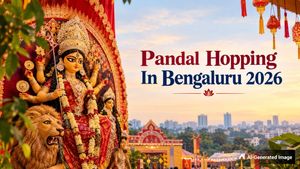 Pandal Hopping In Bengaluru 2026: 7 Durga Puja Venues Worth Your Time


The Way to Freedom


When our child is in the elementary class, we have to insist that he studies the multiplication tables daily. But when the university level of pure mathematics has been reached, it would be absurd to insist on that same routine. Arithmetic tables were certainly necessary in those early days, but in the higher grades they are redundant. Similarly, rituals have an elementary purpose, without which nothing higher is possible; but to stop with them would be a terrible waste.
Approaching the Ideal Teacher
When a seeker learns that yagnas (sacrifices) and other rituals cannot in themselves take him to the Supreme state, it is natural that he would wonder what he is to do. The following verse explains the duties such a seeker in whom the rituals have fulfilled themselves:
Let a Brahmana (an aspirant), after he has examined the worlds gained by karma(action), acquire freedom from all desires, reflecting that nothing eternal can be gained by karma. Let him, in order to obtain the knowledge of the Eternal, take sacrificial fuel in his hands and approach that preceptor alone who is versed in the Vedas and established in Brahman. (Mundaka Upanisad 1:/1: 12)
The idea indicated here is that moksa (liberation) cannot be the result of any action performed; for if it could result from action, it would be a perishable state. The eternal should be- and ever is - the unborn;for all that is born must necessarily die. When a seeker's intellect realizes the impermanence of the benefits accrued by ritualism, he becomes indifferent to them, and wants to know only that Knowlege "knowing which everything becomes known."
In order to realize the Self, a sincere aspirant is advised in this verse to approach a guru. Now here else in our scriptures do we have such a clear and exhaustive definition of a perfect guru: one who has both a mastery over the entire scriptural literature and a complete personal experience of the absolute Reality.
These two great qualifications are the essential criteria for becoming a spiritual teacher. In order to realize the Self, mastery of the scriptures is not necessary. It is only to become a spiritual teacher that we need this education.
Unless the guru is well versed in the scriptures he will find it difficult and impossible to direct the gaze of the student toward the Self shining within. If the guru is very learned but is not living constantly in full awareness of the Self, he is also unable to bless anyone.
Pundits are apt examples of gurus who are srotriyas (well versed in the scriptures) but are not Brahmanistas (established in Brahman).
Likewise, some of the masters of realization living in the Himalayas - adored and worshiped for their perfection - cannot act as a guru to a disciple, since they have no medium with which to express their deep subjective experience. Often such masters guide us through their presence, their ways, and their actions.
About the author
Swami Chinmayananda the great master's lectures were an outpour of wisdom. He introduced the Geetha Gnana Yagna. He wrote a lot of books on spirituality, commentaries to Vedantic texts, children books etc. He then started spreading His teachings globally.....

 Continue with Google

