




 Click it and Unblock the Notifications


Latest Updates
-
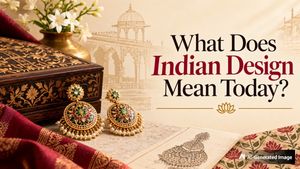 What Does Indian Design Mean Today? A Creative Director Explains
 -
 Why Your Vision Can Feel Different In Bright And Dim Rooms, Expert Explains
 -
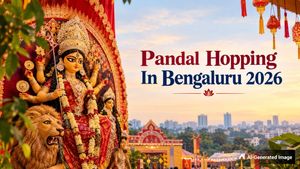 Pandal Hopping In Bengaluru 2026: 7 Durga Puja Venues Worth Your Time
 -
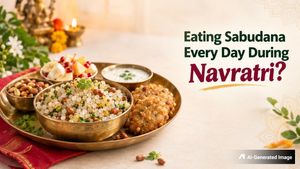 Navratri 2026 Fasting Food: Is Daily Sabudana Really the Best Choice?
 -
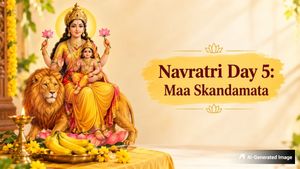 Navratri Day 5: Maa Skandamata, Puja, Rituals, Colour, SIgnificance, And Rituals
 -
 “Discharge Does Not Mean Cured”: A Rehab Specialist Explains Post-Surgery Care
 -
 Delhi Durga Puja Pandals 2026: Where To Go For Grand Themes, And Where To Escape The Crowd
 -
 Regular Periods Don’t Always Mean Everything Is Fine, Says Gynaecologist
 -
 Koffee With Karan 9: Salman Khan Opens Up About Fatherhood In Season Premiere
 -
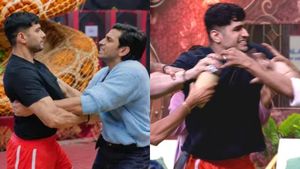 Bigg Boss 20: Is Nakul Dhull In The Secret Room After Physical Clash With Gullu?


Garba Before The DJ Era: What Navratri Looked Like In Earlier Times

Long before ticketed grounds and DJ consoles, a Garba night began with a clay pot, a lit lamp and a woman who knew the songs. Women gathered after sundown in courtyards, squares and sometimes cordoned-off streets, singing and dancing late into the night.

Navratri 2026 runs from 11 to 19 October, and Garba is again filling venues across Gujarat and the diaspora. But Garba before the DJ era was a quieter, more devotional evening, and parts of it still survive.
A Pot, A Lamp And A Circle
The name Garba is linked to garbha deep, the lamp placed inside a perforated earthen pot at the centre of the circle. UNESCO, which inscribed Garba of Gujarat on its heritage list in December 2023, describes dancers moving counter-clockwise around the lit pot or an image of the mother goddess Amba, singing and clapping together. It also records that Garba was previously danced only by women.
When The Dancers Were The Singers
Gordon Thompson, then a doctoral candidate in ethnomusicology at the University of California, Los Angeles, wrote in 1985 that the dancers were traditionally the singers, led by a senior woman who chose the songs, steps and tempo. The music was call and response: the leader sang the chorus and the circle echoed it.
The steps were simple. Three steps forward, then a bend and clap towards the centre on the fourth. The songs, many linked to poet-saints such as Narsinh Mehta and Vallabh Bhatt, praised the goddess. Accompaniment came from the dhol, dholak, cymbals and shehnai. Sound amplification came later, Thompson noted, as celebrations grew larger, and singers and dancers became separate groups.
The Lanes That Still Remember
In Ahmedabad's old-city pols, the street Garba never fully went away. According to Sahapedia, the tradition began with women singing to dholak beats in the lanes. At Sadu Mata ni Pol, men dress in sarees on Ashtami and perform Garba in a ritual said to be around 200 years old.
How The Beat Changed
The shift was gradual. Take Dakla, a Kutch folk form traditionally sung to a single instrument, the daak. According to a 2025 report by The Federal, the commercialisation of Dakla is traced to a 1997 album that used the dhol instead of the daak, and traditional singers say their Navratri invitations began to dwindle from the mid-1990s. By 2016, a Gujarati folk album had blended Dakla with electronica and multiple instruments, making the sound faster and more upbeat.
The economics shifted too. The same report notes that singers now earn anywhere between ₹80,000 and ₹3.5 lakh a day during Navratri, and that organisers book fast, high-energy music because it fills the grounds.
The setting has changed as well. The Centre for Indic Studies in Ahmedabad notes that Garba is often held in large party plots, with young people buying expensive passes for commercial events.
What Has Not Changed
UNESCO's file says every generation redefines Garba through new styles, lyrics and dress while keeping the circle of feminine energy intact, and it is now danced by people of all genders and ages.
Bottomline
The grounds are bigger, and the beats are faster, but the heart of a Garba night is still a circle around a flame. If a neighbourhood circle with a lamp, a dhol and a singer in the middle turns up this Navratri, it is worth a visit. It is closer to where the dance began.

 Continue with Google

