




 Click it and Unblock the Notifications


Latest Updates
-
 Ahmedabad Police Flag Fraud Risk Behind Viral 'Rent A Garba Partner' Ads
 -
 Vidya Balan’s Jailer 2 Entry As Kantha: From Silk To Manjulika, A Look At Her Unconventional Roles
 -
 Samay Raina Has Now Denied Dating Rumours With Two Women In Three Months
 -
 Kareena Kapoor Turns 46: From Size Zero To Fine Lines, The ‘Daayra’ Actress Is Choosing To Age Without Apology
 -
 The Emotional Side of Delayed Parenthood That We Don’t Talk About Enough
 -
 World Alzheimer’s Day 2026: Why Early Diagnosis Matters And What This Year’s Theme Means
 -
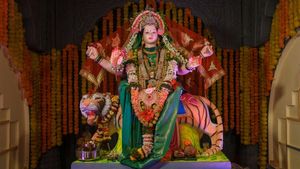 When Is Navratri In 2026? Full Dates, Rituals, Colours, Significance, and Fasting Guide
 -
 Vijay Sethupathi Confirms Maharaja 2, Hollywood Remake In The Works
 -
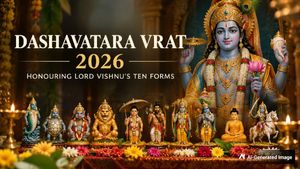 Dashavatara Vrat 2026: Everything To Know About Tithi, Rituals, Fasting And The Ten Forms Of Lord Vishnu
 -
 Senior Journalist Payal Mehta Passes Away At 46; PM Modi, Rahul Gandhi, Other Political Leaders Pay Tributes


Why Navratri Is Celebrated Twice In A Year?

Many people do not know that Navratri is celebrated twice in a year. The Ashwina Navratri that starts at the beginning of winter (between September and October) is the more popular Navratri. Very few people know about the Chaitra Navratri that happens during the beginning of summer between March and April. Both these Navratris are celebrated for nine days in honour of Shakti or the mother goddess who is also referred to as Durga, Sherawali Maa or Parvati in different parts of India.
There are some important reasons why Navratri is celebrated for nine days and twice every year. These reasons include spiritual, natural and mythological ones. All these causes contribute to the celebration of Navratri twice every year.

Change Of Weather
If you notice carefully, both the Navratris are celebrated at the juncture of seasonal changes. Just before the beginning of summer and winter, Mother Nature undergoes a major change and that is what is commemorated by this festival to celebrate Goddess Shakti, who is an embodiment of Nature itself.
Length Of Day And Night
Scientifically speaking, between March and April as well as September and October, the length of the day is almost equal to the length of the night. It constitutes as a scientific proof that Navratri is celebrated exactly at the break of summer and winter.
Pleasant Weather
Both the Navratris are celebrated at a time when the weather is pleasant. You neither have to face the scorching heat of the summers during Navratri nor the biting cold of the winters. As the weather is so temperate, these two times of the year are perfect forcelebrations.
Lord Ram's Puja
If Hindu mythology is to be believed, Navratri used to be celebrated only at the break of summer earlier. But when Lord Ram had a war with Ravan, He did not want to wait another 6 months to take the blessings of Maa Durga. So He started the tradition of celebrating Navratri just before winter. He did a Durga Puja before He left for Lanka and returned victorious.
The significance of Navratri remains the same in both cases. The time itself is symbolic of Nature and its magical ways.

 Continue with Google

