




 Click it and Unblock the Notifications


Latest Updates
-
 Who Is Anant Nag? Meet The Veteran Kannada Actor Set To Receive Dadasaheb Phalke Award
 -
 Throwback Thursday: Kareena Kapoor’s ‘Poo’ To Priyanka Chopra’s ‘Desi Girl’, Bollywood Looks That Ruled 2000s
 -
 PM Narendra Modi Birthday Special: Make His Favourite Khichdi At Home And Know Its Health Benefits
 -
 PM Modi Turns 76: ‘Ashirwad Ka Diya’ To Be Lit At 500+ Locations Across India
 -
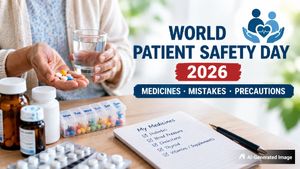 World Patient Safety Day 2026: Taking Multiple Medicines? Expert Explains How To Prevent Medication Errors
 -
 Kanya Sankranti 2026: Surya’s Virgo Transition, Rituals And Why The Day Is Spiritually Significant
 -
 Vishwakarma Puja 2026: Why Do We Worship Tools, Machines And Vehicles On This Day?
 -
 Grammy-Nominated Singer-Songwriter Alex Warren To Perform At Abu Dhabi Grand Prix 2026
 -
 How Does Insulin Work? Understanding The Hormone That Controls Blood Sugar
 -
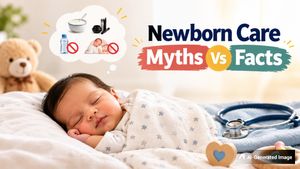 Newborn Care Myths Vs Facts: What A Neonatologist Wants Parents To Know


Covid-19 In Babies: Here's What To Expect & What You Should Do

Parents are understandably worried about what would happen if their infant caught COVID-19. Babies may be considered vulnerable due to immature immune systems, and are also not eligible for most of the treatments and vaccinations available for older children and adults.

The good news is, most babies experience mild illness. Here's what to expect if your baby tests positive.
Current evidence suggests COVID-19 cannot be spread through breastmilk.
It's still really important to continue breastfeeding (if you do so already), and there is no need to separate mother and baby.
Transmission from older siblings and other close contacts may also be reduced by vaccination. Vaccination of parents and caregivers will also reduce their chance of severe disease, thereby minimising the risks and interruptions for mother and baby.
How to do a COVID test for babies?
Testing your baby is similar to testing yourself. Babies can often get PCR tests in the same places where you will be tested, or you can use a rapid antigen test (RAT) on them.
If you are using a RAT it's important to check it's for the correct age group, as not all RATs can be used on children. It will say on the packet whether it is suitable. Otherwise ask your pharmacist for the correct test for your child's age.
It's also important to follow the specific instructions for the test you have purchased, as not all will be the same.
Throughout the pandemic, children of all ages have been less likely to experience severe disease compared with adults. The likelihood of severe disease also appears to be lower with Omicron compared with previous variants, although the transmission of later variants has been higher.

How severe can COVID be in infants?
From our clinical experience and international research, babies with COVID-19 have mostly had mild disease.
The need for hospitalisation or intensive care is extremely uncommon. Babies may be at higher risk if they are premature or have another underlying serious illness or condition. Studies describing COVID-19 in newborns reflect that similar to other respiratory viruses like influenza and RSV, deaths are very rare.
A range of immune differences in newborns have been proposed to explain why babies usually get less severe diseases. While there is no vaccine for infants, antibodies transfer from mothers who have been vaccinated while pregnant to newborns, which may offer protection.
What are the symptoms?
Babies may exhibit a range of symptoms when they have COVID-19 that are typical of other respiratory viruses. Up to 25 per cent of babies may have no symptoms.
Fever, nasal congestion, feeding difficulties and cough are more common symptoms. Breathing difficulties, lethargy and persistent fever may be signs of severe disease.
You can give your baby paracetamol or ibuprofen if there is fever or discomfort, and nasal saline drops can ease congestion. If you are considering giving medication to an infant under three months of age, please consult your GP.
When to see a doctor
Talk to your doctor if your baby has any of the following: difficulty breathing; persistent NSE 2.93 % fever feeding difficulties impacting hydration or causing less than 50 per cent of a normal number of nappies.
It is important to note that any fever in a newborn up to three months of age requires a medical review, regardless of whether the baby has COVID.
Anything else I should know?
Protecting against other common circulating viruses which can affect babies, such as influenza, is also important. Children over six months of age can receive the influenza vaccine.
Inputs From The Conversation

 Continue with Google

