




 Click it and Unblock the Notifications


Latest Updates
-
 Govt Warns Against Overusing Antibiotics And Painkillers: No Prescription, No Pills
 -
 72nd National Film Awards: Yami Gautam's Message For Outsiders, Mammootty And Dhanush Honoured
 -
 Ayurveda Day 2026: An Expert Explains 7 Food Habits Ayurveda Would Ask You To Rethink
 -
 Stop Blaming the Monsoon Entirely for Your Hair Fall, Says This Dermatologist
 -
 Shakira Debuts a New Gaurav Gupta Breastplate, and This Time It's Gold and Banarasi
 -
 Can Hair Oils Prevent Premature Graying or Improve New Hair Growth?
 -
 Can Any Blood Group Donate Organs to Any Patient? A Transplant Expert Explains
 -
 Everyone's Talking About Rahane's Igatpuri Home. Here's Why The Town Itself Is Worth The Trip
 -
 You Don't Need Surgery for Every Sinus Problem: When Is FESS Actually Necessary?
 -
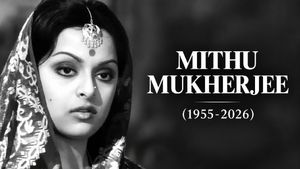 Who Was Mithu Mukherjee? Veteran Bengali Actress Passes Away At 71


Pandit Shivkumar Sharma: Facts About The Santoor Maestro And Music Composer

Pandit Shivkumar Sharma, a renowned musician and santoor maestro, died on May 10 in Mumbai at the age of 84. For the previous six months, he had been suffering from kidney problems and was on dialysis. He died as a result of cardiac arrest.

Image Source: Wikipedia
Sharma gave the santoor, once a not-so-famous instrument from Jammu and Kashmir, a classical status, alongside more traditional and well-known instruments like the sitar and sarod.

Facts About Pandit Shivkumar Sharma
- Pandit Shivkumar Sharma was born to singer Uma Dutt Sharma in Jammu (India).
- When he was five years old, he began learning music. His father and Guru taught him how to play the tabla and coached him in vocal performance.
- Sharma first performed in front of an audience in Mumbai's Haridass Sangeet Sammelan in 1955.
- He was summoned to Jammu by his father, who wanted him to accept a position with the Jammu and Srinagar Radio.
- Though he started playing on the local radio station in Jammu, he had other plans to pursue music outside of his government position and thus, arrived in Mumbai with INR 500 and his santoor.
- There were times when he had nothing in his pocket to eat. Therefore, to accompany others, he started playing the tabla.
- During those times, santoor playing concerts were hard to come by due to criticism related to the instrument.
- In 1967, Pandit Shivkumar Sharma, flautist Hariprasad Chaurasia, and guitarist Brij Bhushan Kabra collaborated on the critically acclaimed concept album 'Call of the Valley'.
- Later in 1981, the legendary and renowned filmmaker Yash Chopra offered Sharma and flautist Pt Hari Prasad Chaurasia, the duo known as the Shiv-Hari combination, an opportunity to compose the music for Silsila in 1981.
- He also collaborated with Hariprasad Chaurasia on the music for various other Hindi films like Faasle, Vijay, Chandni, Lamhe, Sahibaan and Darr in the following decade.
- In 1986, he received the renowned Sangeet Natak Academy Award, and in 1991, the Padma Shri.
- In 2001, he was also given the Padma Vibhuhan.
- Sharma has performed in front of the House of Lords in the United Kingdom and the Queen of the Netherlands, as well as being awarded honorary citizenship by the city of Baltimore in the United States for his contributions to music.
- Over the last half-century, his concerts have attracted millions of new listeners and devoted followers of Indian classical music.
- In an interview, he said that he stopped making film music later due to the introduction of Western beats and features, which according to him were noisier than melody.
Comments

 Continue with Google

