




 Click it and Unblock the Notifications


Latest Updates
-
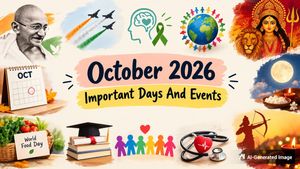 October 2026 Important Days And Events: Complete List Of National And International Observances
 -
 "I Look For Green Flags Now": Inside Dating's Biggest Shift In 2026
 -
 What Is Bhajan Clubbing? The Trend PM Modi Called Spectacular
 -
 Love & War First Looks: Alia Bhatt, Ranbir Kapoor and the Making of Bhansali's Next Epic
 -
 Bhadrapada Purnima 2026: What Makes This Full Moon Important Before Pitru Paksha
 -
 Pitru Paksha 2026: Do Ancestors Need Shraddha Rituals? Astrologer Ajit V Khawad Explains
 -
 Fake “Pakistan-Made” Beauty Creams Seized In Maharashtra: What To Know Before Buying Skin-Lightening Products
 -
 OTT Releases This Week (Sept 21-27): What To Watch Across Netflix, JioHotstar, Prime Video, ZEE5 And SonyLIV
 -
 CGM vs Finger-Prick Test: Which Blood Sugar Monitoring Method Is Better?
 -
 Anant Chaturdashi 2026: Why The Anant Sutra Has 14 Knots And How The Festival Is Linked To Ganesh Visarjan


Artificial Sweeteners Can Make You Actually Eat More: Study Reveals

Researchers have identified a complex network in the brain that has revealed why artificial sweeteners may not be the best way to slim down.
Artificial sweeteners are substitutes for sugar that provide a sweet taste, like that of sugar, while containing significantly less food energy.

According to the researchers, the brain system responds to artificially sweetened food by telling the animal it hasn't eaten enough energy, thus increasing the appetite and prompting it to actually eat more.
It senses and integrates the sweetness and energy content of food, said the study conducted on mice and fruit flies.
"After chronic exposure to a diet that contained the artificial sweetener sucralose, we saw that animals began eating a lot more," said lead researcher Greg Neely, Associate Professor at the University of Sydney in Australia.
"Artificial sweeteners can actually change how animals perceive the sweetness of their food, with a discrepancy between sweetness and energy levels prompting an increase in caloric consumption," Neely added.

The findings showed that inside the brain's reward centres, sweet sensation is integrated with energy content. When sweetness versus energy is out of balance for a period of time, the brain recalibrates and increases total calories consumed.
For the study, fruit flies were exposed to a diet laced with artificial sweeteners for prolonged periods (more than five days). The flies were then found to consume 30 per cent more calories when they were then given naturally sweetened food.
The team also replicated the study using mice. The mice that consumed a sucralose-sweetened diet for seven days displayed a significant increase in food consumption, and the neuronal pathway involved was the same as in the fruit flies.
"The chronic consumption of the artificial sweetener actually increases the sweet intensity of real nutritive sugar which then increases the animal's overall motivation to eat more food," Neely stated in the work published in the journal Cell Metabolism.

Further, the artificial sweeteners were also found to promote hyperactivity, insomnia as well as decrease the sleep quality, in which the behaviours were consistent with a mild starvation or fasting state.
"The pathway discovered is part of a conserved starvation response that actually makes nutritious food taste better when you are starving," Neely noted.
(Inputs from IANS)
Disclaimer: The information provided in this article is for general informational and educational purposes only and is not intended as a substitute for professional medical advice, diagnosis, or treatment. Always seek the advice of your physician or a qualified healthcare provider with any questions you may have regarding a medical condition.

 Continue with Google

