




 Click it and Unblock the Notifications


Latest Updates
-
 Deepika Padukone And Ranveer Singh Announce Second Daughter’s Name On Dussehra, Share Family Photo
 -
 Who Was Karthik Sabesh? Tamil Actor Passes Away At 37, Days After Uncle And Composer Deva’s Death
 -
 Who Is Ravleen Varghese? Meet The First Malayali Model To Walk The Victoria’s Secret Runway
 -
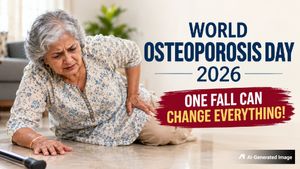 World Osteoporosis Day 2026: A Minor Fall, A Major Fracture — Doctor On Why Older Adults Should Be Careful
 -
 Durga Visarjan 2026: October 20 or 21? Know Shubh Muhurat, Rituals And Significance
 -
 Happy Dussehra 2026: 50+ Wishes, Messages And Greetings To Share With Family And Friends
 -
 Dussehra 2026: Astrologer Ashutosh Clairvoyant On Colours, Offerings And Puja Rituals For Each Zodiac Sign
 -
 Hustle Culture Has a Bedroom Problem No One Talks About, Expert Explains
 -
 Iris Young Minds Initiative: How A Noida CSR Programme Is Opening Up Talk On Student Stress
 -
 Lal Hit Janta Party Explained: Who Is Behind The Rival to the Cockroach Janta Party


Jogging In Middle Age Can Delay Ageing

London : Taking regular aerobic exercise could stop the biological clock and delay ageing by up to 12 years, researchers have claimed.
Keeping fit by jogging or cycling through middle age and beyond slows and even reverses the decline in muscle power, balance and co-ordination in later life, a new study found.
The research said that without regular workouts, maximum aerobic power fell in men by up to half between the ages of 20 and 60.
Women began to lose fitness aged around 35, with aerobic power also falling by up to half by the age of 60, it added.
Eventually, everyday activities became 'intolerably fatiguing' for older men and women, said the study published in the British Journal of Sports Medicine.
The research by Toronto University found that relatively high-intensity aerobic exercise over a relatively long period of time could boost maximal aerobic power by 25 per cent.
Dr Roy Shephard, of the University's faculty of Physical Education and Health, said long-term aerobic training can maintain or restore aerobic power in later life.
The effect is the equivalent of turning back the biological clock for older people by up to 12 years, he added.
"A regular exercise programme can slow or reverse the loss of aerobic fitness, reducing the individual's biological age and prolonging independence," Dr Shephard told the Daily Mail.
Evidence has shown that regular activity cuts the risk of a range of health problems including diabetes, depression and heart disease.
It also reduces the chances of premature death from any illness, the study said.
Disclaimer: The information provided in this article is for general informational and educational purposes only and is not intended as a substitute for professional medical advice, diagnosis, or treatment. Always seek the advice of your physician or a qualified healthcare provider with any questions you may have regarding a medical condition.

 Continue with Google

