




 Click it and Unblock the Notifications


Latest Updates
-
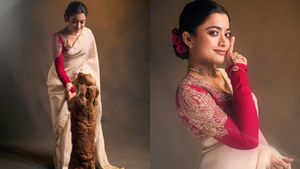 As ‘Ranabaali’ Hits Theatres, A Look At Rashmika Mandanna’s ₹1.31 Lakh Ivory Saree For Pre-Release Promotions
 -
 Durga Puja Pandals Mumbai 2026: 7 Stunning Celebrations To Explore From Matunga To Juhu
 -
 World Spine Day 2026: Is Your Phone Habit Causing Neck Pain? What To Know About Tech Neck
 -
 Breast Cancer Awareness Month 2026: Expert Explains Why Family History Isn't the Only Risk
 -
 Skanda Sashti 2026: Significance, Vrat Rituals And How Devotees Observe The Day
 -
 Saraswati Avahan 2026: Significance, Shubh Muhurat, Rituals And Puja Vidhi
 -
 Navratri Day 6: Maa Katyayani Puja, Colour, Rituals, And Significance
 -
 Garba Before The DJ Era: What Navratri Looked Like In Earlier Times
 -
 What Does Indian Design Mean Today? A Creative Director Explains
 -
 Why Your Vision Can Feel Different In Bright And Dim Rooms, Expert Explains


The First Durga Puja At Belur Math-III


On Navami night, Swamiji (Swami Vivekananda) sang in the worship pandal a few songs to the Divine Mother — the songs which Sri Ramakrishna loved and himself sang on such occasions. One day there was an open-air drama performance (yatra) named 'Nala-Damayanti'. The drummers and the flute players played sweet music at intervals.
On Vijaya Dasami, the image of Mother Durga was immersed in the Ganga. At the time of immersion Swami Brahmananda danced like a boy; Swamiji (Swami Vivekananda) and Swami Premananda watched from upstairs. At the end of the Puja, Swamiji gave Rs.25 as Daksina to the Tantradharaka through the Holy Mother. The Holy Mother was highly pleased with the way the Puja was conducted and remarked, 'Mother Durga will come here every year.' She returned to her Calcutta residence after blessing the monks and Brahmacharins.
Swamiji's joy knew no bounds. On 12 November 1901, he wrote to Nivedita: “Since the Durga Puja I have been very ill and so could not reply to your letter earlier. We had a grand Puja here of Durga lasting nearly four days, but alas I was down with fever all the time. We had a grand image and huge Puja it was"
On the same day, he wrote also to Sister Christine: “We brought a clay image of Mother with ten hands, standing with one foot on a lion, the other on a demon. Her two daughters — the goddess of wealth and the goddess of learning and music —on either side on lotuses, beneath her two sons — the god of war and the god of wisdom...Thousands of people were entertained"
A number of orthodox Brahmins and pundits of the nearby Bally, Belur, Uttarpara and Dakshineswar were invited and they all enthusiastically participated in the celebration. One of the main items in this celebration was the feeding of the poor. The devotees had Prasada in the north-western portion of the courtyard, in the space between the existing jackfruit tree and Sri Ramakrishna's new temple. Everyone without any discrimination was warmly welcomed and entertained by the monks. The atmosphere of joy could be palpably felt at Belur Math during the Puja days. The total expenditure was Rs. 1,400 only.
From 1902 to 1911 the worship of Mother Durga was conducted not in an image but in a consecrated pitcher (ghata). A devotee promised to pay the expenses for the Mother's image, and from 1912 onwards the Mother's worship in image was resumed. The tradition continues. Every year lakhs of people come to the Math to witness the worship of Mother Durga and also the Kumari Puja on Astami morning at 9 A.M. 'Khichuri Prasada' is distributed to all.
To be continued
About the author
Swami Vimalatmananda
Swami Vimalatmananda, a monk of the Ramakrishna order is one among the members of the governing body of Ramakrishna Math and Mission. In this article, which is an excerpt from 'The First Durga Puja at Belur Math', he discusses about the joy experienced by Swami Vivekananda on celebrating it.

 Continue with Google

