




 Click it and Unblock the Notifications


Latest Updates
-
 Dussehra 2026: The Difference Between Vijayadashami And Ravana Dahan
 -
 Veteran Musician Deva Dies At 75: Life And Legacy Of Thenisai Thendral
 -
 Navratri Fasting Diet: How To Stay Energised And Full Through The Day
 -
 Kavya Maran Wedding In Greece? Date, Venue, and What Is Confirmed
 -
 Navratri Fasting 101: What To Eat, What To Skip, And How To Avoid Acidity And Headaches
 -
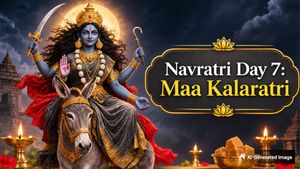 Navratri Day 7: Maa Kalaratri Puja, Colour, Rituals And Significance
 -
 Office To Dandiya Nights: One Quick-Change Outfit Formula For Navratri 2026
 -
 As ‘Ranabaali’ Hits Theatres, A Look At Rashmika Mandanna’s ₹1.31 Lakh Ivory Saree For Pre-Release Promotions
 -
 Durga Puja Pandals Mumbai 2026: 7 Stunning Celebrations To Explore From Matunga To Juhu
 -
 World Spine Day 2026: Is Your Phone Habit Causing Neck Pain? What To Know About Tech Neck


Can One Meditate Full Time? - Part I

Natesa: I have my professional work. Yet I want to be in perpetual meditation. Will they conflict with each other? Maharshi: There will be no conflict. As you practice both and develop your powers you will be able to attend to both.
Talks 30, Page 37
Here a busy man with a unfulfilled longing to devote more time for spiritual practice is really seeking an assurance from Ramana that his professional work would not come in the way of 'sadhana'. In 'Talks' we find many seekers having this problem. They have their duties to discharge, family obligations, daughter's marriage, son's education, and the like. How can they in the thick of all this really find even a little time, let alone a lion's share of available time for spiritual practice? It is also a common idea that work and meditation, a contemplative way of life and life in the world are an either or proposition.
One finds it hard to get over the sub-conscious idea that they are alternatives, that all said and done one can pay attention to only one thing at a time. Time and again this doubt crops up. Paul Brunton found it difficult to accept the firm statement of Ramana that, given the right mental attitude one can hold on to the inner peace flowing from meditation not only a recluse in a jungle hermitage but also amidst the demands of a busy life in London.
We also find that some persons have a compelling urge to give themselves more completely to meditation by taking the plunge and opting for sanyasa. Natanananda did so notwithstanding repeated advice from Ramana not to do so. It is only later that he learnt that the ochre robe or white cloth made no difference to his sadhana. The example of Janaka, who 'fenced with two swords' of karma and jnana, and that of Chudala narrated in 'Yoga Vasista' are regarded as exceptions.
One has to have a close look at the assumptions underlying this approach. Duties are regarded as 'worldly', often to be performed because circumstances leave no choice. What is regarded as 'meditation' is the time set apart for spiritual practice. How valid are these distinctions? Are we right in regarding each as a separate water-tight compartment? Is each of them a full time job? Can one be totally absorbed in the supposed alternatives even assuming we decide to choose one exclusively?

 Continue with Google

