




 Click it and Unblock the Notifications


Latest Updates
-
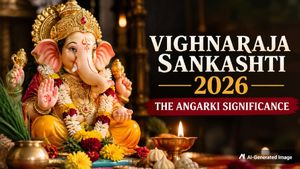 Vighnaraja Sankashti Chaturthi 2026: Know The Date, Significance, Vrat Katha And Moonrise Fasting Rituals
 -
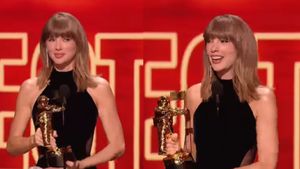 Taylor Swift Makes VMA History: All About Her Record-Breaking Night And Striking Red Carpet Look
 -
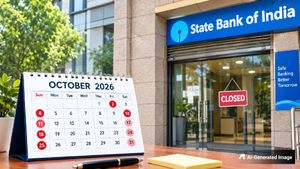 Bank Holidays October 2026: Check State-Wise List Before Visiting Your Branch
 -
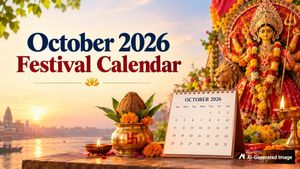 October 2026 Festival Calendar: Pitru Paksha Ends, Navratri Begins, Dussehra Follows
 -
 Pitru Paksha 2026: What To Eat And Avoid, According To Astrologer Gauri Jain
 -
 Guide to Surviving Festive-Season Humidity While Hosting: An Expert Shares Tips on Choosing Fabrics
 -
 Is Your Makeup Causing Breakouts? A Dermatologist Explains
 -
 You Don't Need an MRI for Every Backache: What a Physiotherapist Looks For First
 -
 Who Is Tanya Mishra? The Model-Actress Fans Are Calling A National Crush
 -
 Happy Birthday Ranbir Kapoor: Inside 'Ramayana' Actor's ₹250 Crore Krishna Raj Home Built Around Kapoor Legacy


Independence Day 2026: Why Did Gandhi Stay Away From Independence Day Celebrations?

At the exact hour Jawaharlal Nehru stood in Delhi speaking of a tryst with destiny, the man most associated with India's freedom was sitting on the floor of a derelict bungalow in Calcutta, spinning thread.
No flag. No speech. No garland.

Gandhi was not part of the celebrations in the national capital on 15 August 1947, he did not celebrate India's independence at all. Instead, he had travelled east, into the neighbourhoods bleeding from communal violence, and made a decision that still unsettles anyone who reads about it properly: the Father of the Nation deliberately boycotted Independence Day.
The House He Chose Over The Red Fort
Two days before freedom, Gandhi moved into Hydari Manzil, an abandoned property in Beliaghata, a mixed Hindu-Muslim locality in north Calcutta still raw from the killings of the previous year.
His grandniece Manu recorded the state of it: a very shabby house without any facilities, open on all sides, with broken doors and windows, and a single latrine used by hundreds of people.
He did not move in alone. Gandhi had offered to share the house with Huseyn Shaheed Suhrawardy, the former premier of Bengal, warning him that accepting would mean "the old Suhrawardy would die". Suhrawardy was widely blamed by Hindus for the Great Calcutta Killings of August 1946. Gandhi knew exactly what he was doing.
He wrote to a colleague: "I have taken many risks, perhaps this is the greatest of all".
"A Day Of Rejoicing, But For Me A Day Of Sorrow"
Gandhi's refusal was never a sulk. It was a position.
He saw Partition as the vivisection of the country, and announced he would boycott the official ceremonies entirely, travelling east with a message of peace instead. "The 15th is the day of our trial," he told a crowd in Bihar. "Observe a fast on that day."
He kept his own instruction. On 14 August he undertook a 24-hour fast, addressed a prayer meeting, and told those gathered: "I am not going to Delhi to participate in the festivities of August 15. My place is here with you, in the midst of this suffering."
On the 15th itself, he marked the arrival of freedom with prayer, fasting and the spinning of the charkha. His prayer meetings that week carried readings from the Quran, the Bhagavad Gita and the Bible.
The One-Man Boundary Force
The result was something close to inexplicable.
Hindus and Muslims came out together into the streets of Calcutta to celebrate independence on 14 August, in a city that had seen unprecedented mass violence exactly a year earlier. Gandhi himself was amazed: "Hindus and Muslims have become friends practically in a day."
Punjab, meanwhile, was burning. Mountbatten wrote to him: "In the Punjab we have 55,000 soldiers and large-scale rioting on our hands. In Bengal our forces consist of one man, and there is no rioting.... [I must] pay my tribute to the One-man Boundary Force."
Gandhi refused the triumph. He later called it "a short-lived nine-day wonder" - and by early September he had begun a fast unto death as the violence crept back.

 Continue with Google

