




 Click it and Unblock the Notifications


Latest Updates
-
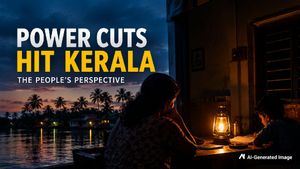 Kerala Faces Power Cut Crisis: What’s Happening And How People Are Coping With Night-Time Outages
 -
 Google Turns 28: 10 Surprising Things You Probably Never Knew About The Search Giant
 -
 World Tourism Day 2026: Significance, Theme And How India Is Redesigning Tourism With Artificial Intelligence
 -
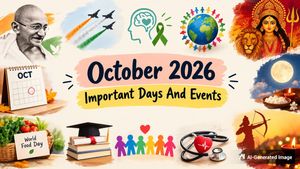 October 2026 Important Days And Events: Complete List Of National And International Observances
 -
 "I Look For Green Flags Now": Inside Dating's Biggest Shift In 2026
 -
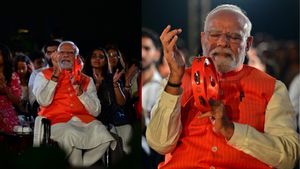 What Is Bhajan Clubbing? The Trend PM Modi Called Spectacular
 -
 Love & War First Looks: Alia Bhatt, Ranbir Kapoor and the Making of Bhansali's Next Epic
 -
 Bhadrapada Purnima 2026: What Makes This Full Moon Important Before Pitru Paksha
 -
 Pitru Paksha 2026: Do Ancestors Need Shraddha Rituals? Astrologer Ajit V Khawad Explains
 -
 Fake “Pakistan-Made” Beauty Creams Seized In Maharashtra: What To Know Before Buying Skin-Lightening Products


Independence Day 2026: Before Har Ghar Tiranga, Flying Your Flag Was Illegal

In 1992, a young industrialist named Naveen Jindal hoisted the Indian tricolour at his factory in Raigarh, Chhattisgarh. Officials objected almost immediately. Under the Flag Code of India as it stood then, an ordinary citizen simply wasn't allowed to fly the national flag whenever they liked.

As India marks its 80th Independence Day in 2026, that fact tends to surprise people. The flag now goes up on balconies, car dashboards and office gates every August without a second thought, largely thanks to the government's Har Ghar Tiranga campaign. But for over five decades after independence, the Flag Code of India restricted private citizens to flying it only on a handful of designated national occasions, not the other 360-odd days of the year.
The Factory Hoist That Started It All
Jindal's objection was simple: the flag belonged to the country, not just to government buildings. Officials disagreed, warning him that continued display of the flag outside sanctioned days could invite action.
Rather than take it down, Jindal took the matter to court. In 1995, the Delhi High Court sided with him, ruling that the Flag Code was a set of executive instructions, not enforceable law, and that flying the flag respectfully fell within the constitutional right to freedom of expression.
The government appealed to the Supreme Court, arguing that this was a matter of policy, not something for courts to settle. Jindal held his ground. As he put it, the flag "belongs to every Indian."
The Rule That Finally Changed
While the appeal sat with the Supreme Court, the government was asked to set up a committee to review the restriction. The result was a new Flag Code, replacing the old one from 26 January 2002, and for the first time allowing the general public to hoist the tricolour on any day of the year, provided it was done with dignity.
The Supreme Court's own judgment followed in January 2004, formally recognising the right to fly the flag as part of the fundamental right to free expression under Article 19 of the Constitution.
The Flag Code kept evolving well after that. Amendments in 2021 and 2022 allowed machine-made polyester flags and permitted the tricolour to remain hoisted day and night at private homes, changes that laid the groundwork for the scale of Har Ghar Tiranga two decades later.
The Khadi Rule That's Quietly Changed
There's a smaller detail in this story that's often repeated with a bit too much confidence: that only one factory in India is "allowed" to make the national flag. That's not quite right anymore.
For years, the Karnataka Khadi Gramodyoga Samyukta Sangha (KKGSS) in Bengeri, near Dharwad, was the only unit certified by the Bureau of Indian Standards to produce the flag in its original form - hand-spun, hand-woven khadi. That much is true, and it made KKGSS a genuine institution: a single, largely women-run unit supplying flags for Parliament, embassies and the Prime Minister's own Independence Day hoist at the Red Fort.
But in December 2021, the government amended the Flag Code again, this time to permit machine-made and polyester flags alongside khadi ones, largely to meet the scale that Har Ghar Tiranga demanded. The change was contested. Congress leaders and khadi advocates argued it diluted the flag's symbolism and threatened jobs at KKGSS, and staff there have since reported falling orders as cheaper polyester flags took over the market. So the "one factory" claim is really a half-truth: it was accurate for the official khadi flag, but it hasn't reflected the full picture since 2021.
Bottomline
The Tiranga fluttering outside Indian homes every August looks like it has always belonged there. It hasn't. It took a factory in Raigarh, a decade-long legal fight, and a Supreme Court ruling before the flag genuinely became every citizen's to fly. Eighty years after independence, that history is worth remembering alongside the parades: freedom, even over a piece of cloth, was something people had to ask for.

 Continue with Google

