




 Click it and Unblock the Notifications


Latest Updates
-
 Delhi-NCR Under GRAP 1: The Curbs, the Bans and the Rules to Know
 -
 Sepsis Can Look Like ‘Just a Bad Infection’: Expert Lists Warning Signs Families Need to Know
 -
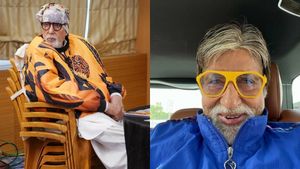 Amitabh Bachchan Social Media Break: Doctors Ask Big B To Rest
 -
 Throwback Thursday: Yash Chopra’s Heroines And The Fashion That Defined Bollywood Romance
 -
 Deepika Padukone Wears ₹90,000 Gold Kurta Set As Ranveer Singh, Daughter Dua Twin For Baby Devi’s Name Reveal
 -
 Women, Menopause And Bone Health: Doctor Explains Why Osteoporosis Risk Rises After 40
 -
 Can Breast Cancer Be Detected Before Symptoms Appear? A Doctor Explains The Role Of Screening
 -
 Papankusha Ekadashi 2026: October 21 Or 22? Know The Correct Date, Tithi And Significance
 -
 OTT Releases This Week (October 19–25): New Movies And Series On Netflix, Prime Video, JioHotstar And Zee5
 -
 Police Commemoration Day 2026: Know The History, Significance And Programmes Planned Across India This Year


No One Bathes In The Same River Twice-Part II


Ordinarily one takes the mind to be a permanent and separate entity like one's body. Ramana begins by pointing out that because there are thoughts we assume that there is a mind from which they emanate. Ramana asks, "Take away thoughts, then where is the mind?" This statement is only to point out the truth that when every thought is changing and is different and is in fast motion there must be a common or linking centre which alone can be called the mind.
Ramana's solution is alert watchfulness of thought at its moment of birth. For, such attention would put an immediate stop not only to that thought but also to the proliferation of that thought into hundreds of related thoughts. This practice of paying attention to the Self, called self-enquiry begins by focussing attention on the subject 'I' and by not allowing any distraction which would happen whenever there is slackening of attention to the rising thought.
Attention to rising thoughts would allow the movement of thoughts from one moment to another without being clogged. As a result the mind would be spacious. This freedom would be a growing freedom. It arises from steadfast practice that is a result of detachment from nagging and obsessive thoughts.
Thought will arise and subside naturally depending exclusively on the need of that moment. This dropping of the thought load by diligent and persistent practice of Self-attention would open up a whole new world hitherto unknown to us. It is like the relief enjoyed by a labourer carrying a heavy load when he drops that load at the destination. The mind which is now fragmented and enervated, would be alert, attentive, powerful and unitary. For the mind is consciousness and is of the same nature as the Self.
In this context one can appreciate the repeated assertion of Ramana that the nature of the mind is pure like ether and its power is the power of the Self. The individual and separate subject, separate 'I' will cease to exist naturally when its associations with experiential thoughts are cut and it exposes itself to the magnetic force of the Self.
In understanding the true nature of one's own mind, one would have discovered one's own immortality by freeing oneself from the shackling thoughts. For the sake of communication and understanding one might say that the mind which we now know would cease to be and be replaced by the pure, unitary mind enabling one to be in the state of natural happiness.
Chat With The Devotees Of Bhagwan Ramana Maharishi

 Continue with Google

