




 Click it and Unblock the Notifications


Latest Updates
-
 Kerala Faces Power Cut Crisis: What Happened And How People Are Coping With Night-Time Outages
 -
 Google Turns 28: 10 Surprising Things You Probably Never Knew About The Search Giant
 -
 World Tourism Day 2026: Significance, Theme And How India Is Redesigning Tourism With Artificial Intelligence
 -
 October 2026 Important Days And Events: Complete List Of National And International Observances
 -
 "I Look For Green Flags Now": Inside Dating's Biggest Shift In 2026
 -
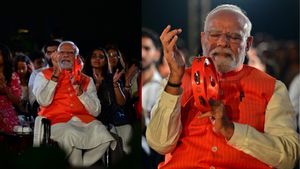 What Is Bhajan Clubbing? The Trend PM Modi Called Spectacular
 -
 Love & War First Looks: Alia Bhatt, Ranbir Kapoor and the Making of Bhansali's Next Epic
 -
 Bhadrapada Purnima 2026: What Makes This Full Moon Important Before Pitru Paksha
 -
 Pitru Paksha 2026: Do Ancestors Need Shraddha Rituals? Astrologer Ajit V Khawad Explains
 -
 Fake “Pakistan-Made” Beauty Creams Seized In Maharashtra: What To Know Before Buying Skin-Lightening Products


Hariyali Teej 2019: Importance of Celebrating Teej

India is a pious land of festivals and occasions. Most of the festivals are religious and they give you an immense pleasure to perform all the rituals with your dear and near ones.
As this is the country of seasonal varieties, all six seasons are enriched with their own significances. Every season brings new festivals and celebration to make people realise only one truth that life is a gift of God.
You should enjoy every day of it. Teej is also one of those occasions which is celebrated in the month of Shravana (July-August), during the extended monsoon. This year, hariyali teej will be celebrated on 3 August. So, what is the importance of celebrating teej?
Also Read: 10 Vegetarian Recipes For Teej
Before knowing the significance of celebrating teej, you should gather a little more information about the festival. This is celebrated on Shukla Paksha, Tritiya, in the Shravan month.
This is also popular as Shravani Teej or Hariwali Teej. Though the whole country celebrates it, the pomp and vigour is seen in the northern part of the country. States like Rajasthan, Punjab, Bihar, UP, Hariyana and even Kathmandu (capital of Nepal) celebrate it gallantly.
Teej is mainly celebrated by women who keep fast for the welfare of their husband and marital life. On this occasion, Lord Shiva and Goddess Parvati are worshipped. Hence, read on to know more about the significance of celebrating teej, in this article.

1. Religious Significance
While discussing the importance of celebrating teej, this point always come first. According to the Hindu religion, this was the day when Lord Shiva and Goddess Parvati reunited after hundreds of years. So, women keep ‘Niraja Vrata' to commemorate this incident and for the well-being and long life of their husbands.

2. Significance According To Weather
This is another symbolic significance of celebrating teej. As teej is celebrated in the Shravan masam, it is the festival to celebrate good monsoon. Women dressed in beautiful saree and ornaments, sing, dance and thus, welcome monsoon.

3. Freedom From Daily Humdrum
This is the most underlying importance of celebrating teej. Women always get busy in their family life. To bring a change to their life, teej plays an important role. Married women can visit their paternal house this time, which also gives them joy and makes them enthusiastic to lead life again.

4. Strengthens Relationship
During teej, married women keep fast for the well-being of their husbands. This brings them closer and be more dedicated to their husbands. On the other hand, when husbands watch their wives keeping a fast for them, it will obviously make them feel more special and thus, they become more loving and caring to their wives.

5. Three-day Rituals
The importance of celebrating teej lies in the three-day celebration. On the first day, women enjoy a feast prepared by their husbands. The second day is the fasting day and the third day, they offer prayers to Lord Shiva and Goddess Parvati.

6. Mythical Significance
In some parts of the country, women bathe with red mud on the holy occasion of teej. This signifies that a lady becomes completely purified after the bath by removing all her past sins.
Then, she keeps a fast and with the moon, arising in the sky, she breaks her fast and joins in a delightful feast.
The importance of celebrating teej lies in the giggling smile of the women, in their glittery eyes which smile with their ornaments and colourful apparels.
The ‘sawan ke jhoole' (swing, made on tree branches) reminds them of their childhood days. And with the memory of teej of the present year, they prepare to perform all their duties again.

 Continue with Google

