




 Click it and Unblock the Notifications


Latest Updates
-
 Alia Bhatt And Vicky Kaushal Set The Ramp Ablaze In Manish Malhotra’s Stunning Chikankari Couture Looks
 -
 Bank Strike From September 28 To 30: Why Are Bank Employees Striking And Which Services Will Be Affected?
 -
 Kerala Faces Power Cut Crisis: What Happened And How People Are Coping With Night-Time Outages
 -
 Google Turns 28: 10 Surprising Things You Probably Never Knew About The Search Giant
 -
 World Tourism Day 2026: Significance, Theme And How India Is Redesigning Tourism With Artificial Intelligence
 -
 October 2026 Important Days And Events: Complete List Of National And International Observances
 -
 "I Look For Green Flags Now": Inside Dating's Biggest Shift In 2026
 -
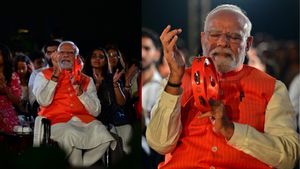 What Is Bhajan Clubbing? The Trend PM Modi Called Spectacular
 -
 Love & War First Looks: Alia Bhatt, Ranbir Kapoor and the Making of Bhansali's Next Epic
 -
 Bhadrapada Purnima 2026: What Makes This Full Moon Important Before Pitru Paksha


Hajj and Umrah Rituals-Symbolisation


Ihram : The Muslims who undertake the Hajj pilgrimage follow a dress code. Ihram is the dress that the Muslim males are required to wear while involving in Hajj rituals, while women dress normally as they always do. The donning of the Ihram is to denote the equality of the pilgrims in the eyes of God; He looks at everybody alike.
Umrah : There are a lot of symbolisation attached to Hajj and Umrah rituals. While Umrah means performing a minor pilgrimage, it also means to perform Tawaf and Sa'i around the Kaaba(The cube shaped building in Mecca), which is found in the premises of Al-Masjid al-Ḥarām or the Grand Mosque . Umrah is not considered to be undertaken compulsorily, like Hajj, which everyone who is physically and otherwise able to undertake. However, it is also highly recommended.
Tawaf is walking counter clockwise around the Kaaba (a cube shaped building), seven times. The first three circuits are done in a fast pace while the pilgrims slow down for the next four circuits. They shout "In the name of God, God is Great, God is Great, God is Great and praise be to God" (Bism Allah Allahu Akbar, Allahu Akbar, Allahu Akbar wa lil Lahi Alhamd) during all the seven circuits. Eating is prohibited during the performance of Tawaf, however, drinking of water is allowed. The worshippers in the course of their circuit may also kiss the black stone (the ancient eastern stone of the Kaaba, a Muslim relic). However, on account of a huge gathering they may just point their right hand towards it in reverence. This would mean a complete Tawaf after which they are supposed to offer two Raakat prayers.
After performing the Tawaf, pilgrims perform the Sa'i, which is making rapid circuits seven times around the Kaaba which symbolises the frantic act of Hagar (Ibrahim's wife) in search of water for her crying infant. People also then drink from the well of Zamzam (a water source that sprang up within the Masjid-al-Haram) miraculously, symbolizing the fact that the child's thirst was quenched by this miraculous water. (Read detailed account)
Arafat
On the eighth of Dhu al-Hijjah, the pilgrims make their way to Mina (a temporary tent city made for hajj pilgrims), where they offer prayers in the night. The next day morning (9th morning) they leave for Mt.Arafat, where they engage in contemplative vigil and prayer, also reciting the Koran, near the hill Jabal Al Rahmah (The Hill of Forgiveness, Mount Arafat). The hill is supposed to be the place where Prophet Muhammad delivered his last sermon. This is known as Wuquf, the most significant Hajj ritual. The pilgrims spend the afternoon in a place, on the Arafat plain until sunset. The Hajj pilgrimage mission is considered invalid if the Wuquf is not performed.
Muzdalifah
After sunset, the pilgrims make way for Muzdalifah, a place between Arafat and Mina, where pebbles are collected for stoning the devil, a ritual observed the next day.
Ramy al-Jamarat
At Mina, pilgrims throw stones on the three pillars, which is called Ramy al-Jamarat, which symbolises the devil's challenge to Abraham thrice, while he was about to sacrifice his son according to God's demand. The performance of Ramy al-Jamarat, symbolises the pilgrims defying the devil. On the first occasion, the largest pillar (Jamrat'al'Aqabah ) is stoned followed by stoning the others on the second occasion. Seven pebbles are hurled in the process.
Eid al-Adha
Eid al-Adha or Bakrid follows the ritual of stoning the devil. It is about sacrificing an animal to God, symbolizing God's mercy towards Ibrahim by substituting a ram for his child.
Tawaf az-Ziyarah
This involves the pilgrims visiting the Masjid al-Haram mosque in Mecca, for performing another Tawaf, denoting their urgency to respond to God and to reveal their love for Him. The night is spent in Mina. The next day morning the pilgrims again throw seven pebbles at each of the three Jamarat in Mina. They would have to leave Mina for Mecca before sunset on the 12th, failing, they will have to perform the ritual of throwing pebbles again.
Tawaf al-Wida
Before leaving Mecca, pilgrims perform the Tawaf al-Wida or a farewell Tawaf.
Journey to Medina
Though the rituals involved in the Hajj pilgrimage concludes with the Tawaf-al-Wida, people also make a journey to Medina and the the Al-Masjid al-Nabawi (Mosque of the Prophet), where Prophet Muhammad is tombed and also Riad ul Jannah. Pilgrims also visit the grave of the companion of Prophet Muhammad, Umhat ul Mominen and Ahl al-Bayt in Al-Baqi'.
Let us thus get an insight into the symbolisation of rituals in the great Hajj and Umrah pilgrimages.

 Continue with Google


