




 Click it and Unblock the Notifications


Latest Updates
-
 Alia Bhatt And Vicky Kaushal Set The Ramp Ablaze In Manish Malhotra’s Stunning Chikankari Couture Looks
 -
 Bank Strike From September 28 To 30: Why Are Bank Employees Striking And Which Services Will Be Affected?
 -
 Kerala Faces Power Cut Crisis: What Happened And How People Are Coping With Night-Time Outages
 -
 Google Turns 28: 10 Surprising Things You Probably Never Knew About The Search Giant
 -
 World Tourism Day 2026: Significance, Theme And How India Is Redesigning Tourism With Artificial Intelligence
 -
 October 2026 Important Days And Events: Complete List Of National And International Observances
 -
 "I Look For Green Flags Now": Inside Dating's Biggest Shift In 2026
 -
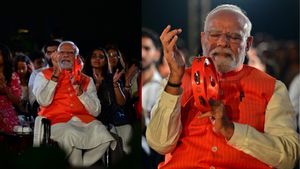 What Is Bhajan Clubbing? The Trend PM Modi Called Spectacular
 -
 Love & War First Looks: Alia Bhatt, Ranbir Kapoor and the Making of Bhansali's Next Epic
 -
 Bhadrapada Purnima 2026: What Makes This Full Moon Important Before Pitru Paksha


Universality of Religions


There are numerous religions in the world that have differences because they are all the outcome of different traditions and backgrounds.
God
All religions believe that God is a monotheistic character except Buddhism and Jainism which virtually do not believe in any God. There may arise doubts about this monotheistic nature especially in the case of religions such as Hinduism. But we forget that there has always been an undercurrent of monotheism even though an average Hindu worships a number of Gods; in doing so he is fully aware that he is worshipping manifestations, expressions, or aspects of the same all powerful God.
All religions also believe in only one supreme, all powerful, all knowing creator GOD. Another point. is that of attributing some metaphysical qualities to God like infinity, all powerfulness all knowingness. as well as some ethical qualities (like mercy, benevolence, justice) Furthermore God is regarded as the creator, sustainer and destroyer of the world.
According to all world religions other than Hinduism, God is only the efficient cause of the world and not the material cause and that he has created the world "ex nihilo" But according to Hinduism. He is both the efficient and material cause of the world and He has created the world out of the material of his own being.
A striking similarity between Hinduism and Christianity is the point, taking God as three in one (Trinity). In Hinduism the trinity is formed by Brahma, the creator, Vishnu the maintainer, sustainer and Mahesh, the destroyer. While in Christianity the trinity is formed by God the father, the Son and the Holy Spirit. There is no functional distinction in the case of the Christian trinity. Difference lies only in the nature of the trinity.
Hinduism believes that whenever there is a marked regression in virtuous life and evil reigns supreme in the world, God incarnates and annihilates the evil. There have been several such incarnations in the past and they are expected in the future also. Whereas according to the other religions of the world, God sends messengers to instruct people about the true lessons of religion and morality. Some religions believe that such messengers may come in the future also but according to Islam, Mohammed was the last prophet and there is none to come after him.
Both in Judaism and Christianity the conception of God is very similar, though there are points of differences which hardly catch the eye. Both consider God as all-powerful, all-knowing, all-present, merciful, just and kind. Judaism emphasises the all-powerfulness of God and also on his attributes of mercy and justice.
Christianity lays utmost emphasis upon God's character of love. He is completely kind and loving and loves even the worst of sinners. Judaic God is sometimes characterised as wrathful and revengeful but there is no such thing as far as the Christian conception of God goes. One marked difference between these two religious is though they claim to be Monothestic - Christianity due to its doctrine of trinity doesn't remain strictly monotheistic in character.

 Continue with Google

