




 Click it and Unblock the Notifications


Latest Updates
-
 Saptami Shraddha 2026: Who Should Perform It And What Does This Pitru Paksha Ritual Mean?
 -
 Gandhi Jayanti 2026: 7 Sustainable Lifestyle Lessons We Can Still Learn From Gandhi
 -
 Who Is Captain Smit Machchhar? The Pilot Who Fought Back Mid-Air on Flydubai FZ1073
 -
 Toys For Kidults And ToyTrends: Inside The Spielwarenmesse 2027 Preview
 -
 How Do You Tell Normal Stress From Something More Serious? Expert Explains
 -
 International Coffee Day 2026: 7 Ways To Make Your Morning Coffee Healthier Without Losing Taste
 -
 Why Do People with Diabetes Feel Hungry Even After Eating?
 -
 Throwback Thursday: Before The Headlines, Govinda Was Every 90s Kid’s Favourite Bollywood Entertainer
 -
 Why Monsoon Is Not The Time To Skip Childhood Vaccinations? Expert Weighs In
 -
 Jubin Nautiyal Becomes A Father: Singer Welcomes Baby Boy On Ganesh Chaturthi, Opens Up About Fatherhood


International Day Of Non-Violence 2026: Why Was Gandhiji's Birthday Chosen For A Global Message Of Peace?

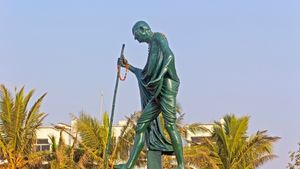
Every October 2 carries significance far beyond being Mahatma Gandhi's birth anniversary. The date is observed around the world as the International Day of Non-Violence, bringing attention to the idea that social and political change can be pursued without resorting to physical violence. On International Day of Non-Violence 2026, the United Nations is observing the day with a focus on "Non Violence as a means to Peace and Development."
Why Is International Day Of Non-Violence Observed On October 2?
The date was chosen because October 2 marks the birth anniversary of Mahatma Gandhi, who was born in Porbandar, Gujarat, in 1869. Gandhi became internationally associated with non-violent resistance during India's freedom movement.

The United Nations General Assembly established the International Day of Non-Violence through Resolution A/RES/61/271 on June 15, 2007. The resolution called for the observance to spread the message of non-violence through education and public awareness.
What Is International Day Of Non-Violence 2026 Theme?
For the 2026 commemoration, the United Nations has highlighted "Non Violence as a means to Peace and Development." The theme connects the principle of non-violence with two broader global concerns: building peaceful societies and creating conditions for sustainable development.
The UN's 2026 observance also reflects on Gandhi's continuing influence and the relevance of dialogue and peaceful action in addressing conflict and injustice.
How Did Gandhi Promote Non-Violence?
Gandhi's philosophy was closely linked to ahimsa, or non-violence, and satyagraha, his approach to resistance based on truth. Rather than relying on physical force, he advocated methods including civil disobedience, non-cooperation and peaceful protest.
The 1930 Salt March became one of the most recognised examples of this approach. Gandhi and his followers challenged British colonial salt laws through a non-violent campaign that became an important episode in India's independence movement.
His ideas later influenced non-violent movements for civil rights and social change in different parts of the world.
International Day Of Non-Violence And Gandhi Jayanti
In India, October 2 is celebrated as Gandhi Jayanti, marking Mahatma Gandhi's birth anniversary. Internationally, the same date serves as the UN's International Day of Non-Violence.
The two observances therefore meet on the same day, connecting Gandhi's legacy in India with a wider international message about peaceful action, dialogue and respect for human dignity.
Non-violence is not simply about avoiding conflict. It also raises a larger question about how people respond when they disagree, face injustice or seek change. On October 2, that question becomes part of a global conversation about whether lasting peace can be built through dialogue rather than force.

 Continue with Google

