



 Click it and Unblock the Notifications



Latest Updates
-
 *High Blood Pressure and Heart Disease: 5 Cardiac Complications You Should Never Ignore*
-
 How to Choose the Best Adult Diapers for Comfort, Protection, and Everyday Use
-
 Naukuchiatal Travel Guide: Kumaon’s Hidden Gem for a Peaceful 3-Day Getaway from Delhi
-
 From Regional Flavours to Culinary Stories: Kahaani Celebrates India's Diverse Food Culture
-
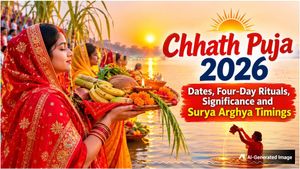 Chhath Puja 2026: Dates, Four-Day Rituals, Significance and Surya Arghya Timings
-
 Kavya Maran and Anirudh Ravichander Tie the Knot in Greece, Couple Shares Post
-
 Who Is Kimberly Powell? Meet Nvidia's Healthcare Chief Named in Fresh Jensen Huang Allegations
-
 5 Must-Read Books on Spirituality and Personal Growth to Start 2027 on a Positive Note
-
 Kareena Kapoor Khan's Bhopal Royal Pendant Look Sparks Debate Amid Legal Notice
-
 High Blood Pressure: The Silent Health Risk You Should Never Ignore


What Is the Astrological Significance of Chhath Puja? Explained By Astrologer Ashutosh

Chhath Puja in 2026 will be celebrated from Friday, 13 November, to Monday, 16 November. The four-day festival begins with Nahay Khay, followed by Kharna. The third day is marked by Sandhya Arghya, when devotees offer prayers to the setting Sun. The festival concludes with Usha Arghya on the morning of 16 November, when prayers are offered to the rising Sun.

What Is the Astrological Significance of Chhath Puja?
In Vedic astrology, Surya Dev represents the soul, confidence, health, father and a person's position in society. The Sun is also associated with leadership, authority and self-respect. This is why offering prayers to the Sun is considered significant in Jyotish.
In 2026, Chhath Puja falls during the Sun's transit through Libra (Tula), where it is considered debilitated. Worshipping Surya Dev during this period is traditionally believed to help strengthen the Sun's positive influence.
There is another interesting astrological aspect to this year's festival. The Sun is expected to move from Libra into Scorpio on 16 November. The festival's concluding morning rituals therefore coincide with this change in the Sun's zodiac position.
The Sun also has a connection with Uttara Ashadha, a nakshatra ruled by Surya. Shravana, which follows in the lunar cycle, is associated with listening, learning and receiving knowledge.
Chhath Puja is also closely linked to prayers for children and family well-being. In Vedic astrology, the fifth house represents children, and Leo (Simha), ruled by the Sun, is associated with this house in the natural zodiac.
For devotees who believe in the astrological significance of the festival, offering water to the Sun during sunrise is considered an important spiritual practice. Even those who are not observing the complete Chhath fast can offer arghya and pray to Surya Dev for good health, strength and positivity.
Here are the expected Arghya timings for some major cities:
In Patna, Sandhya Arghya will take place at 5:01 PM on 15 November, while Usha Arghya will be offered at 6:07 AM on 16 November. In Ranchi, the timings are 5:04 PM and 6:03 AM, respectively. Devotees in Varanasi can offer the evening arghya at 5:10 PM and the morning arghya at 6:16 AM.
In Kolkata, sunset arghya is expected at 4:53 PM, followed by the morning arghya at 5:50 AM. In New Delhi, the timings are 5:28 PM and 6:44 AM, while in Mumbai, devotees can offer prayers at 6:00 PM on Sunday and 6:46 AM on Monday.
These timings are based on city locations and may vary slightly depending on the exact place. Devotees visiting riverbanks and ghats are advised to reach early.
Who Is Worshipped During Chhath Puja?
Chhath Puja is dedicated to Surya Dev (the Sun God) and Chhathi Maiya. Both hold a special place in the festival.
Unlike many other Hindu festivals, Chhath involves offering prayers directly to the Sun without an idol. Devotees stand in water and offer arghya as a mark of gratitude and devotion. The setting Sun is worshipped in the evening, while prayers are offered to the rising Sun the following morning. These rituals are also associated with Pratyusha and Usha, representing the evening and morning rays of the Sun.
Chhathi Maiya is worshipped as Shashthi Devi, who is believed to protect children and bless families with happiness and well-being. In Bihar, she is also regarded as the sister of Surya Dev. Many women observe the fast with prayers for their children's good health, long life and a happy future.
What Happens on Each of the Four Days?
Each day of Chhath Puja has its own rituals and importance.
Nahay Khay (13 November): The first day begins with a holy bath and cleaning of the house. Devotees prepare a simple sattvik meal, usually consisting of lauki, chana dal and rice. The food is cooked using rock salt, without onion or garlic.
Kharna (14 November): On the second day, the person observing the fast does not eat throughout the day. In the evening, after offering prayers, gur ki kheer and roti are prepared and offered as prasad. The meal is then consumed, after which the strict 36-hour fast begins.
Sandhya Arghya (15 November): The third day is one of the most important parts of the festival. Families prepare traditional prasad, including thekua, and arrange fruits, sugarcane and other offerings in bamboo baskets. Devotees gather at riverbanks and ghats, stand in water and offer arghya to the setting Sun.
Usha Arghya (16 November): On the final morning, devotees return to the ghats before sunrise. They offer prayers and arghya to the rising Sun. Once the rituals are completed, the fast is broken with prasad and water.
Why Is the Setting Sun Worshipped First?
One of the most interesting aspects of Chhath Puja is that devotees offer prayers to the setting Sun before worshipping the rising Sun.
The reason is connected to the timing of the festival. The evening arghya is offered on Kartik Shukla Shashthi, while the morning arghya takes place on Saptami. The rituals therefore begin with the setting Sun and conclude with prayers to the rising Sun.
There is also a deeper meaning behind this tradition. People usually celebrate the rising Sun as a symbol of new beginnings and success. However, Chhath Puja reminds devotees to show gratitude to the setting Sun as well. It is a way of acknowledging the support, energy and blessings received throughout the day.
What Are the Rules for puja?
Chhath Puja is known for its strict rules and discipline. Cleanliness is given great importance throughout the four days. The house and kitchen are kept clean, and special care is taken while preparing the prasad. Traditionally, it is cooked separately, often on a clay chulha.
Food restrictions are also followed during the festival. Onion, garlic, meat, eggs and alcohol are avoided. The person observing the vrat does not taste the prasad while preparing it.
After Kharna, devotees observe a strict nirjala fast, which means going without food and water until the morning rituals are completed. This period usually lasts around 36 hours. Many devotees also sleep on the floor and wear clean or newly washed clothes.
For families that follow the tradition, Chhath is often observed every year with the same devotion and discipline.
However, the strict fast may not be suitable for everyone. Pregnant women, elderly people and those with health concerns should consult a doctor before observing a nirjala fast. The rituals can be followed according to one's health and capacity.
Disclaimer: The benefits of gemstones mentioned in this article are based on traditional beliefs and astrological practices. Results may vary from person to person. We recommend consulting a certified astrologer or gem expert before wearing any gemstone for astrological purposes. This content is intended for informational purposes only and should not be considered a substitute for professional advice.

 Continue with Google


