




 Click it and Unblock the Notifications


Latest Updates
-
 As ‘Ranabaali’ Hits Theatres, A Look At Rashmika Mandanna’s ₹1.31 Lakh Ivory Saree For Pre-Release Promotions
 -
 Durga Puja Pandals Mumbai 2026: 7 Stunning Celebrations To Explore From Matunga To Juhu
 -
 World Spine Day 2026: Is Your Phone Habit Causing Neck Pain? What To Know About Tech Neck
 -
 Breast Cancer Awareness Month 2026: Expert Explains Why Family History Isn't the Only Risk
 -
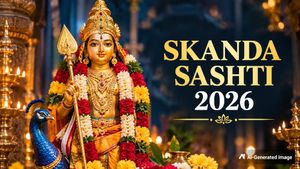 Skanda Sashti 2026: Significance, Vrat Rituals And How Devotees Observe The Day
 -
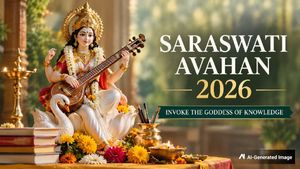 Saraswati Avahan 2026: Significance, Shubh Muhurat, Rituals And Puja Vidhi
 -
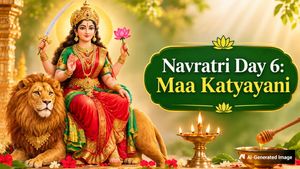 Navratri Day 6: Maa Katyayani Puja, Colour, Rituals, And Significance
 -
 Garba Before The DJ Era: What Navratri Looked Like In Earlier Times
 -
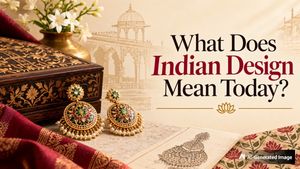 What Does Indian Design Mean Today? A Creative Director Explains
 -
 Why Your Vision Can Feel Different In Bright And Dim Rooms, Expert Explains


Why Indians Do Not Consume Food During An Eclipse
Know more about why some people in India do not consume food during an eclipse.

If you are an Indian, regardless of the kind of a societal background you come from, you would surely be able to vouch for the fact that India is a land of hundreds of traditions and beliefs, right?
As it is rightly termed, the "subcontinent", India is a country which houses a whole array of different cultural backgrounds, religions, castes and sub-castes, so one can imagine how many traditions are born out of all these different cultural backgrounds.
Every state is culturally different from the other and has its own set of traditions that are still being followed to this day.

For example, most states celebrate the beginning of the new year differently and even at different times of the year.
While the new year is celebrated as 'Ugadi' in Karnataka, it is called 'Pongal' in Tamil Nadu, and the rituals involved in the celebrations can be very different.
Now, with traditions come a number of beliefs too and while some beliefs have a solid basis that pertain to the health and well-being of a person, the others may simply be meaningless.
For example, many families in India still believe that only women who give birth to male children can attain a place in heaven; this belief has no basis and could be a pure myth.
Other beliefs such as a woman having to wash her hair on the third day for her period, could have some scientific evidence. A woman's body produces a lot of sweat and oil during the menstrual cycle, so a hair-wash nearing the end of the cycle could be a hygienic practice!
Now, even when it comes to certain natural phenomenon such as the full moon, eclipse, etc., people in India have certain beliefs.
Many people here say that one must not consume any food or go out, during a solar eclipse.
Let us now find out some of the reasons why many Indians do not consume food during an eclipse.

Reason #1: Radiations May Cause Health-hazards
As we know, a solar eclipse occurs when the moon comes in between the sun and the earth, partially obscuring the sun from the earth, until it lasts. Astronomers and scientists alike, believe that during an eclipse, certain radiations reach the earth through the atmosphere, and these radiations may lead to the health-hazardous bacteria in the food to multiply faster.
So, this could be one reason why Indians do not consume food when there is an active eclipse.

Reason #2 Can Cause Indigestion
Yet another reason why many Indians do not consume food until an eclipse is over is because of the fact that the radiations which fall on the earth during the eclipse can interfere with a healthy digestion.
A number of research studies have been conducted on this subject and scientists claim that consuming food during an eclipse could cause indigestion.
There have also been a few studies in which experts claim that foods which have been exposed to direct radiations from the eclipse could also be potentially toxic!
So, there are some of the reasons why a lot of Indians do not consume food during an eclipse.
Disclaimer: The information provided in this article is for general informational and educational purposes only and is not intended as a substitute for professional medical advice, diagnosis, or treatment. Always seek the advice of your physician or a qualified healthcare provider with any questions you may have regarding a medical condition.

 Continue with Google

