




 Click it and Unblock the Notifications


Latest Updates
-
 Deepika Padukone And Ranveer Singh Announce Second Daughter’s Name On Dussehra, Share Family Photo
 -
 Who Was Karthik Sabesh? Tamil Actor Passes Away At 37, Days After Uncle And Composer Deva’s Death
 -
 Who Is Ravleen Varghese? Meet The First Malayali Model To Walk The Victoria’s Secret Runway
 -
 World Osteoporosis Day 2026: A Minor Fall, A Major Fracture — Doctor On Why Older Adults Should Be Careful
 -
 Durga Visarjan 2026: October 20 or 21? Know Shubh Muhurat, Rituals And Significance
 -
 Happy Dussehra 2026: 50+ Wishes, Messages And Greetings To Share With Family And Friends
 -
 Dussehra 2026: Astrologer Ashutosh Clairvoyant On Colours, Offerings And Puja Rituals For Each Zodiac Sign
 -
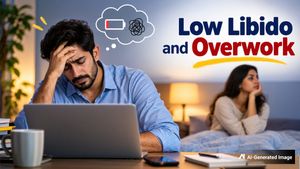 Hustle Culture Has a Bedroom Problem No One Talks About, Expert Explains
 -
 Iris Young Minds Initiative: How A Noida CSR Programme Is Opening Up Talk On Student Stress
 -
 Lal Hit Janta Party Explained: Who Is Behind The Rival to the Cockroach Janta Party


Warning: Antidepressants May Up Death Risk
Antidepressant drugs increase the risk of death. Here is how.

Antidepressant drugs - commonly prescribed to reduce depression and anxiety - may significantly increase the risk of death by preventing multiple organs from functioning properly, a study has warned.
It is widely known that brain serotonin affects mood, and that most commonly used antidepressant treatment for depression blocks the absorption of serotonin by neurons.
However, less known is the fact that all the major organs of the body - the heart, kidneys, lungs, liver - use serotonin from the bloodstream.
Antidepressants block the absorption of serotonin in these organs as well, and the researchers warn that antidepressants could increase the risk of death by preventing multiple organs from functioning properly.

The researchers reviewed studies involving hundreds of thousands of people and found that antidepressant users had a 33 per cent higher chance of death than non-users.
Antidepressant users also had a 14 per cent higher risk of cardiovascular events, such as strokes and heart attacks.
"We are very concerned by these results. They suggest that we shouldn't be taking antidepressant drugs without understanding precisely how they interact with the body," said Paul Andrews, an associate professor at McMaster University in Canada who led the research.
Taken by one in eight adult Americans, antidepressants are among the most frequently used medications. They are often prescribed by family doctors without a formal diagnosis of depression, on the assumption they are safe.
Since depression itself can be deadly - people with depression are at an increased risk of suicide, stroke and heart attack - many physicians think that antidepressants could save lives by reducing depressive symptoms.

"I think people would be much less willing to take these drugs if they were aware how little is known about their impact outside of the brain, and that what we do know points to an increased risk of death," said Marta Maslej, from McMaster University.
The findings point to the need for more research on how antidepressants actually work, said Benoit Mulsant, a psychiatrist at the University of Toronto.
The researchers found that antidepressants are not harmful for people with cardiovascular diseases such as heart disease and diabetes. This makes sense since these antidepressants have blood- thinning effects that are useful in treating such disorders.
Unfortunately, this also means that for most people who are in otherwise good cardiovascular health, antidepressants tend to be harmful, researchers said.
The findings were published in the journal Psychotherapy and Psychosomatics.
Disclaimer: The information provided in this article is for general informational and educational purposes only and is not intended as a substitute for professional medical advice, diagnosis, or treatment. Always seek the advice of your physician or a qualified healthcare provider with any questions you may have regarding a medical condition.

 Continue with Google

