




 Click it and Unblock the Notifications


Latest Updates
-
 Throwback Thursday: Before Uday Shetty, There Was Anna — Nana Patekar’s 7 Most Iconic Screen Characters
 -
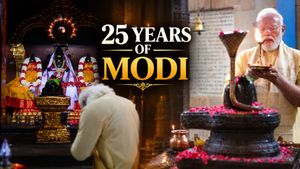 PM Narendra Modi Marks 25 Years In Government With Prayers At Delhi’s Historic Shri Vinayak Temple
 -
 Indian Air Force Day 2026: Inside The 94th Anniversary Celebrations, Theme, History And Air Displays
 -
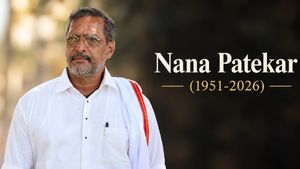 Nana Patekar Passes Away At 75: Veteran Bollywood Actor’s Last Public Appearance Video Goes Viral
 -
 Masik Shivratri October 2026: Why This Sacred Night Is Significant For Lord Shiva Devotees
 -
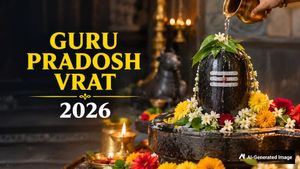 Guru Pradosh Vrat 2026: Know The Puja Timings, Fasting Rules And Shiva Worship Rituals
 -
 The Screen–Snack Connection: Expert Explains How Screen Time Changes Kids' Eating
 -
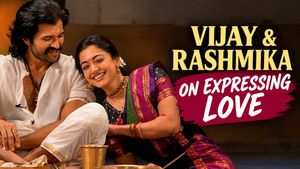 Vijay Deverakonda Says Rashmika Mandanna Tells Him ‘I Love You’ 10-15 Times A Day — A Psychologist Explains
 -
 Culturally Matched NDIS Support in Melbourne: Where to Start
 -
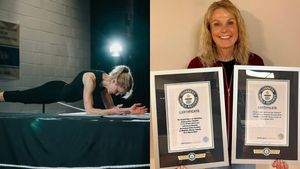 58-Year-Old DonnaJean Wilde's Plank Record: 4 Benefits For Women 50+


Who Owns Yoga?


It is one of the most discussed subject between the practitioners of Yoga, which stoked the amber, out of which evolved a fierce debate.
Who owns Yoga? An Indian-American group kick started a campaign, “Take Back Yoga," to expose Westerners with the truth that every single pose, followed in gyms, ashrams and spas, simply pertain to Hinduism.
The campaign, “Take Back Yoga," did not insist the followers of Yoga to take up to Hinduism, or ask instructors to teach more of Hinduism, it but suggested a fair claim of practitioners to become more aware of Yoga, having its roots in Hinduism.
The suggestion, however sparked strong reactions, even beyond the religious spectrum.
Writer, Deepak Chopra, cast aside the campaign as a as a jumble of faulty history and Hindu nationalism.
R. Albert Mohler Jr., president of the Southern Baptist Theological Seminary, however agreed to the Hindu roots of Yoga and cited that as evidence that the practice imperilled the souls of Christians who practised it.
The campaign also prompted the Indian Government, in June to come up with digital drawings of Yoga asanas, to cow-down the numerous claims of Yoga instructors and entrepreneurs who have mushroomed in large numbers, like Bikram Choudhury, an Indian born, Yoga instructor to film stars, based in Los Angeles.
Choudhury provoked the Indian officials, when he copyrighted about 26 Yoga asanas as “Bikram Yoga
The campaigners of''Take Back Yoga'' pointed out that Yoga was first described in Hinduism''s seminal texts and remains at the core of Hindu teaching.
However, Americans prefer to look at Yoga as the legacy of a timeless, spiritual Indian Wisdom, owing to the consideration of Hindusim as a polytheistic faith of “castes, cows and curry"
New York Times quoted Aseem Shukla, the foundation's co-founder, as saying.
"In a way our issue is that yoga has thrived, but Hinduism has lost control of the brand," t
According to many practitioners, including Debbie Desmond, 27, a yoga instructor in Williamsburg, Brooklyn, the talk of branding and ownership is bewildering.
"Nobody owns yoga. Yoga is not a religion. It is a way of life, a method of becoming. We were taught that the roots of yoga go back further than Hinduism itself," she said, as to who owns yoga.
Loriliai Biernacki, a professor of Indian religions at the University of Colorado, said the debate surfaced important issues, about Hindu concepts permeating American culture, including meditation, belief in karma and reincarnation, and even cremation.
"All these ideas are Hindu in origin, and they are spreading"
"But they are doing it in a way that leaves behind the proper name, the box that classifies them as ''Hinduism,''" she said.

 Continue with Google

