




 Click it and Unblock the Notifications


Latest Updates
-
 Who Is Anant Nag? Meet The Veteran Kannada Actor Set To Receive Dadasaheb Phalke Award
 -
 Throwback Thursday: Kareena Kapoor’s ‘Poo’ To Priyanka Chopra’s ‘Desi Girl’, Bollywood Looks That Ruled 2000s
 -
 PM Narendra Modi Birthday Special: Make His Favourite Khichdi At Home And Know Its Health Benefits
 -
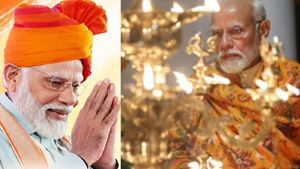 PM Modi Turns 76: ‘Ashirwad Ka Diya’ To Be Lit At 500+ Locations Across India
 -
 World Patient Safety Day 2026: Taking Multiple Medicines? Expert Explains How To Prevent Medication Errors
 -
 Kanya Sankranti 2026: Surya’s Virgo Transition, Rituals And Why The Day Is Spiritually Significant
 -
 Vishwakarma Puja 2026: Why Do We Worship Tools, Machines And Vehicles On This Day?
 -
 Grammy-Nominated Singer-Songwriter Alex Warren To Perform At Abu Dhabi Grand Prix 2026
 -
 How Does Insulin Work? Understanding The Hormone That Controls Blood Sugar
 -
 Newborn Care Myths Vs Facts: What A Neonatologist Wants Parents To Know


Life of Sri Ramanujacharya - Part 3

The true mettle of a teacher becomes known when he comes face to face with a disciple who is superior to him in intellect or character. A mediocre teacher or one of shallow character may harbour feelings of jealousy or malice towards his own students who may be of superior calibre whereas great teachers always control their ego, pride and arrogance and allow the disciples to become even greater than them.
Yadavaprakasa, the renowned teacher of Advaita Vedanta in Kanchipuram faced this dilemma when Ramanuja began contradicting his teachings with his own scholarship and insight. Yadavaprakasa's scriptural learning made him haughty, proud and insecure of anyone who challenged his authority. A sharp intellect not tempered with compassion and selfless service, often falls prey to unethical and even criminal tendencies.
One day, Yadavaprakasa was expounding a commentary on the Chandogya Upanishad written by Adi Sankaracharya. Sankara is said to have interpreted the mantra "kapyasam pundarikamevamakshini" as "The two eyes of that Supreme Being are like lotuses resembling the buttocks of a monkey (kapyasam)!" Ramanuja was deeply shocked and pained at hearing this vulgar interpretation of the verse and tears started tricking down his eyes.
On being asked for the reason for his tears, Ramanuja replied that he found the interpretation unbecoming of a great scholar like him. Yadavaprakasa flared up on being challenged by a young disciple and challenged him to dare come up with a better meaning than the one Adi Sankara himself had given. Ramanuja derived a new meaning for the word kapyasam as 'kam jalam pibati' (he who drinks water, the sun) and so the mantra would then mean, "The eyes of that Supreme Being resemble the beautiful lotuses blossomed by the rays of the sun!"
Another day, during a debate on the Mahavakya (great Truth or utterance) "satyam jnanam anantam brahma," Ramanuja differed with Yadavaprakasa's interpretation that Brahman itself is truth, intelligence and infinity. Ramanuja was of the opinion that Brahman is endowed with these qualities and it doesn't mean that Brahman itself is all these qualities.
Thus, the seed of distrust, jealousy and hatred against Ramanuja took root in the dry heart of the intellectual Yadavaprakasa and the teacher decided to get rid off this 'dangerous' disciple who seemed to be refuting Advaita itself in favour of dualistic interpretations. Yadavaprakasa and his close disciples hatched a clever plan. They would go on a pilgrimage to Kasi and on the way murder Ramanuja in a secluded forest and then proceed to the Ganga to wash off the sin of having killed a Brahmin!

 Continue with Google

