




 Click it and Unblock the Notifications


Latest Updates
-
 Eat, Celebrate, Repeat: 6 Ayurvedic Tips To Keep Your Digestion Happy This Navratri 2026
 -
 Breast Cancer Awareness Month 2026: Expert Explains The Emotional Toll Of Breast Cancer
 -
 Navratri 2026 Food Hopping In Delhi NCR: 7 Places To Explore For A Taste Of Festive Flavours
 -
 Why Casual Games Are Perfect for Quick Online Play
 -
 World Menopause Day 2026: Theme, Significance And What Research Reveals About Menopause In India
 -
 Navratri Day 8: Maa Mahagauri Puja, Colour, Rituals And Significance
 -
 Dussehra 2026: The Difference Between Vijayadashami And Ravana Dahan
 -
 Veteran Musician Deva Dies At 75: Life And Legacy Of Thenisai Thendral
 -
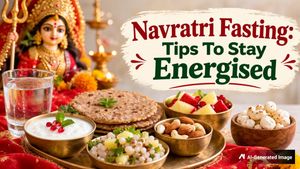 Navratri Fasting Diet: How To Stay Energised And Full Through The Day
 -
 Kavya Maran Wedding In Greece? Date, Venue, and What Is Confirmed


Daana-Charity-Part-II


Another way of classifying the nature of daanam is according to the extent to which it frees the recipient from his / her need. If an act of charity makes the recipient dependent, then it is lower in scale while if it frees him partially or totally from his need, then it is superior.
Consider annadaanam, for instance. The food served removes the hunger of the person only once. The need is not removed and has to be satisfied again with the passage of time. Yet, the scriptures highlight the merit of this form of charity as it fulfils the most primary need of the human being. However, if the one educates an illiterate person or a mendicant and makes him capable of earning his own bread, then we have made him less dependant on others. Hence, the gift of knowledge is considered superior to annadaanam. This is the reason why education was considered as a sacred, non-profitable act of charity in traditional Indian society. This system received support from all quarters - from the highest kings down to the common man.
Note this interesting remark made by Swami Vivekananda during one his lectures in Madras. This note appears in the famous compilation called Lectures from Colombo to Almora titled, 'On Charity':
"During his stay in Madras the Swami presided at the annual meeting of the Chennapuri Annada Samam, an institution of a charitable nature, and in the course of a brief address referred to a remark by a previous speaker deprecating special alms-giving to the Brahmin over and above the other castes.
Swamiji pointed out that this had its good as well as its bad side. All the culture, practically which the nation possessed, was among the Brahmins, and they also had been the thinkers of the nation. Take away the means of living which enabled them to be thinkers, and the nation as a whole would suffer.
Speaking of the indiscriminate charity of India as compared with the legal charity of other nations, he said, the outcome of their system of relief was that the vagabond of India was contented to receive readily what he was given and lived a peaceful and contented life; while the vagabond in the West, unwilling to go to the poor-house - for man loves liberty more than food - turned a robber, the enemy of society, and necessitated the organisation of a system of magistracy, police, jails, and other establishments.
Poverty there must be, so long as the disease known as civilisation existed: and hence the need for relief. So that they had to choose between the indiscriminate charity of India, which, in the case of Sannyins at any rate, even if they were not sincere men, at least forced them to learn some little of their scriptures before they were able to obtain food; and the discriminate charity of Western nations which necessitated a costly system of poor-law relief, and in the end succeeded only in changing mendicants into criminals"
This is how the idea of charity strongly influenced Indian society. Swami Vivekananda was obviously not an advocate of any shade of Brahmin supremacy; on the contrary, he was a vociferous critique of the prevailing orthodoxy and casteism. However, he understood clearly the advantages that indigenous Indian education had over the modern Macaulayan system which injected the poison of caste-based competition and jealousy into Indian society.
The highest form of daanam is the gift of Brahmavidya which an enlightened Master bestows on a worthy disciple. It breaks the disciple's shackles of ignorance and sets him free forever. There can be no price set upon this gift of the highest Self Knowledge and hence it is the greatest of all acts of charity.
(to be continued...)

 Continue with Google

