




 Click it and Unblock the Notifications


Latest Updates
-
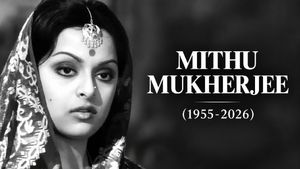 Who Was Mithu Mukherjee? Veteran Bengali Actress Passes Away At 71
 -
 Ahmedabad Police Flag Fraud Risk Behind Viral 'Rent A Garba Partner' Ads
 -
 Vidya Balan’s Jailer 2 Entry As Kantha: From Silk To Manjulika, A Look At Her Unconventional Roles
 -
 Samay Raina Has Now Denied Dating Rumours With Two Women In Three Months
 -
 Kareena Kapoor Turns 46: From Size Zero To Fine Lines, The ‘Daayra’ Actress Is Choosing To Age Without Apology
 -
 The Emotional Side of Delayed Parenthood That We Don’t Talk About Enough
 -
 World Alzheimer’s Day 2026: Why Early Diagnosis Matters And What This Year’s Theme Means
 -
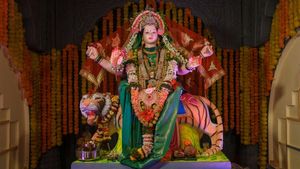 When Is Navratri In 2026? Full Dates, Rituals, Colours, Significance, and Fasting Guide
 -
 Vijay Sethupathi Confirms Maharaja 2, Hollywood Remake In The Works
 -
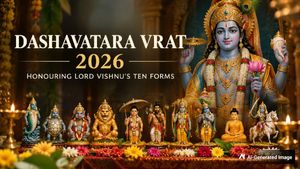 Dashavatara Vrat 2026: Everything To Know About Tithi, Rituals, Fasting And The Ten Forms Of Lord Vishnu


Sai Satcharitra Of Shirdi Sai Baba-Bhakti Yoga-(Chapter 45)


It is well-known, that Sai Baba had enjoined Kakasaheb Dixit to read daily two works of Shri Ekanath: (1) Bhagawatam and (2) Bhawartha Ramayan. Kakasaheb read these daily while Baba was living and he followed the practice even after Baba's passing away. Once in Kaka Mahajani's house in Choupati, Bombay, Kakasaheb was reading Ekanathi Bhagawat in the morning.
Madhavarao Deshpande alias Shama and Kaka Mahajani were then present and listened attentively to the portion read, viz., the 2nd Chapter, 11th skandha of the book. Therein the nine Nathas or Siddhas of the Rishabha family, viz., Kavi, Hari, Antariksha, Prabuddha, Pippalayan, Avirhotra, Drumil, Chamas and Karabhajan expounded the principles of the Bhagawat Dharma to King Janak. The latter asked all the nine Nathas most important questions and each of them answered them satisfactorily.
The first, i.e., Kavi explained what is Bhagawat Dharma; Hari, the characteristics of a Bhakta (devotee); Antariksha, what is Maya; Prabuddha, how to cross Maya; Pippalayan, what is Para-Brahma; Avirhotra, what is Karma; Drumil, the incarnations of God and their deeds; Chamas, how a non-devotee fares after death; Karabhajan, the different modes of worship of God in different ages. The substance of all the exposition was that in this Kali age, the only means of liberation was the remembrance of Hari's (Lord's) or Guru's feet.
Sai Ram. A beautiful summarisation of a simple yet effective way of liberation - bhakti. Sri Narada's Bhakti Sutras also emphasise the same point. Sai also emphasised the importance of Bhakti and Prapatti / Saranagati (surrender). Sai Ram.
After the reading was over, Kakasaheb said in a despondent tone to Madhavarao and others - "How wonderful is the discourse of the nine Nathas on Bhakti or devotion. But at the same time how difficult it is to put it into practice Bhakti Yoga! The Nathas were perfect, but is it possible for fools like us to attain the devotion (Bhakti Yoga) as delineated by them? we won't get it even after several births, then how are we to get salvation? It seems that there is no hope for us."
Madhavarao did not like this pessimistic attitude of Kakasaheb. He said - "It is a pity that one who by his good luck got such a jewel (Guru) as Shirdi Sai Baba, should cry out so disparagingly; If he has unwavering faith in Shirdi Sai Baba, why should he feel restless? The Bhakti of the Nathas may be strong and wonderful, but is not ours' loving and affectionate? And has not Shirdi Sai Baba told us authoritatively that remembering and chanting Hari's and Guru's name confers salvation? Then where is the cause for fear and anxiety? Kakasaheb was not satisfied with Madhavarao's explanation. He continued to be anxious and restless, the whole day, thinking and brooding over how to get the powerful Bhakti of the Nathas. Next morning, the following miracle took place.
Sai Satcharitra
Sai Satcharitra is an autobiographical account of Shirdi Sai Baba. This write up is an excerpt from Chapter 45 of Sai Satcharitra which talks about the importance of reading Eknathi Bhagawat and the essence of Bhakti Yoga in it.

 Continue with Google

