




 Click it and Unblock the Notifications


Latest Updates
-
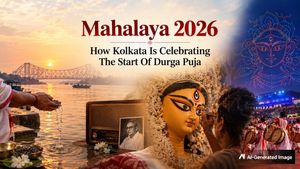 Mahalaya 2026: How Kolkata Is Celebrating The Start Of Durga Puja
 -
 Bigg Boss 20 Eviction Alert: No Elimination, Two Wild Cards Enter
 -
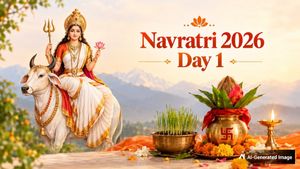 Navratri 2026 Day 1: Maa Shailputri Puja, Ghatasthapana Muhurat, Colour, And Significance
 -
 World Mental Health Day 2026: Why ‘Just Talk To Someone’ Isn’t A Student Mental Health Strategy
 -
 World Mental Health Day Special: People Share The Hurtful Words They Still Remember, And Experts Explain Why
 -
 World Mental Health Day 2026: How Indian Families Can Replace ‘Log Kya Kahenge?’ With ‘How Can We Help?’
 -
 Sarva Pitru Amavasya 2026: Date, Significance, Rituals And How To Observe The Day
 -
 Navratri 2026: Vastu Consultant Gauri Jain Shares 9 Vastu Tips To Prepare Your Home Before Ghatasthapana
 -
 World Mental Health Day 2026: Is Saying No At Work Good For You?
 -
 World Mental Health Day 2026: Is It Time To Switch Off After Work?


Navratri Across India: How Day 1 Is Celebrated In Different States

The nine nights of Navratri start tomorrow, Sunday, 11 October, but the first day does not look the same everywhere. In one state, a clay pot is installed at home. In another, a royal festival opens on a hilltop. In a third, the dancing begins at dusk and goes on past midnight.
Navratri means "nine nights", and the name is about the only thing that stays fixed. Here is how Navratri Day 1 is marked across the country.

The Common Thread: Ghatasthapana
Across much of India, Day 1 begins with Ghatasthapana. It is the installation of a clay pot sown with barley, which is watered through the festival and sprouts by the end. For Delhi, the muhurat on 11 October is 6.19 am to 10.12 am. Devotees also worship Maa Shailputri, the first form of Durga, and many begin a fast.
Gujarat: The Dancing Begins

In Gujarat, Navratri is danced. Garba and dandiya raas are performed in concentric circles around a perforated earthen lamp called the garbo, from late evening until well past midnight. Garba starts slowly and builds, and later the dandiya sticks come out. Day 1 is the first of nine such nights.
Maharashtra: A Pot, Seeds And A Colour
In Maharashtra, an earthen pot is installed at home and seeds are sown around it, and they sprout over the nine days. Day 1 is also the start of a colour code. In Mumbai, many people dress in a different assigned colour each day, and offices and local trains quietly follow the colour of the day. This year, Day 1 falls on a Sunday, so the colour is orange.
Karnataka: A Royal Beginning At Mysuru
In Karnataka, Day 1 has an official opening. Mysuru Dasara is inaugurated at Chamundeshwari Temple on Chamundi Hill at 11.50 am on 11 October. The inauguration falls during the auspicious Dhanur Lagna, and cultural programmes begin the same evening at Mysuru Palace.
Known as the Nada Habba, or state festival, it was originally begun by the rulers of the Vijayanagara Empire in the 14th century. The famous Jamboo Savari procession follows on 21 October, according to the state schedule.
Tamil Nadu, Andhra Pradesh And Telangana: Dolls And Flowers
In the south, the festival comes indoors. In Tamil Nadu, Karnataka and Andhra Pradesh, households arrange Golu or Bommai Kolu, tiered displays of dolls on odd-numbered steps. Women invite friends and family to see the display, exchange gifts and sing devotional songs. In Tamil Nadu, sundal, made from a different pulse each day, and sweet pongal are shared as offerings.
Telangana has its own flower festival too, Bathukamma, in which women stack flowers into a tiered arrangement.
West Bengal: A Day Earlier
Bengal does things differently. In West Bengal, Odisha, Assam and Tripura, the last four days are Durga Puja, a distinct festival with its own calendar, pandals and iconography. The season opens with Mahalaya, which fell on 10 October, and the puja rituals themselves begin on Shashthi, on 16 October.
North India: Fasts And Ramlila
In much of North India, Day 1 is quieter and more devotional: Ghatasthapana, a fast and prayers at home or in temples. The festival also coincides with Ramleela performances depicting episodes from the Ramayana, ending in Dussehra celebrations. Kanya Pujan comes later, on Ashtami or Navami.
Bottomline
A pot of sprouting barley in Maharashtra, a lamp at the centre of a Garba circle, a hilltop inauguration in Mysuru: the first night of Navratri takes many forms, but all begin with the same idea of welcoming the Goddess. By the time Vijayadashami arrives, each region will have told the story in its own way.

 Continue with Google

