




 Click it and Unblock the Notifications


Latest Updates
-
 Why Casual Games Are Perfect for Quick Online Play
 -
 World Menopause Day 2026: Theme, Significance And What Research Reveals About Menopause In India
 -
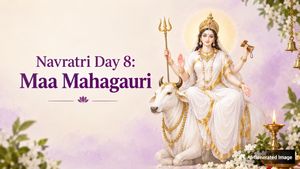 Navratri Day 8: Maa Mahagauri Puja, Colour, Rituals And Significance
 -
 Dussehra 2026: The Difference Between Vijayadashami And Ravana Dahan
 -
 Veteran Musician Deva Dies At 75: Life And Legacy Of Thenisai Thendral
 -
 Navratri Fasting Diet: How To Stay Energised And Full Through The Day
 -
 Kavya Maran Wedding In Greece? Date, Venue, and What Is Confirmed
 -
 Navratri Fasting 101: What To Eat, What To Skip, And How To Avoid Acidity And Headaches
 -
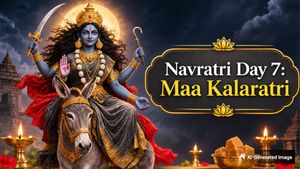 Navratri Day 7: Maa Kalaratri Puja, Colour, Rituals And Significance
 -
 Office To Dandiya Nights: One Quick-Change Outfit Formula For Navratri 2026


When Is Masan Holi 2024? Know About Date, And Significance Of Bhasma Holi or 'Holi of Pyre Ashes' In Varanasi

Bhasma Holi or Masan Holi also known as the "Holi of Pyre Ashes," is a unique and spiritually significant festival celebrated in the ancient city of Varanasi, also known as Benaras. This festival falls on the day after Holi, known as "Rangbhari Ekadashi" or "Phalgun Krishna Ekadashi."
Holi is a festival that commemorates the love between Radha and Krishna. However, in Uttar Pradesh's Banaras, the celebration takes a unique turn with its own versions of the festival, deeply associated with Lord Shiv, the city's revered deity.

Bhasma Holi is a deeply rooted tradition in Varanasi, where devotees and priests come together to play Holi using sacred ash (bhasma) instead of colorful powders or gulal. Through this post, let us know the history, significance of Bhasma Holi in Varanasi and when it will be celebrated in 2024.
Masan Holi Or Bhasma Holi 2024 Date
This year Masan Holi will be celebrated on Thursday, 21 March 2024 in Varanasi.
Masan Holi Or Bhasma Holi 2024: History And Significance
Banaras, a city synonymous with spiritual liberation, hosts three distinct versions of Holi: the conventional Holi, Rangbhari Ekadashi, and the peculiar Masaan ki Holi. While the first resembles a nationwide celebration, the latter two are exclusive to Kashi, filled with local fervour and traditions.
The festival holds immense significance for the people of Varanasi, as it is believed to cleanse the soul and bring spiritual enlightenment. Playing Holi with bhasma, or sacred ash, is considered a form of worship and devotion to Lord Shiva, who is revered as the supreme deity in Varanasi.
Masan Holi Or Bhasma Holi 2024: Rituals, Celebrations
On the day of Bhasma Holi, devotees and priests gather at various temples and ashrams in Varanasi to participate in the celebrations. The festival commences with a grand aarti at the Masaan temple near Manikarnika Ghat, setting an electrifying ambiance as devotees anoint the Shivling with ashes. The ash used during Bhasma Holi is typically collected from the cremation grounds, symbolizing the cycle of life, death, and rebirth.
This is followed by the celebration of Rangbhari Ekadashi, five days before Holi, symbolizing the union of Lord Shiva and Goddess Parvati. It's a time when divine and mortal realms merge in celebration, leading up to the day Shiva visits Masaan to celebrate with his ghostly attendants, illustrating the stark contrasts and complexities of life and renunciation.
On this day, locals, alongside Naga Sadhus and Aghoris, gather to partake in this extraordinary celebration, smearing ashes in a display of devotion and joy.
Unlike the colorful and vibrant celebrations of Holi in other parts of India, Bhasma Holi is a more subdued and spiritual affair. Devotees and priests gently apply bhasma on each other's faces, hands, and bodies, chanting hymns and mantras dedicated to Lord Shiva. The use of bhasma is believed to purify the body and soul and is considered a form of blessing from the deity.
Masan Holi Or Bhasma Holi 2024: Legends
According to mythology, the inception of Bhasma Holi, also referred to as 'Masane Holi,' is attributed to Lord Shiva himself. Legend has it that after bringing Mother Parvati to Kashi, Shiva indulged in a conventional Holi celebration with colors and gulal. However, unable to share these moments with the crematorium's inhabitants - ghosts and spirits - he reserved a day after Rangbhari Ekadashi to celebrate with them, marking the beginning of Masaan ki Holi.
By playing Holi with bhasma, devotees express their devotion to Lord Shiva and seek his blessings for health, prosperity, and happiness. Bhasma Holi is not just a festival; it is a deeply ingrained tradition that reflects the spiritual and cultural heritage of Varanasi, making it a truly unforgettable experience for all who participate.

 Continue with Google

