



 Click it and Unblock the Notifications



Latest Updates
-
 Festive FOMO Is Changing Dating Habits, Survey Finds Nearly Half Of Singles Are Delaying Matches
-
 Tiger Shroff Firing Incident: What Happened In Mumbai's Juhu? Latest Updates
-
 Eat, Celebrate, Repeat: 6 Ayurvedic Tips To Keep Your Digestion Happy This Navratri 2026
-
 Breast Cancer Awareness Month 2026: Expert Explains The Emotional Toll Of Breast Cancer
-
 Navratri 2026 Food Hopping In Delhi NCR: 7 Places To Explore For A Taste Of Festive Flavours
-
 Why Casual Games Are Perfect for Quick Online Play
-
 World Menopause Day 2026: Theme, Significance And What Research Reveals About Menopause In India
-
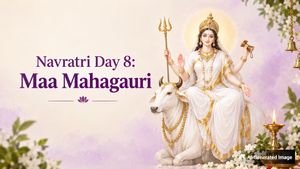 Navratri Day 8: Maa Mahagauri Puja, Colour, Rituals And Significance
-
 Dussehra 2026: The Difference Between Vijayadashami And Ravana Dahan
-
 Veteran Musician Deva Dies At 75: Life And Legacy Of Thenisai Thendral


Maha Navami Significance: Why The Ninth Day Of Navratri Matters Most

Nine nights of fasting, vigil and prayer. Then one day that devotees treat as the summit.
Maha Navami, the ninth day of Sharad Navratri, is observed on Monday, 19 October, according to the Delhi calendar, while Durga Puja celebrations in eastern India mark it on 20 October, a day before Vijayadashami. Whichever date a household follows, the Maha Navami significance stays the same: it is where devotion turns into fulfilment.

Because the lunar tithis of Ashtami and Navami overlap this year, some calendars place the two days very close together. Families who follow a local panchang, or the guidance of a family priest, will usually find the exact puja timings there.
Maha Navami Significance Begins With A Victory
Tradition holds that this is the day Goddess Durga completes her triumph over the buffalo demon Mahishasura. In Bengal's telling, the battle reaches its peak in the narrow window between Ashtami and Navami, a 48-minute juncture marked by Sandhi Puja. Details vary from region to region. The spirit does not.
For devotees, the story is less about a demon than about what he stands for. Navami is when the nine-day penance is believed to bear fruit, and the faithful say that the closer the worship comes to its end, the more deliberate it becomes.
The Goddess Who Grants

The ninth form worshipped is Maa Siddhidatri, whose name translates as the giver of siddhis. Devotees believe her grace bestows the eight supernatural accomplishments described in yogic tradition. She is traditionally depicted seated on a lotus, a symbol of purity and spiritual attainment.
Her place at the end of the sequence is deliberate. After eight forms associated with strength, austerity and courage, Siddhidatri is seen as the one who completes the journey. Devotees often describe the day's prayers as gratitude rather than petition, a shift that sets Navami apart from the earlier days of asking and austerity.
Nine Girls, One Blessing
Few rituals are as widely observed as Kanya Puja. In it, young girls are worshipped as manifestations of the Goddess, then offered food and gifts. Families perform it on either Ashtami or Navami, depending on custom.
Many homes also hold a Navami homa, a fire ritual meant to mark the close of the worship. In many traditions, the day includes a recitation of the complete Durga Saptashati, the scripture that narrates the Goddess's battles. Devotees often describe it as the moment the house exhales after nine days of discipline.
When Tools Become Sacred
Across much of southern India, Navami is also Ayudha Puja. Tools and instruments are worshipped as symbols of divine energy. Books, vehicles, kitchen implements and office equipment are cleaned, decorated and set aside from work for the day.
The observance is often paired with Saraswati Puja, when books and instruments of learning are placed before the Goddess of knowledge. It is a quietly radical idea. The objects that earn a living, and the ones that educate, are honoured alongside the Goddess herself.

 Continue with Google


