




 Click it and Unblock the Notifications


Latest Updates
-
 Pandal Hopping In Bengaluru 2026: 7 Durga Puja Venues Worth Your Time
 -
 Navratri 2026 Fasting Food: Is Daily Sabudana Really the Best Choice?
 -
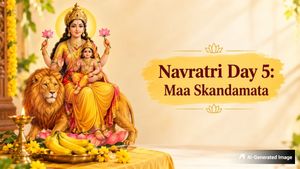 Navratri Day 5: Maa Skandamata, Puja, Rituals, Colour, SIgnificance, And Rituals
 -
 “Discharge Does Not Mean Cured”: A Rehab Specialist Explains Post-Surgery Care
 -
 Delhi Durga Puja Pandals 2026: Where To Go For Grand Themes, And Where To Escape The Crowd
 -
 Regular Periods Don’t Always Mean Everything Is Fine, Says Gynaecologist
 -
 Koffee With Karan 9: Salman Khan Opens Up About Fatherhood In Season Premiere
 -
 Bigg Boss 20: Is Nakul Dhull In The Secret Room After Physical Clash With Gullu?
 -
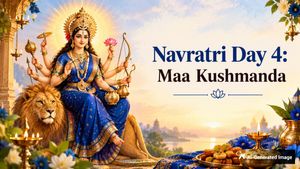 Navratri Day 4: Maa Kushmanda Puja, Colour, Rituals And Significance
 -
 OTT Releases This Week (October 12–18): What To Watch On Netflix, Prime Video, JioHotstar And ZEE5


Ganesh Chaturthi 2026: Date, Muhurat, Rituals, Significance and Puja Guide

Every year, sometime around late August or September, homes across India begin clearing out a corner. A red cloth goes down. Marigolds get strung along doorframes. And then, on one carefully chosen morning, Ganesha comes home. In 2026, that morning falls on Monday, 14 September, when Ganesh Chaturthi returns to mark the birth of the elephant-headed god known as Vighnaharta, the remover of obstacles.

The date shifts each year because it follows the Hindu lunar calendar, landing on the Shukla Paksha Chaturthi of the Bhadrapada month. This year, the Chaturthi tithi begins at 7:06 am on 14 September and runs until the following morning.
The Muhurat: When To Bring Bappa Home
Timing matters enormously in Ganesh Chaturthi tradition, since Lord Ganesha is believed to have been born during the midday, or Madhyahna, period. For 2026, the most auspicious Sthapana muhurat in Delhi falls between roughly 11:02 am and 1:31 pm, though this shifts slightly by city, closer to 11:16 am-1:44 pm in Pune, and 10:51 am-1:18 pm in Chennai. Families are advised to check their local panchang, since even a few minutes' difference in longitude can move the window.
There is one thing to actively avoid on the day: looking at the moon. Legend holds that Ganesha, after a fall from his mouse-vahana, was mocked by the moon god Chandra and cursed anyone who glimpsed the moon on Chaturthi to face false accusations. Devotees who do catch sight of it are told to recite the Syamantaka Mani shloka as a remedy.
The Rituals: Sthapana to Visarjan

The celebration unfolds in stages. A day before, homes are cleaned and decorated with rangoli and torans. On Chaturthi morning, the idol is brought home, welcomed with an aarti at the doorstep, then installed during the chosen muhurat through Prana Pratishtha - the ritual of invoking life into the idol with mantras and akshata (rice). Modak, Ganesha's favourite sweet, takes centre stage on the offering plate, often alongside 21 durva grass blades, considered especially dear to him.
Some families keep Ganesha for a day and a half, others for five, seven, or the full ten days of Ganeshotsav, which this year concludes with Visarjan - the idol's immersion - on Friday, 25 September, Anant Chaturdashi.
Significance of Ganesh Chaturthi
Ganesh Chaturthi is at its most visible in Maharashtra, where it grew from a home ritual into a public movement - associated with freedom-era community organising - and now fills streets with towering pandals and processions chanting "Ganpati Bappa Morya." But the festival's reach has widened well beyond the state; it is a public holiday in Goa, Gujarat, Karnataka and Odisha too, and in South India, where it is often called Vinayaka Chaturthi, celebrations tend to stay closer to home, with quieter family pujas replacing the pandal spectacle.
What ties both versions together is the same idea: inviting in the god of new beginnings before starting anything else, then letting him go, trusting he'll return.
Bottomline
Ganesh Chaturthi isn't really about a single auspicious hour, however carefully it's calculated. It's about the ten days in between - the daily aartis, the modak-making, the sense of a guest who's also family. The muhurat gets Bappa through the door. Everything that follows is why people keep bringing him back, year after year.

 Continue with Google

