




 Click it and Unblock the Notifications


Latest Updates
-
 Shakira Debuts a New Gaurav Gupta Breastplate, and This Time It's Gold and Banarasi
 -
 Can Hair Oils Prevent Premature Graying or Improve New Hair Growth?
 -
 Can Any Blood Group Donate Organs to Any Patient? A Transplant Expert Explains
 -
 Everyone's Talking About Rahane's Igatpuri Home. Here's Why The Town Itself Is Worth The Trip
 -
 You Don't Need Surgery for Every Sinus Problem: When Is FESS Actually Necessary?
 -
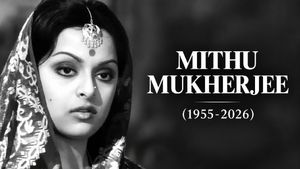 Who Was Mithu Mukherjee? Veteran Bengali Actress Passes Away At 71
 -
 Ahmedabad Police Flag Fraud Risk Behind Viral 'Rent A Garba Partner' Ads
 -
 Vidya Balan’s Jailer 2 Entry As Kantha: From Silk To Manjulika, A Look At Her Unconventional Roles
 -
 Samay Raina Has Now Denied Dating Rumours With Two Women In Three Months
 -
 Kareena Kapoor Turns 46: From Size Zero To Fine Lines, The ‘Daayra’ Actress Is Choosing To Age Without Apology


The Final Verdict By The Pandava Prince Yudhishthira In Mahabharata: Know About The Concept Of Dharma


Pandavas and Kauravas, soon after completing their archery and weaponry training from Dronacharya and Kripacharya, Bhishma and Dhritarashtra decided to choose the crown prince for the city of Hastinapur. Now the major choice fell between Duryodhana (the eldest of Kauravas) and Yudhishthira (the eldest of Pandavas) out of which the best would rule the nation.
Case Of Murder
It was coincidentally at this time; somebody was murdered due to the scheming plans of four people who belonged to four different strata of society. Bhishma at this juncture, thought of raising a question in the court, as he thought that was the time to test the mettle of both princes. Bhishma asked both the princes to hear the case of murder and suggest a suitable verdict as per the dharma they had learnt under Dronacharya.
It was a case where a Brahmin, a Kshatriya, a Vaishya and a Sudra were embroiled in this case, as they were primarily responsible for the killing of the innocent. All four culprits were called to the court and were lined up in front of Yudhishthira. Duryodhana enthusiastically blurted out that all those four people deserved the punishment of getting hanged for what they had committed.
Yudhishthira's Judgment
When Yudhishthira's turn arrived, he slowly said Since Sudras are not exposed to Dharma shastras, he is not aware completely of what is wrong and what is right. Hence, he can be awarded the mildest punishment of 50 whips and to be released. The Vaishya was to be punished a little more severely because he was exposed considerably to the dharma shastra. He had to be whipped 50 times and imprisoned for 5 years. A kshatriya who is much more aware of dharma is a protector of dharma in the kingdom and if he errs, he needs stricter punishment, say, 100 whips and incarceration for 12 years. Brahmin is not supposed to even utter the word violence and he is thoroughly knowledgeable on the dharma shastras. Since he has committed this sin, he should be hanged. But being a Kshatriya, I can't punish a brahmin. Hence, I would ask the brahmin to choose his own mode of punishment that is ordained for such a crime by the shastras.
Response To The Final Verdict
This judgement was treated with a standing ovation and amid cheers from the crowd, all the elders appreciated his knowledge and wisdom at such a young age. Everyone at the court felt happy and considered Yudhishthira apt for the role of a king. Bhishma was immeasurably pleased with the Pandava prince's conduct and judgment.
Dharma is not only the precept that is written in the books or as writing on the wall. It is to be intelligently applied to each and every situation that we come across and judge the actions and reactions based on that.

 Continue with Google

