




 Click it and Unblock the Notifications


Latest Updates
-
 Vijay Deverakonda Says Rashmika Mandanna Tells Him ‘I Love You’ 10-15 Times A Day — A Psychologist Explains
 -
 Culturally Matched NDIS Support in Melbourne: Where to Start
 -
 58-Year-Old DonnaJean Wilde's Plank Record: 4 Benefits For Women 50+
 -
 Navratri 2026: Can You Exercise While Fasting? A Doctor Says What To Keep In Mind
 -
 Is Stress Quietly Affecting Your Heart? Grand Master Akshar Shares 5 Yoga Practices You Must Try
 -
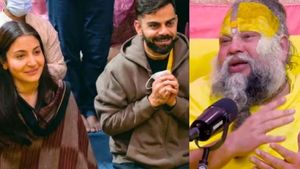 Virat Kohli-Anushka Sharma’s ₹5 Crore Premanand Maharaj Ashram Visit Claim: Is It True?
 -
 UK07 Rider Case: What Happened Between Anurag Dobhal And His Wife's Cousin In Dehradun
 -
 Who Is Shannon K? The Singer Linked To A Bigg Boss 20 Wildcard Entry
 -
 Russia Plague Scare: Is India At Risk? What WHO Says About The Threat
 -
 After Weeks Of Rumours, Kiara Advani's Second Pregnancy Is Official


Do Hindus Really Have 33 Crore Deities?

Why do Hindus worship so many Gods? Are Hindus nature worshippers? Do Hindus really have 33 crore deities? These are some of the most obvious questions which people from other faiths ask you. In fact, these questions are puzzling even to the people who have grown up following Hindu traditions.
Hinduism has often been labelled as a polytheistic religion. According to the beliefs there are around 33 crore Gods and Goddesses including the incarnations of various deities. But this is far from being true. Hinduism believes in worshipping the one Supreme Being who is known by different names. The difference in deities is due to the differences in regions and cultures.

So, in a way Hinduism can be called both monotheistic and henotheistic. Henotheism defines Hinduism better which means worshipping one God without denying the existence of other Gods. Therefore Hinduism advocates one simple view that there is only one God who can be reached by following different paths.
Coming back to the initial question, do Hindus really have 33 crore deities? Read on to find out.
The Four Denominations
Hinduism has four principal denominations namely: Shaivism, Shaktism, Vaishnavism and Samartism. The Shaivas realise God in the form of Shiva. For Vaishnavites, God is Vishnu. Likewise for Shaktas, the female form Shakti is the Supreme Being. Samartas see all the deities as the reflection of one God. So, the choice of deity is left to the devotee. Due to this diversity, Hinduism is also tolerant of other religions, respecting the fact that all religions lead to the same God.
The Ardhanarishvara
When it comes to the form of the Supreme Being, Hinduism believes that God exists in Ardhanarishvara form. This form is half man and half woman. It thus, advocates the view that the male form is incomplete without the female part and vice-versa. So, the nature works perfectly only when the two forms work in union with each other.
God Is Within
One of the most important teachings of Hinduism is that God does not reside somewhere in the heaven, outside the being. God resides within every individual. God resides in each individual, waiting to be discovered by the individual.
One God
Henotheism is the best way to understand the concept of Hinduism. It means worshipping one God without denying the existence of others. Hindus believe in one pervasive God who energises the whole Universe. One can reach this Supreme Being through different paths, following different faiths. Coming to nature worship, Hindus worship every aspect of Nature. The trees, animals, rivers, forces etc. because they believe that God is present in all these forms and provides nourishment to all. There may be different names for the Divine but that does not mean that there are different Gods.
So, we may conclude that we may find God through 33 crore different ways but He is only one, the Supreme Being.

 Continue with Google

