




 Click it and Unblock the Notifications


Latest Updates
-
 PCOS Is Getting Younger: Why More Teenagers Are Being Diagnosed Than Ever Before
 -
 National Nutrition Week 2026: What To Eat To How To Eat — Expert Shares 7 Ayurveda Rules For Mindful Nutrition
 -
 Kareena Kapoor's Power Dressing At ‘Daayra’ Trailer Launch: 6 Bollywood Actresses Who Owned The Blazer Trend
 -
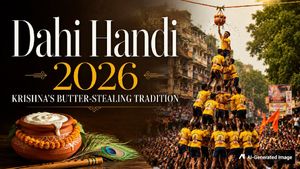 Dahi Handi 2026: Why Govindas Form Human Pyramids And What The Tradition Really Means
 -
 Teachers Day 2026: 7 Things Students Can Teach Their Teachers In Return
 -
 Happy Teacher's Day 2026: 100+ Wishes, Messages, and Captions To Say Thank You
 -
 Teachers’ Day 2026: Dr Sarvepalli Radhakrishnan's Story And Why We Celebrate His Birthday
 -
 New OTT Releases This Week (31 Aug-6 Sept): What To Watch Across Netflix, JioHotstar, Prime Video And SonyLiv
 -
 Happy Janmashtami Wishes 2026: 50+ Quotes, Captions, Posts For Instagram, Facebook, WhatsApp And X
 -
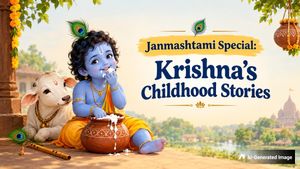 Beyond Makhan Chor: 10 Lesser-Known Stories From Krishna's Childhood


Bihu 2023: Bihu Dance Rituals That Take You To A Trance

It was during a Rongali Bihu event, a very special occasion, during the new year, that King Ahom King Rudra Singha in 1694 had arranged Bihu performance by the Bihu dancers which actually inspired the people of Assam to perform it every year with verve and gusto. The young boys and girls don the colourful traditional costume of mekhela chador and express their youthful zest and joy through brisk steps and rapid hand gestures and movements.

They display traces of zesty fun of the Nagas in their dances and "Khamba Lim" is one such dance form where two groups of men and women stand in two rows and then begin moving to the music. The liveliness of this dance inspires the onlookers to be a meaningful part of this celebration.
Bihu is essentially folk that celebrates the agricultural society. There are three Bihu celebrations, the Bohag Bihu, Magh Bihu and Kongali Bihu and these dances are meant for three seasons, namely spring, winter and Autumn respectively. Assam is a diverse cultural medley that requires to strengthen its cultural diversity and unity at the same time. They are performed on the Brahmaputra banks where rhythms and drums (dhol) and melody of flute ( pepa) occupy the air.
The striking Costumes You Just Cant Stop Looking At
Boys are dressed in dhotis and Gamocha a headgear for the head, which are both brightly coloured with needlework done in different patterns on the two ends. Girls wear the chador and mekhela. Mekhela is a cylindrical shaped costume that is meant to cover the lower body. Chador is more or less like a dress that is used for the upper body. They wear a blouse under the chador. Commonly silk, and cotton are used to stitch these dresses. Girls also embellish their faces with beautiful jewellery and intertwine their braids with strings of flowers that adds to the colour of the attire.
Pulse Stopping Music Of Dhol And Baanhi
Bihu Dance is accompanied by music and this does not fall behind. Instruments like khole, pepa, taal, toka or harp, and xutuli, gogona and baanhi.
The dance begins with a slow tempo, and gradually with accompanying drums, hornpipes, harps and bamboo slappers.Gradually the momentum picks up. Although the songs are based on agricutral evetns, at the same time it focuses on graceful dance movments and theme of love and romance.
This dance for a while, brings our attention to the myriad varities of colourful Girls wear a headgear by name Gitigee, Agoo ( mekhala) and Lagu Richa ( chador) which are accompanied by the jewellery. Men wear Dhoti Gomocha (towel) and Chapkan (Shirt). Well known dance forms of Bihu are about 30 in number and Sattriya dance is one of them.

 Continue with Google