




 Click it and Unblock the Notifications


Latest Updates
-
 Bigg Boss 20 Qazi Touqeer’s Funny Take On Situationships And Benching: A Peek Into Today’s Relationship Trends
 -
 Ralph Lauren Under Fire As Spring 2027 Zardozi-Style Gown Sparks Indian Craft Credit Row
 -
 Ganesh Chaturthi 2026: Make Your Festive Spread Colourful With Chef Rubal Pupneja’s Gulkand Rainbow Modak
 -
 Mahira Khan Announces Second Pregnancy At 41: 'Raees' Actor Flaunts Baby Bump At TIFF 2026
 -
 BRICS 2026 Summit: Healthy Lifestyle Mission Takes Centre Stage — What It Means For Everyday Indians
 -
 Varaha Jayanti 2026: Significance And The Story Of Lord Vishnu’s Boar Avatar
 -
 Clay vs Plaster Of Paris Ganesha Idols: What's The Environmental Difference?
 -
 What Is Leheriya? The Rajasthani Textile Behind Kareena Kapoor's Saree Inspired By Sister Karisma's ‘Zubeidaa’
 -
 Sidharth Malhotra In 'The Vvaan': Is The Story Of Bihar’s Mysterious Van Devi Temple True?
 -
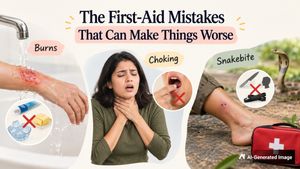 World First Aid Day 2026: Why Toothpaste On Burns And Sucking Out Snake Venom Are Both Wrong


World Breastfeeding Week: Travelling While Breastfeeding — Tips For Flights, Road Trips And Public Places

The panic usually sets in a day before departure - not about packing, but about the feed. Will there be a private corner at the boarding gate? What happens if the baby cries through take-off? Every year, mothers cut short holidays, skip weddings or dread work trips because breastfeeding and travel feel incompatible. They aren't.

This World Breastfeeding Week, observed from 1 to 7 August under the theme "Breastfeeding for a Sustainable Start in Life: Strengthen What Works," the World Health Organization is pushing exactly this point - that the systems and knowledge to support breastfeeding already exist. They simply need to travel with the mother.
Flights: Timing The Feed Matters More Than The Seat
Ear pain during take-off and landing is one of the most common reasons infants cry mid-flight, and feeding is the fix most paediatric bodies recommend. According to guidance from Australia's Raising Children Network, breastfeeding during take-off and landing helps ease this discomfort, though babies must remain in an infant seatbelt while feeding.
Carrying expressed milk is where most confusion sits. The general rule across most airlines is that expressed milk must be carried in liquid form, not frozen, in individual containers - and that it will go through security screening separately from other liquids, regardless of whether the baby is travelling with the mother. Because these rules vary by airline and by country, it's worth checking the specific carrier's policy before departure rather than assuming a blanket standard applies. Requesting ice from cabin crew early in the flight, rather than after the milk has already warmed, also helps.
Road Trips: Build The Stop Into The Route, Not Around It

Unlike flights, road trips offer control - but only if that control is planned for. Nursing-focused guidance from the University of Maryland Medical System suggests identifying rest stops or safe parking areas in advance, rather than searching for one mid-cry.
A few habits make the difference between a stressful drive and a manageable one:
- Nurse just before setting off, buying two to three hours before the next feed
- Mark rest stops or safe pull-over points on the route beforehand, rather than improvising
- Keep a manual backup pump in the car in case of long stretches without charging points
- Pack a wet bag for soiled cloths or leaking bottles so the car stays usable
- For longer drives, pumping in the car and storing milk safely matters just as much as the feed itself - a cooler bag with ice packs keeps expressed milk usable for hours without a fridge.
Public Places: The Discomfort Is Often More Social Than Logistical
In India, the biggest barrier to feeding on the move usually isn't access - it's stigma. Coverage of Indian mothers' experiences with public breastfeeding has repeatedly pointed to one workaround: a dupatta, scarf or dedicated nursing cover, carried specifically to make feeding on the move less stressful in crowded or unfamiliar places.
Malls, airports and larger railway stations increasingly have dedicated nursing rooms, and apps like Mamava now map lactation-friendly spaces across several international airports. Where such spaces aren't available, feeding-friendly clothing - wrap dresses, tops with side openings - can reduce the friction of finding a "perfect" spot before feeding.
The reassurance worth repeating: breastfeeding in public is not indecent, and a mother does not need permission to feed a hungry infant, whether she's at a departure gate or a highway dhaba.
What To Pack, Regardless Of Mode
- Nursing cover or lightweight muslin wrap
- Extra nursing pads and a spare nursing bra
- Insulated cooler bag with ice packs for expressed milk
- Manual backup pump
- A wet/dry bag for soiled items
- Snacks and water - supply dips faster when the mother is dehydrated or under-fed
Bottomline
Travel doesn't have to interrupt breastfeeding - it has to be planned around it, the same way a mother plans around any other need on a trip. This World Breastfeeding Week's message - that the support systems already work, they just need reinforcing - applies here too: a cooler bag, a marked rest stop, a nursing cover packed within reach. None of it is complicated. It just needs to be there before the baby is hungry, not after.

 Continue with Google

