




 Click it and Unblock the Notifications


Latest Updates
-
 Iris Young Minds Initiative: How A Noida CSR Programme Is Opening Up Talk On Student Stress
 -
 Lal Hit Janta Party Explained: Who Is Behind The Rival to the Cockroach Janta Party
 -
 Barbara Palvin In Victoria’s Secret Fashion Show Six Weeks After Birth
 -
 Maha Navami Significance: Why The Ninth Day Of Navratri Matters Most
 -
 Festive FOMO Is Changing Dating Habits, Survey Finds Nearly Half Of Singles Are Delaying Matches
 -
 Tiger Shroff Firing Incident: What Happened In Mumbai's Juhu? Latest Updates
 -
 Eat, Celebrate, Repeat: 6 Ayurvedic Tips To Keep Your Digestion Happy This Navratri 2026
 -
 Breast Cancer Awareness Month 2026: Expert Explains The Emotional Toll Of Breast Cancer
 -
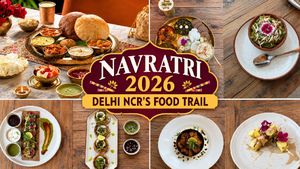 Navratri 2026 Food Hopping In Delhi NCR: 7 Places To Explore For A Taste Of Festive Flavours
 -
 Why Casual Games Are Perfect for Quick Online Play


Homemade Foods For Infants Not Always A Healthy Choice: Study

Home-cooked meals, specifically made for infants and young children, are not always healthier than commercially available baby foods, a new research suggests.
The findings indicated that home-cooked meals, which are often perceived as the best option, usually exceed energy density and dietary fat recommendations.
Home-cooked meals also provided 26 per cent more energy and 44 per cent more protein and total fat, including saturated fat than commercial products.
"Unlike adult recommendations, which encourage reducing energy density and fats, it is important in infants that food is suitably energy dense in appropriately sized meals to aid growth and development," said Sharon A. Carstair from the University of Aberdeen in Britain.

In addition, home-cooked meals were found to be around half the price of commercially available ready-made meals.
While almost two-thirds (65 per cent) of commercial products met dietary recommendations on energy density, only just over a third of home-cooked meals did so, and over half (52 per cent) exceeded the maximum range.
Home-cooked meals contained more protein as well as included a greater variety of vegetables than ready-made meals, but commercial products contained a greater vegetable variety per meal, averaging three compared with two for home-cooked recipes.
Ready-made meals are a convenient alternative, but any parent looking to provide their child with a varied diet should probably not rely solely on ready-made meals, the researchers said.
"Dietary fats contribute essential fatty acids and fat soluble vitamins together with energy and sensory qualities, thus are vital for the growing child; however, excessive intakes may impact on childhood obesity and health," Carstair added.
For the study, the team compared the nutrient content, price and food group variety of 278 ready-made savoury meals, 174 of which were organic and 408 home-cooked meals made using recipes from 55 bestselling cookbooks designed for the diets of infants and young children.
While 16 per cent of the home-cooked meals were poultry based compared with 27 per cent of the ready-made meals, nearly one in five (19 per cent) were seafood based versus seven per cent of the ready-made meals.
On the other hand, a similar proportion (21 per cent) were meat based compared with 35 per cent of the commercial products and almost half (44 per cent) were vegetable based compared with around a third (31 per cent) of the ready-made meals.
However, "the high proportion of red meat-based meals and recipes and low seafood meals are of concern when dietary recommendations encourage an increase in oil-rich fish consumption and limitation of red and processed meats," said the paper published online in the journal Archives of Disease in Childhood.
Inputs from IANS

 Continue with Google

