




 Click it and Unblock the Notifications


Latest Updates
-
 Veteran Musician Deva Dies At 75: Life And Legacy Of Thenisai Thendral
 -
 Navratri Fasting Diet: How To Stay Energised And Full Through The Day
 -
 Kavya Maran Wedding In Greece? Date, Venue, and What Is Confirmed
 -
 Navratri Fasting 101: What To Eat, What To Skip, And How To Avoid Acidity And Headaches
 -
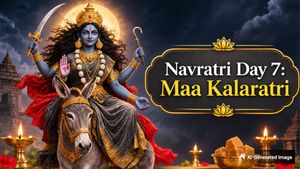 Navratri Day 7: Maa Kalaratri Puja, Colour, Rituals And Significance
 -
 Office To Dandiya Nights: One Quick-Change Outfit Formula For Navratri 2026
 -
 As ‘Ranabaali’ Hits Theatres, A Look At Rashmika Mandanna’s ₹1.31 Lakh Ivory Saree For Pre-Release Promotions
 -
 Durga Puja Pandals Mumbai 2026: 7 Stunning Celebrations To Explore From Matunga To Juhu
 -
 World Spine Day 2026: Is Your Phone Habit Causing Neck Pain? What To Know About Tech Neck
 -
 Breast Cancer Awareness Month 2026: Expert Explains Why Family History Isn't the Only Risk


Who Is Banu Mushtaq? Trailblazing Voice Of Muslim Women In Kannada Literature, Wins Booker Prize 2025

In a landmark moment for Indian literature, Banu Mushtaq, a Kannada writer, lawyer, and activist, etched her name into the annals of global literary history by winning the 2025 International Booker Prize along with translator Deepa Bhasthi for her powerful short story collection Heart Lamp. The book not only captured the attention of the jury, but also the hearts of readers worldwide.
What makes this win even more monumental is that it marks the first time a Kannada-language work has received this prestigious honour. "This feels like a thousand fireflies lighting a single sky - brief, brilliant and utterly collective," she said while talking about this remarkable moment.
Heart Lamp, published in 2025 is a collection of 12 poignant, women-centric stories set in southern India's Muslim communities. The stories, written between 2019 and 2023, were carefully selected and translated by Bhasthi, who began working on Mushtaq's translations in 2022. The book received widespread praise for its emotional depth, sharp social commentary, and cultural specificity.

However, for those unaware, behind this achievement lies a remarkable woman who has spent decades crafting poignant narratives centred on Muslim women, marginalized voices, and quiet resistance.
So, who is Banu Mushtaq? Her journey from a small town in Karnataka to the global literary spotlight is not just a story of artistic brilliance-it's a proof of resilience, conviction, and an unshakeable belief in the power of words.
Banu Mushtaq: Early Life And Education
Banu Mushtaq (ಬಾನು ಮುಷ್ತಾಕ್), born in 1948 in Hassan, Karnataka, is an acclaimed Indian writer, lawyer, and social activist whose literary contributions and fearless advocacy have left an indelible mark on the cultural and political landscape of southern India. Writing primarily in Kannada, Mushtaq's powerful stories have transcended linguistic boundaries, appearing in Urdu, Hindi, Tamil, Malayalam, and most recently, English.
Born into a Muslim household in Hassan, Mushtaq's early life was shaped by both tradition and resilience. At just eight years old, she enrolled in a Kannada-medium missionary school in Shivamogga. Despite the language barrier, she excelled quickly - mastering reading and writing Kannada within days, far surpassing the six-month goal set for her.
Challenging societal norms, she pursued higher education and made the independent decision to marry for love at the age of 26. Her linguistic versatility includes fluency in Kannada, Hindi, Dakhni Urdu, and English, enabling her to reach diverse audiences through both her activism and writing.
Mushtaq began her professional journey as a reporter with the influential Kannada weekly Lankesh Patrike, known for its progressive stance and fearless journalism. She also briefly worked with All India Radio in Bengaluru, further honing her skills as a communicator and storyteller.
Literary Contributions And Activism
Though she had an early interest in storytelling, Banu Mushtaq began writing seriously at the age of 29 during a period of postpartum depression. Writing became a lifeline - a form of self-exploration and healing. Her fiction, deeply rooted in real experiences, often centres on women's lives within Muslim communities, shedding light on patriarchy, societal expectations, and female agency.
Over the years, Mushtaq has published 6 volumes of short stories, 1 novel, a collection of essays and a poetry anthology. Her story Kari Nagaragalu was adapted into the critically acclaimed 2003 film Hasina, a rare Kannada-language film spotlighting Muslim women's lives.
Beyond literature, Banu Mushtaq has been a vocal advocate for social justice, particularly within Karnataka's Muslim communities. Since the 1980s, she has aligned herself with progressive causes, opposing religious fundamentalism, patriarchal practices, and communal tensions.
Key moments in her activism include:
- In 2000, Mushtaq and her family faced a three-month social boycott after she championed the right of Muslim women to enter mosques, a stance that sparked fierce backlash but brought national attention to gender inequities in religious spaces.
- Baba Budangiri Protests: In the early 2000s, she joined the Komu Souhardha Vedike, a civil society platform, to resist attempts to bar Muslims from visiting the syncretic Sufi-Hindu shrine in Chikmagalur, a flashpoint of communal tension.
- Hijab Rights Advocacy: In more recent years, Mushtaq has strongly supported the rights of Muslim girls to wear the hijab in educational institutions, a contentious issue in Karnataka. She has consistently spoken out against policies and sentiments that seek to marginalize religious identity in public life.

 Continue with Google

