




 Click it and Unblock the Notifications


Latest Updates
-
 Who Is Jay Singh Rathore? The X User Accused Over A Rs 1.5 Lakh Appeal
 -
 Eye Injury at Home: The Common Things Parents Should Never Put in a Child's Eye
 -
 Ganesh Visarjan 2026: What To Do With Puja Flowers And Nirmalya
 -
 Condoms, Pills, Copper-T or Hormonal IUD: Expert Answers How Do You Actually Choose?
 -
 The Missing Medal: How Mirabai Chanu Finally Completed Her Collection At The Asian Games
 -
 From Corsetry To Crystals: Breaking Down Rashmika Mandanna's Vogue World Gown
 -
 Govt Warns Against Overusing Antibiotics And Painkillers: No Prescription, No Pills
 -
 72nd National Film Awards: Yami Gautam's Message For Outsiders, Mammootty And Dhanush Honoured
 -
 Ayurveda Day 2026: An Expert Explains 7 Food Habits Ayurveda Would Ask You To Rethink
 -
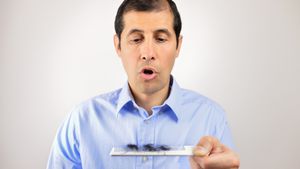 Stop Blaming the Monsoon Entirely for Your Hair Fall, Says This Dermatologist


Tolyamory: The Grey Area in Modern Relationships No One Talks About

You know that uncomfortable feeling you can't quite explain. There's no clear evidence of cheating. No messages you can point to, no boundaries that were explicitly broken. And yet, something doesn't sit right.
Maybe it's the emotional closeness with someone else. The secretive tone. The way certain conversations are conveniently left out.
And when you bring it up, the response is quick: "But I didn't do anything wrong."
That space, between what counts as cheating and what simply feels like it-is where a new term is quietly gaining attention: tolyamory.
What Is Tolyamory?

Tolyamory comes from the idea of "technical loyalty."
It describes a dynamic where someone stays within the defined rules of a relationship, but pushes emotional or behavioural boundaries just enough to avoid being called out for cheating.
In simple terms, nothing "officially wrong" happens. But it doesn't feel entirely right either.
It's not about open relationships or mutual agreements. Instead, it's about operating in grey areas-where intent, secrecy, and emotional investment start to matter more than labels.
Why It Feels Like Cheating (Even If It Isn't)
The discomfort that comes from tolyamory is not just based on the rules, but something more fundamental: trust.
- Relationships are not just based on what is or isn't allowed. They are based on feelings of safety, honesty, and respect.
- This is why if someone enters into a relationship that is secretive, overly close, or made to seem minor, it is seen as a betrayal, even if boundaries were not technically crossed.
The Rise of Grey Areas in Modern Dating

Dating today is more fluid than ever.
With social media, constant connectivity, and evolving relationship norms, boundaries aren't always clearly defined. What one person sees as harmless interaction, another may see as emotional betrayal.
Terms like tolyamory are emerging because people are trying to make sense of these blurred lines.
It reflects a shift, from focusing only on physical cheating to recognising emotional behaviour, intention, and honesty as equally important.
Intent vs Impact: The Real Conversation
One of the biggest tensions in situations like this is the gap between intent and impact.
Someone might argue they didn't intend to hurt their partner because they didn't "cheat."
But the impact-the discomfort, insecurity, or feeling of being sidelined can still be very real.
Tolyamory sits right in this gap, forcing couples to ask uncomfortable but necessary questions:
- What counts as crossing a boundary?
- Is emotional closeness outside the relationship okay?
- Does secrecy change the meaning of an action?
Why Clear Communication Matters More Than Ever
If there's one thing this term highlights, it's the importance of defining boundaries early and openly.
Every relationship is different. What may be comfortable in one relationship may not be in another. But having these issues unspoken also leaves room for confusion, and that's where the trouble starts to build.
Honest conversations about comfort levels, emotional boundaries, and transparency can prevent a lot of this grey-area tension.

 Continue with Google

