




 Click it and Unblock the Notifications


Latest Updates
-
 Throwback Thursday: Before Uday Shetty, There Was Anna — Nana Patekar’s 7 Most Iconic Screen Characters
 -
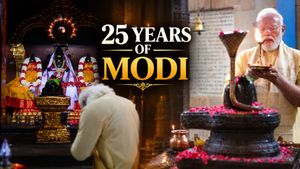 PM Narendra Modi Marks 25 Years In Government With Prayers At Delhi’s Historic Shri Vinayak Temple
 -
 Indian Air Force Day 2026: Inside The 94th Anniversary Celebrations, Theme, History And Air Displays
 -
 Nana Patekar Passes Away At 75: Veteran Bollywood Actor’s Last Public Appearance Video Goes Viral
 -
 Masik Shivratri October 2026: Why This Sacred Night Is Significant For Lord Shiva Devotees
 -
 Guru Pradosh Vrat 2026: Know The Puja Timings, Fasting Rules And Shiva Worship Rituals
 -
 The Screen–Snack Connection: Expert Explains How Screen Time Changes Kids' Eating
 -
 Vijay Deverakonda Says Rashmika Mandanna Tells Him ‘I Love You’ 10-15 Times A Day — A Psychologist Explains
 -
 Culturally Matched NDIS Support in Melbourne: Where to Start
 -
 58-Year-Old DonnaJean Wilde's Plank Record: 4 Benefits For Women 50+


The Quiet Side of Ladakh: Buddhist Traditions and the Inner Self

Ladakh is in the middle of its busiest season in years. Between January and July 2026, the high-altitude Himalayan region welcomed over 3.3 lakh tourists, already 98 per cent of its entire 2025 footfall, achieved in just seven months. Lieutenant Governor Vinai Kumar Saxena credited the surge partly to cultural events like the Hemis Festival, Sindhu Mahakumbh and Ladakh Astro Week, which have drawn large numbers of domestic and international visitors.

We spoke to Govind Gaur, Founder and CEO, WanderOn, who explained that the real pull of Ladakh has little to do with footfall numbers. "In a world where travelling is usually associated with completing the list of destinations one wants to visit, Ladakh can give much more: the possibility to relax, to get acquainted with oneself, and become closer to the essence of the mindful way of travelling," Gaur said. "Mindful travel requires paying attention to the local nature, culture and inhabitants, and contemplating one's own feelings and thoughts."
Where Monasteries Do the Talking

"At the heart of Ladakh's spiritual identity lies Tibetan Buddhism," Gaur explained. "Monasteries such as Hemis, Thiksey, Diskit, Alchi and Lamayuru are the centres of faith and meditation. Walking around in these monasteries, listening to the chanting of monks, and observing hundreds of flickering butter lamps against the background of ancient murals makes one feel serene and introspective about one's own life."
Most of these monasteries allow visitors during morning prayers or meditations, he added, where one can sit silently among the monks and listen to the chanting of sacred texts.
The Landscape as a Form of Meditation
"Ladakh's landscape itself becomes a meditation," said Gaur. "Towering snow-capped peaks, crystal-clear skies, and the gentle flow of the Indus and Zanskar rivers remind visitors of nature's quiet power."
Whether it's watching the sunrise over Pangong Lake, walking through the Nubra Valley's sand dunes, or simply sitting beside a mountain stream, Gaur believes every one of these moments can help travellers tune into their inner self.
Slowing Down in the Villages

"While itinerary planning usually focuses on packing all possible places into a short time frame, mindful travel in Ladakh helps travellers explore at a relaxed pace," Gaur said. "Staying one extra day in a village, drinking tea together with locals, and discovering local farming traditions helps travellers create deeper bonds."
He pointed to homestays in villages like Turtuk, Uleytokpo and Sumur as a chance for travellers to discover local hospitality and learn how communities have adapted to one of the harshest climates in the world.
"Food is also a major part of this," Gaur added. "Enjoying simple local dishes like thukpa, skyu, momos and butter tea means much more than enjoying good taste. These dishes tell of the strength and resourcefulness of people who respect their land and use only local resources."
Festivals That Mean More Than They Show
The Hemis Tsechu, Ladakh's best known festival, draws visitors from around the world for its colourful rituals and masked dances. But according to Gaur, "its spiritual background lies in Buddhist teachings regarding the values of compassion, impermanence, and the victory of wisdom over ignorance."
Travelling Without Taking Too Much
"One very important part of travelling to Ladakh is to be environmentally conscious," Gaur cautioned. "The environment of Ladakh becomes increasingly vulnerable due to the increasing number of tourists." With visitor numbers climbing sharply this year, he stressed a few habits that make a real difference:
- Carry a reusable water bottle and avoid single-use plastics
- Choose eco-conscious homestays and accommodations
- Use water sparingly, it's scarce in a cold desert
- Follow the rules and etiquette observed inside monasteries
"Following these can help travellers preserve the special cultural heritage of this region," he said.
Bottomline
"The most valuable lesson that travellers can get in Ladakh is the significance of simplicity in life," Gaur reflected. "Life moves there according to the rhythm of nature rather than time." In the end, he believes the true souvenir from Ladakh is a quieter mind, a deeper appreciation for simplicity, and the realisation that the most meaningful journeys are often the ones that lead inward.

 Continue with Google

