




 Click it and Unblock the Notifications


Latest Updates
-
 Veteran Musician Deva Dies At 75: Life And Legacy Of Thenisai Thendral
 -
 Navratri Fasting Diet: How To Stay Energised And Full Through The Day
 -
 Kavya Maran Wedding In Greece? Date, Venue, and What Is Confirmed
 -
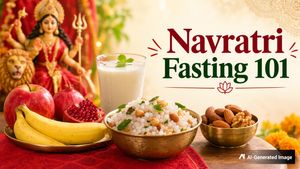 Navratri Fasting 101: What To Eat, What To Skip, And How To Avoid Acidity And Headaches
 -
 Navratri Day 7: Maa Kalaratri Puja, Colour, Rituals And Significance
 -
 Office To Dandiya Nights: One Quick-Change Outfit Formula For Navratri 2026
 -
 As ‘Ranabaali’ Hits Theatres, A Look At Rashmika Mandanna’s ₹1.31 Lakh Ivory Saree For Pre-Release Promotions
 -
 Durga Puja Pandals Mumbai 2026: 7 Stunning Celebrations To Explore From Matunga To Juhu
 -
 World Spine Day 2026: Is Your Phone Habit Causing Neck Pain? What To Know About Tech Neck
 -
 Breast Cancer Awareness Month 2026: Expert Explains Why Family History Isn't the Only Risk


Old Monk Controversy Explained: Why FSSAI Says The Iconic Drink Cannot Be Sold As ‘Rum’

For generations, the name Old Monk has been almost synonymous with rum in India. The distinctive dark bottle, vanilla-led aroma and familiar taste have made it a nostalgic fixture at bars, parties and winter gatherings. But the iconic spirit is now at the centre of a regulatory controversy that has left many consumers asking a surprisingly simple question: Is Old Monk actually rum?
The Food Safety and Standards Authority of India (FSSAI) has told the Bombay High Court that Old Monk, in its current form, cannot be sold or marketed simply as "Rum". According to the regulator, the product uses neutral spirit along with artificial and nature-identical rum flavouring, which it says alters the product's natural characteristics.
The dispute has also put the spotlight on another familiar claim on the bottle - "7 Years Old Blended" with FSSAI arguing that this description can mislead consumers. Here is what the controversy actually means.
Why Is FSSAI Objecting To Old Monk?
At the heart of the matter is how rum is defined under India's food safety regulations.
FSSAI's position is that rum should possess the characteristic taste and aroma associated with the spirit. The regulator says laboratory testing found artificial or nature-identical flavouring substances in the products under scrutiny.

According to FSSAI, these added flavours can mask the natural characteristics of the spirit and alter its true identity. As a result, the regulator says such a product should not simply be labelled and marketed as "Rum".
For flavoured products, FSSAI has said terms such as "Flavoured Rum" or "Premix Rum" should be clearly mentioned on the label to avoid misleading consumers.
So, What Is Inside The Bottle?
This is where the terminology can get confusing.
FSSAI has raised concerns about the use of neutral spirit as a major component of the product, along with rum flavouring. Neutral spirit is highly purified alcohol with relatively little of the flavour and aroma associated with a traditionally matured spirit.
The regulator's argument is not simply that neutral spirit is present. Its objection is that the resulting beverage is then being presented to consumers under the straightforward category of "Rum", despite the use of added flavouring to create or enhance the characteristic profile.
In other words, the controversy is about what the product should legally and accurately be called, rather than a claim that Old Monk is unsafe to consume.
What About The "7 Years Old Blended" Claim?
Another major point of contention is the phrase "7 Years Old Blended" used on the Old Monk XXX variant.
FSSAI's investigation found that the major ingredient was neutral, unmatured or unaged spirit, while matured rum spirit accounted for less than 5% of the blend, according to the government's findings.
That has implications for the age statement.
Under the applicable FSSAI regulations, when an age claim is made for a blend, the age should correspond to the youngest spirit used in that blend, rather than allowing the age of an older component to represent the entire product.
FSSAI therefore considers the "7 Years Old Blended" claim misleading in this context.
For consumers, the distinction is important: "7 years old" does not necessarily mean every drop in a blended spirit has spent seven years ageing. The regulatory question is what the age claim represents about the blend as a whole.
Is Old Monk Banned?
Not across India.
The present dispute concerns sales in Maharashtra, following regulatory action against the product. The manufacturer, Mohan Rocky Springwater Pvt Ltd, challenged the prohibition before the Bombay High Court.
The company has sought relief from the prohibition, while FSSAI has defended its position on the product's classification and labelling.
The Bombay High Court has not granted immediate interim relief, and the matter remains under consideration. The company has also submitted revised labels for scrutiny.
So, it would be inaccurate to say that Old Monk has been permanently banned in India.
Old Monk Is Agreeing To Change Its Label
One of the most significant developments in the case is the manufacturer's willingness to modify its packaging.
The company has agreed to remove the "7 Years Old Blended" wording and add clearer disclosure regarding flavouring, including an "Added Flavour" indication in its proposed revised labels.
However, the revised labels still have to be considered by the authorities. FSSAI has sought additional time to examine whether the proposed changes comply with its requirements. That means the final labelling position is not yet settled.
Is Old Monk "Fake Rum"?
That is perhaps the easiest and most misleading way to describe the controversy.
No, that is not what the regulatory proceedings establish.
FSSAI's objection is much more specific: it says the product, in its current composition and labelling, does not meet the requirements to be marketed simply as rum because of the use of neutral spirit and additional flavouring.
The regulator has indicated that such products could instead be identified as "rum-flavoured spirit", or appropriately labelled as flavoured or premix rum where applicable.
So this is primarily a dispute over classification, composition and consumer disclosure.
And This Isn't Just About Old Monk
The Old Monk controversy is part of a broader regulatory crackdown on alcoholic beverages.
The Ministry of Health and Family Welfare has said laboratory testing of products from multiple manufacturers detected external artificial or nature-identical flavours. Products from several brands have faced enforcement action over non-compliance, including concerns around how they were classified and labelled.
That makes the Old Monk case part of a larger conversation about how alcoholic beverages are made and, perhaps more importantly, how they are described to consumers.
What Does This Mean For Old Monk Lovers?
For the average consumer, the immediate takeaway is not that the drink has suddenly become dangerous.
Instead, the controversy raises questions about transparency.
When a bottle says "rum", consumers naturally expect the product to meet the regulatory definition of rum. When an age statement such as "7 Years Old Blended" appears on the label, consumers may reasonably interpret it as a statement about the spirit they are buying.
FSSAI's intervention is essentially asking whether those expectations are being accurately reflected on the bottle.
For now, the legal and regulatory process is still unfolding. The manufacturer has proposed revised labels, while FSSAI is examining them and the Bombay High Court continues to hear the dispute.
The Bigger Question Behind The Old Monk Debate
Old Monk's cultural identity in India has long been bigger than what is written on its label. It is a drink associated with nostalgia, college memories, winter evenings and a distinctly Indian drinking culture.
But the latest controversy puts the spotlight on something consumers rarely stop to examine: what exactly makes a rum a rum?
The answer, as this case shows, isn't simply the taste, colour or name on the bottle. It also involves how the spirit is made, what ingredients and flavouring are used, how it is aged and blended, and what the label tells the person buying it.
For now, Old Monk's fate as a product labelled simply "Rum" remains a matter before the authorities and the court. What is certain is that one of India's most recognisable liquor labels has suddenly become the centre of a much bigger conversation about ingredients, ageing, labelling and what consumers really get inside the bottle.

 Continue with Google

