




 Click it and Unblock the Notifications


Latest Updates
-
 Navratri 2026 Food Hopping In Delhi NCR: 7 Places To Explore For A Taste Of Festive Flavours
 -
 Why Casual Games Are Perfect for Quick Online Play
 -
 World Menopause Day 2026: Theme, Significance And What Research Reveals About Menopause In India
 -
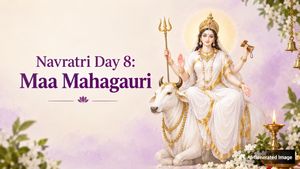 Navratri Day 8: Maa Mahagauri Puja, Colour, Rituals And Significance
 -
 Dussehra 2026: The Difference Between Vijayadashami And Ravana Dahan
 -
 Veteran Musician Deva Dies At 75: Life And Legacy Of Thenisai Thendral
 -
 Navratri Fasting Diet: How To Stay Energised And Full Through The Day
 -
 Kavya Maran Wedding In Greece? Date, Venue, and What Is Confirmed
 -
 Navratri Fasting 101: What To Eat, What To Skip, And How To Avoid Acidity And Headaches
 -
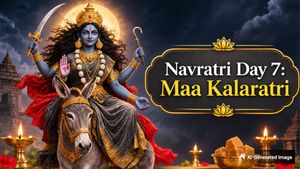 Navratri Day 7: Maa Kalaratri Puja, Colour, Rituals And Significance


International Literacy Day 2025: What Can The World Learn From Kerala, India’s Highest Literacy Rate State?

Every year on September 8, the world comes together to mark International Literacy Day, a reminder that literacy is about more than letters on a page-it is about empowerment, opportunity, and participation in society. In 2025, UNESCO has placed the spotlight on "Promoting Literacy in the Digital Era," highlighting how vital it is to adapt traditional learning to today's connected world.
In India, no place reflects the spirit of this day more clearly than Kerala. With the country's highest literacy rate, the state is not just about people who can read and write-it is about a culture where education has shaped identity, community life, and progress. On International Literacy Day, Kerala's story shows how a society that once fought for basic literacy now thrives in an age where digital skills are part of everyday living.

Royal Decrees and Early Visionaries
Kerala's literacy movement didn't begin in classrooms; it began in royal courts and reformist minds. In 1817, Rani Gouri Parvathi Bayi of Travancore issued a royal rescript making education a state responsibility-a progressive step that put Travancore decades ahead of most of the world.
Christian missionaries soon added momentum, opening schools that welcomed women and marginalised communities. Social reformers such as Sree Narayana Guru, Chattampi Swamikal, and Ayyankali carried the vision forward, demanding education as a universal right.
The Rise of a Reading Culture
By the early 20th century, Kerala had developed something few regions could claim-a culture that valued books as much as food on the table. In 1945, educator P.N. Panicker founded the Kerala Grandhasala Sangham, a library movement that brought books to villages and small towns.
Reading was no longer reserved for the elite; it became a community activity woven into Kerala's social fabric. Homes, schools, and public spaces carried the imprint of this reading revolution.
Post-Independence Policies and People's Movements
After independence, Kerala doubled down on its commitment to education. The Kerala Education Act of 1958 laid the foundation for widespread access to schools, while successive governments worked to strengthen infrastructure and teacher training.
The turning point came in 1989, when Ernakulam district launched the Total Literacy Campaign-a people-powered effort mobilising volunteers, teachers, and families. Within a year, Ernakulam became India's first fully literate district in 1990. Riding on this success, Kerala as a whole was declared the country's first fully literate state in 1991.
Why Kerala's Model Still Matters
Kerala's achievement is more than numbers. It shows what happens when literacy is treated as social empowerment rather than mere statistics.
Women gained agency, communities gained confidence, and generations grew up believing that knowledge was a right, not a privilege.
Even today, the state's reading culture is alive in its thousands of libraries, bustling bookstores, and celebrated events such as the Kerala Literature Festival in Kozhikode. In many homes, bookshelves are as common as kitchen cupboards.

Kerala's journey to literacy is not simply a tale of percentages-it is a story of vision, reform, and collective determination. On International Literacy Day, when the world reflects on the power of reading, Kerala stands as proof that literacy can shape not just individuals, but entire societies.

 Continue with Google

