



 Click it and Unblock the Notifications



Latest Updates
-
 Why Blood Sugar Can Remain High Even When You're Taking Medication
-
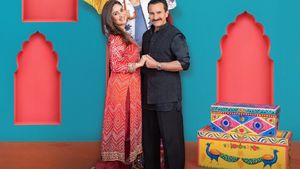 Kareena Kapoor’s Sindoori Red Suit And Saif Ali Khan’s Black Ensemble Are Worth A Style Decode
-
 Does A Shorter Ingredient List Make Skincare Safer? An Expert Explains
-
 Airbnb Just Banned Checkout Chores: No More Stripping Beds Or Washing Dishes
-
 Tom Cruise Lands AFI’s 52nd Life Achievement Award After Honorary Oscar
-
 Bigger & Better Than Ever: Laxmi & Chef Kunal Kapur Return With ‘Diwali Delights’ Season 2
-
 Shukra Pradosh Vrat 2026: Significance, Rituals, Puja Timings And Fasting Rules
-
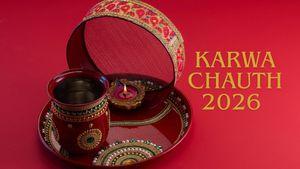 Karwa Chauth 2026: Date, Puja Muhurat, Moonrise Time and Rituals
-
 France Reports First Human Case Of Shamonda Virus After Man In His 60s Dies: Could It Affect India?
-
 Karwa Chauth Solah Shringar: The Significance Of The 16 Traditional Adornments


Devi, Vayu, Vamika And More: Why Modern Parents Are Rediscovering Ancient Indian Baby Names, Expert Explains

Choosing a name for a baby is often about more than finding something that sounds beautiful. Parents may spend weeks exploring meanings, family traditions and cultural connections before settling on one. Interestingly, names rooted in Sanskrit, mythology and ancient Indian traditions are finding renewed attention, including among celebrity parents.
Deepika Padukone and Ranveer Singh recently revealed the name of their second daughter, Devi. Sonam Kapoor and Anand Ahuja named their sons Vayu and Rudralokh, while Yami Gautam and Aditya Dhar chose Vedavid for their son. Anushka Sharma and Virat Kohli named their children Vamika and Akaay, while Katrina Kaif and Vicky Kaushal named their son Vihaan, adding to the growing list of celebrity baby names with Indian linguistic and cultural associations.

These choices offer an interesting starting point for exploring why traditional names appeal to modern parents. Arvind Subbarao, Co-Founder & CEO of iMeUsWe, examines how naming preferences have evolved across generations and why names connected to India's cultural heritage are finding renewed relevance.
Looking Behind To Move Ahead
Naming conventions are shaped by the experiences of each generation. Those given to infants reflect the ideals held by a culture at any given time. According to a first-of-its-kind study of over 1.6 billion records covering the years 1947-2025, the names chosen by Indians have reflected the progress made socially and culturally by the country. The years following India's freedom saw common first names such as Ram, Krishna, Lakshmi, Gita, and Mohammed.
As India became modern, naming preferences also changed. The decades that came later witnessed the rise of names like Ramesh, Suresh, Sunita and Anita. By the 1990s and early 2000s, names like Rahul, Priyanka, Neha, Rohit and Ankit became widely popular, influenced by economic liberalisation, mass media, Bollywood and a more outward-looking India.
Yet the newest generation of parents appears to be charting a different course. Instead of searching only for names that sound contemporary, many are revisiting names that carry deeper cultural significance. Names such as Vihaan, Vaamika, Rudra, Meera, Gauri, Janhavi and Tara are increasingly finding favour. While they feel modern and distinctive, many draw directly from ancient Indian traditions, sacred texts and centuries-old linguistic roots. In many ways, this is not a return to the past, but a reinterpretation of it.
The Rise Of The Generational Skip
One of the most interesting aspects of this trend is what cultural observers describe as a generational skip. Drawing inspiration from mythology, Sanskrit language, and even their ancestral lineage, parents whose names were Rahul, Pooja, Rohit, and Neha are now naming their kids Meera, Rudra, Tara, Gauri, Vihaan, and Vaamika.
Many modern parents are looking beyond the naming trends of their parents' generation and rediscovering names rooted in India's cultural heritage. The appeal lies not just in how these names sound, but in the meaning, history and sense of identity they carry.
What is exciting about it is finding names that will be not only timeless but totally relevant at the same time. With globalisation developing more rapidly day after day, culturally valuable names could become the technique for preserving rituals while remaining trendy at the same time.
The Stories We Pass On Through Names
In recent years, naming a child has become more than a personal choice. It often reflects a family's values, cultural stem, and evolving sense of identity. In an increasingly fast-paced and globalised world, many parents are turning to names that provide a sense of permanence and belonging.
Names are increasingly becoming a bridge between the past and the present. For many families, particularly those in urban and multicultural settings, they offer a way to remain connected to their heritage while navigating a modern, globalised world. Names like Tara, Arjun, Meera, and Gauri seem modern yet retain the age-old Indian customs.
Owing to this, there has been a shift from how a name sounds to what the name means. It could be something that relates to their lineage, language, or simply the value system of the culture that they belong to.
Looking To The Stars And The Family History
Cultural identification is important, but astrology and family history also play significant roles in naming. The manner in which younger parents participate in these customs has evolved. In order to make sound decisions, many people are actively seeking out information about the origins of their names, their family trees, and astrological charts, rather than passively following traditions.
For many families, a name is the first gift of identity. It is expected to reflect family beliefs, culture, and can correlate with a child's birth chart, nakshatra or rashi. The process has become more thoughtful and personalised rather than purely ceremonial.
Ancestry, too, is playing an ever-larger role. Names are helping families maintain links between generations, whether inherited from a grandmother, inspired by a family genealogy, or steeped in regional heritage. They are a significant link between the past and future in a largely mobile and globalised world.
Why Old Names Are Finding New Life
Perhaps the biggest reason for the return of ancient Indian names is that they no longer feel old-fashioned. Names such as Tara, Meera, Arjun, Shiv, Gauri and Rudra are deeply rooted in Indian culture, yet they fit comfortably into contemporary life. They carry a meaning and are often easy to adopt across different cultures and regions.
This blend of folklore and modernity especially resonates with parents nowadays. They choose to consider global as well as Indian options. Names inspired by mythology, spirituality and Sanskrit culture are mostly chosen, not because they are conventional but because they remain relevant even after centuries.
In an age shaped by fleeting trends, many parents are gravitating towards something more enduring. Faith-rooted names are not making a comeback because families are becoming more conservative or less modern, but because they offer continuity and a deeper connection to cultural roots. Names linked to stories, philosophies and shared traditions provide a sense of permanence that purely fashionable names often cannot, reflecting a generation that is confident in celebrating its legacy while preparing its children for the future.
Keeping Stories Alive
At a time when identity is becoming increasingly layered and complex, many parents are seeking a sense of continuity through the names they choose for their children. They want their children to inherit something more than just a name.
Ram, Lakshmi, Mohammed, and Shiv are a few examples who have survived the test of time and remain popular till date. As each generation rediscovers the meaning and values associated with them, these names find renewed relevance and continue to resonate with modern parents.
Arvind Subbarao concludes, "The return of ancient Indian names reflects a generation that is both forward-looking and deeply aware of its roots. In choosing these names, parents are doing more than honouring tradition. They are passing on stories, values and cultural memories that have shaped India for centuries, creating a beautiful bridge between the past and the future."

 Continue with Google


