




 Click it and Unblock the Notifications


Latest Updates
-
 Durga Puja Pandals Mumbai 2026: 7 Stunning Celebrations To Explore From Matunga To Juhu
 -
 World Spine Day 2026: Is Your Phone Habit Causing Neck Pain? What To Know About Tech Neck
 -
 Breast Cancer Awareness Month 2026: Expert Explains Why Family History Isn't the Only Risk
 -
 Skanda Sashti 2026: Significance, Vrat Rituals And How Devotees Observe The Day
 -
 Saraswati Avahan 2026: Significance, Shubh Muhurat, Rituals And Puja Vidhi
 -
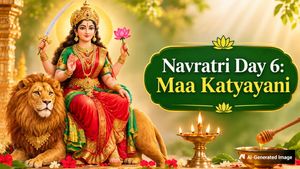 Navratri Day 6: Maa Katyayani Puja, Colour, Rituals, And Significance
 -
 Garba Before The DJ Era: What Navratri Looked Like In Earlier Times
 -
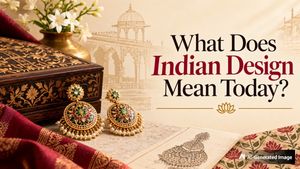 What Does Indian Design Mean Today? A Creative Director Explains
 -
 Why Your Vision Can Feel Different In Bright And Dim Rooms, Expert Explains
 -
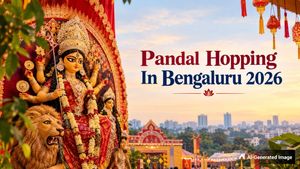 Pandal Hopping In Bengaluru 2026: 7 Durga Puja Venues Worth Your Time


All Eyes Turned To Kartavya Path On 77th Republic Day: Why India’s Biggest Parade Happens Here

Today, as India marked Republic Day, the focus naturally returned to one familiar stretch in the heart of New Delhi. Kartavya Path came alive once again with marching contingents, military displays, cultural tableaux and flypasts unfolding in front of thousands on the ground and millions watching from home. This wasn't just a venue doing its annual duty. It was a space actively reflecting what the Republic stands for, right now.

Kartavya Path At The Centre Of Today's Celebrations
Kartavya Path, earlier known as Rajpath, runs from Rashtrapati Bhavan to India Gate via Vijay Chowk. Designed during the British era as Kingsway, it was once meant to project imperial authority. Today, it serves a very different purpose.
This morning, as the Republic Day parade rolled down this boulevard, the road once again functioned as the Republic's main stage - open, visible, and meant for citizens. The President, as the constitutional head of the nation, led the celebrations from here, reinforcing the idea that India's power structure is rooted in the Constitution adopted on January 26, 1950.
Why Republic Day Unfolds Here Every Single Year
There's a practical reason Kartavya Path is chosen, and then there's a symbolic one.
The wide ceremonial avenue allows space for marching contingents, armoured vehicles, state and ministry tableaux, and aerial displays - all while accommodating dignitaries and public spectators. But beyond logistics, the location matters because of what it connects.
Today's parade once again traced a path between Rashtrapati Bhavan, India Gate and the National War Memorial linking governance, sacrifice and citizenship in one continuous line.
Parade Galleries Renamed After Indian Rivers for 77th Republic Day
For the 77th Republic Day parade, the viewing galleries along Kartavya Path were renamed as part of a broader shift in how the ceremony is presented. Instead of numbered blocks or hierarchical labels, the enclosures were named after major Indian rivers such as the Ganga, Yamuna, Narmada, Brahmaputra, Krishna and Sindhu.
Signage and official maps reflected these new names to help attendees navigate the venue. The change is seen as a move away from status-based distinctions towards a more culturally rooted and inclusive identity, aligning the parade space with elements that are familiar, symbolic, and shared across the country.
A Road That Reflects India's Democratic Journey
As today's celebrations made clear, Kartavya Path has witnessed India's transformation from colonial rule to independence, and then to a functioning republic.
What was once designed to glorify authority now hosts a display of constitutional order, diversity and collective participation. The continuity of holding the Republic Day parade here reinforces the idea that the Republic is not temporary or symbolic - it is lived, annual and ongoing.
What 'Kartavya Path' Means On Republic Day
The name Kartavya Path, formally adopted in 2022, takes on particular relevance on Republic Day.
"Rajpath" implied power and rule. "Kartavya Path" places the emphasis on responsibility - of the state towards its people, and of citizens towards the Republic. Today's parade, with soldiers, artists, schoolchildren and state representatives sharing the same space, made that idea tangible.
More Than A Spectacle, Even Today
For viewers watching today's celebrations unfold, Kartavya Path may feel familiar. But familiarity hasn't diluted its role. Each Republic Day, the road becomes a reminder that the Constitution shapes how the nation presents itself, governs itself, and remembers why January 26 matters.
As today's Republic Day celebrations concluded, Kartavya Path once again did what it has done for decades - slowly held together history, duty and democratic practice. Chosen not just for scale but for meaning, the boulevard continues to reflect the idea of India as a constitutional republic, one where power is visible, accountable and rooted in responsibility.

 Continue with Google

