




 Click it and Unblock the Notifications


Latest Updates
-
 Dawn Phenomenon vs Somogyi Effect: What's The Difference?
 -
 Tritiya Shraddha 2026: Who Should Perform It, Rituals To Follow And Why The Day Holds Significance
 -
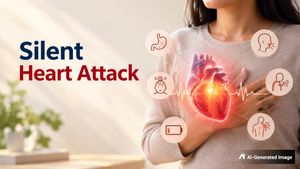 World Heart Day 2026: The Heart Attack That Doesn't Look Like a Heart Attack
 -
 Vighnaraja Sankashti Chaturthi 2026: Know The Date, Significance, Vrat Katha And Moonrise Fasting Rituals
 -
 Taylor Swift Makes VMA History: All About Her Record-Breaking Night And Striking Red Carpet Look
 -
 Bank Holidays October 2026: Check State-Wise List Before Visiting Your Branch
 -
 October 2026 Festival Calendar: Pitru Paksha Ends, Navratri Begins, Dussehra Follows
 -
 Pitru Paksha 2026: What To Eat And Avoid, According To Astrologer Gauri Jain
 -
 Guide to Surviving Festive-Season Humidity While Hosting: An Expert Shares Tips on Choosing Fabrics
 -
 Is Your Makeup Causing Breakouts? A Dermatologist Explains


World Heart Day 2026: Think You Are Fit? Your Heart May Tell a Different Story

Observed every year on September 29, World Heart Day raises awareness about cardiovascular disease and the importance of protecting heart health. The World Heart Day 2026 campaign by the World Heart Federation, "Don't Miss a Beat," highlights that heart disease can go unnoticed and encourages people to pay closer attention to their heart health and potential risks.

But can someone who exercises regularly, maintains a normal weight and looks healthy still have an underlying heart risk? Dr. M. Sai Sudhakar, MD, DM, FACC (USA), Director - Cardiac Sciences, Gleneagles Hospitals, Lakdi-ka-pul & L.B. Nagar, Hyderabad, explains why outward fitness does not always tell the complete story.
Looking Fit Does Not Mean You Are Risk-Free
"He looks fit. She exercises every day. Their weight is normal. So, surely their hearts must be healthy-right? Not necessarily."
With this observation, Dr. Sai Sudhakar draws attention to one of the common misconceptions surrounding heart disease: that it mainly affects people who are overweight, inactive or visibly unhealthy. In reality, cardiovascular risk can exist even in people who appear fit and lead seemingly healthy lifestyles.
"Regular exercise and a healthy weight are important, but they are only pieces of the cardiovascular-health puzzle," he points out.
Blood pressure, cholesterol, blood sugar, smoking, family history, chronic stress, poor sleep and visceral fat can all influence cardiovascular health. Several of these risk factors can develop without producing noticeable symptoms.
Some Heart Risks Can Remain Silent
High blood pressure and high cholesterol can be particularly deceptive because they may not cause obvious symptoms in their early stages.
"High blood pressure and high cholesterol are particularly deceptive because a person can feel completely normal while damage is gradually occurring in the arteries," Dr. Sai Sudhakar explains.
Prediabetes and diabetes can also silently accelerate vascular disease. This makes it important to know key health measurements such as blood pressure, cholesterol and blood sugar, even when there are no obvious signs of a problem.
Family History Can Change the Picture
Genetics is another factor that cannot be judged by appearance or fitness levels. A person may be young, slim and physically active while still carrying an increased cardiovascular risk because of their family history.
"A strong family history of premature heart disease should not be ignored simply because someone is young, slim or physically active," Dr. Sai Sudhakar cautions.
He also draws attention to lipoprotein(a), or Lp(a), an inherited risk factor that can be overlooked because it is not routinely measured as part of a standard lipid profile.
For people with a strong family history or other relevant risk factors, discussing their individual cardiovascular risk with a healthcare professional can help determine whether additional assessment is appropriate.
Exercise Helps, But It Cannot Cancel Every Risk
Regular physical activity remains an important part of cardiovascular health. The World Heart Federation's 2026 campaign also promotes movement through its "Keep the Beat" challenge, encouraging 20 minutes of movement each day during September.
However, being active does not completely eliminate other factors that can affect the heart.
"Exercise significantly reduces cardiovascular risk, but it does not completely cancel out genetic, metabolic or age-related risks," Dr. Sai Sudhakar emphasises.
In other words, exercise and a healthy weight are valuable, but they should be considered alongside regular health checks and an understanding of personal risk factors.
What Your Mirror Cannot Tell You About Your Heart
"The message is simple: looking fit is not the same as having a healthy heart."
Dr. Sai Sudhakar's observation brings the focus back to what cannot necessarily be seen from the outside. Knowing your blood pressure, cholesterol, blood sugar and relevant inherited risk factors can reveal concerns that your appearance may never indicate.

"The heart doesn't always give warnings. Sometimes, the first sign that something is wrong is a cardiac event. Prevention begins before symptoms appear," he adds.
As World Heart Day 2026 focuses on "Don't Miss a Beat," understanding these less visible aspects of cardiovascular health can be an important part of recognising risk before it becomes a serious problem.
Disclaimer: The information provided in this article is for general informational and educational purposes only and is not intended as a substitute for professional medical advice, diagnosis, or treatment. Always seek the advice of your physician or a qualified healthcare provider with any questions you may have regarding a medical condition.

 Continue with Google

