




 Click it and Unblock the Notifications


Latest Updates
-
 Arijit Singh India Tour 2027: First Concerts After Playback Exit
 -
 Healthy Navratri Recipes: 8 Low-Oil Vrat Dishes To Try This Year
 -
 Harmanpreet Kaur Steps Down As Captain: Career In Numbers And Mandhana Likely Next
 -
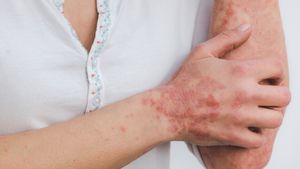 Why Stress Can Make Psoriasis Flare And Why Scratching Makes It Worse
 -
 Jeffrey Archer Dies At 86, One Day Before Adam & Eve Goes On Sale
 -
 Amitabh Bachchan, 83, Struggles To Sleep After Knee Injury On KBC 18
 -
 World Cerebral Palsy Day 2026: Theme, Significance And Why Inclusion Matters For People With CP In India
 -
 Navratri 2026: 5 Vrat Recipes To Add A Fresh Twist To Your Traditional Fasting Food Menu
 -
 Navratri Recipes 2026: Quick Navratri Recipes You Can Make In Under 30 Minutes
 -
 Handwoven Craft Meets Contemporary Elegance In Kasturi Kundal’s Festive Edit


New Antibody Helps Block COVID-19 Transmission In Cells: Study

Los Angeles, Researchers have engineered a novel antibody that can directly interfere with and block the cell-to-cell transmission ability of SARS-CoV-2, the virus that causes COVID-19. The antibody, FuG1, targets the enzyme furin, which the virus uses for its efficient chain of infections in human cells.

The approach, described recently in the journal Microbiology Spectrum, could be added to existing SARS-CoV-2 antibody cocktails for greater function against emerging variants.
"We developed an approach that interferes with the transmission chain of SARS-CoV-2," said senior author of the study Jogender Tushir-Singh from the University of California (UC), Davis in the US.
"The COVID-19 vaccines are a great lifesaver in reducing hospitalisations and severe illness. Yet, we are now learning that they may not be as effective in controlling the transmissibility of the virus," Tushir-Singh said.
The researchers noted that engineered FuG1 antibody competitively interferes with the furin function needed for the SARS-CoV-2 virus to become highly transmissible.
Furin, found throughout the human body, is involved in various functions of cells. It is a type of enzyme that can break down proteins into smaller components.
Furin does this by cutting, or cleaving, the polybasic peptide bonds within the proteins, the researchers said.It can also cleave and activate viruses that enter human cells. Pathogens that utilise furin in their human host include HIV, influenza, dengue fever and SARS-CoV-2, they said.
When SARS-CoV-2 infects a human cell, it is in its active state, having already "cleaved" its spike protein, which the SARS-CoV-2 virus uses to enter and infect the cells.
However, when the virus is being synthesised within the host cell -- when it is replicating -- the spike is in an inactive state.
The virus needs to use the host cell's furin to cut the spike protein into two parts, S1 and S2, which makes the spike active on the viral particles for efficient transmissibility upon release.
Disclaimer: The information provided in this article is for general informational and educational purposes only and is not intended as a substitute for professional medical advice, diagnosis, or treatment. Always seek the advice of your physician or a qualified healthcare provider with any questions you may have regarding a medical condition.

 Continue with Google

