




 Click it and Unblock the Notifications


Latest Updates
-
 Who Is Anant Nag? Meet The Veteran Kannada Actor Set To Receive Dadasaheb Phalke Award
 -
 Throwback Thursday: Kareena Kapoor’s ‘Poo’ To Priyanka Chopra’s ‘Desi Girl’, Bollywood Looks That Ruled 2000s
 -
 PM Narendra Modi Birthday Special: Make His Favourite Khichdi At Home And Know Its Health Benefits
 -
 PM Modi Turns 76: ‘Ashirwad Ka Diya’ To Be Lit At 500+ Locations Across India
 -
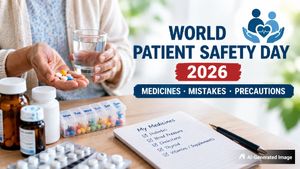 World Patient Safety Day 2026: Taking Multiple Medicines? Expert Explains How To Prevent Medication Errors
 -
 Kanya Sankranti 2026: Surya’s Virgo Transition, Rituals And Why The Day Is Spiritually Significant
 -
 Vishwakarma Puja 2026: Why Do We Worship Tools, Machines And Vehicles On This Day?
 -
 Grammy-Nominated Singer-Songwriter Alex Warren To Perform At Abu Dhabi Grand Prix 2026
 -
 How Does Insulin Work? Understanding The Hormone That Controls Blood Sugar
 -
 Newborn Care Myths Vs Facts: What A Neonatologist Wants Parents To Know


Heartburn Drugs May Up Death Risk - Finds Study
A study suggests how heartburn drugs increases death risk. Check this article for details.

Individuals who take drugs that are commonly used to treat heartburn, ulcers and other gastrointestinal problems for a prolonged time may be at an increased risk of death, researchers warned.
The findings showed that people taking these drugs called as proton pump inhibitors (PPIs) had a 50 per cent increased risk of dying over the next five years.
"People have the idea that PPIs are very safe because they are readily available, but there are real risks to taking these drugs, particularly for long periods of time," said Ziyad Al-Aly, Assistant Professor at the Washington University School of Medicine in St. Louis.

Further, for every 500 people taking PPIs for a year, there was one extra death that would not have otherwise occurred.
Given the millions of people who take PPIs regularly, this could translate into thousands of excess deaths every year, Al-Aly said.
PPIs have also been linked to a variety of health problems, including serious kidney damage, bone fractures and dementia, the researchers said.

For the study, published in the journal BMJ Open, the researchers examined medical records of some 275,000 users of PPIs and nearly 75,000 people who took another class of drugs known as H2 blockers to reduce stomach acid.
Both PPIs and H2 blockers are prescribed for serious medical conditions such as upper gastrointestinal tract bleeding, gastroesophageal reflux disease and esophageal cancer.
The results revealed a 25 per cent increased risk of death in the PPI group compared with the H2 blocker group.
With Inputs From IANS
Disclaimer: The information provided in this article is for general informational and educational purposes only and is not intended as a substitute for professional medical advice, diagnosis, or treatment. Always seek the advice of your physician or a qualified healthcare provider with any questions you may have regarding a medical condition.

 Continue with Google

