



 Click it and Unblock the Notifications



Latest Updates
-
 Dussehra 2026: The Difference Between Vijayadashami And Ravana Dahan
-
 Veteran Musician Deva Dies At 75: Life And Legacy Of Thenisai Thendral
-
 Navratri Fasting Diet: How To Stay Energised And Full Through The Day
-
 Kavya Maran Wedding In Greece? Date, Venue, and What Is Confirmed
-
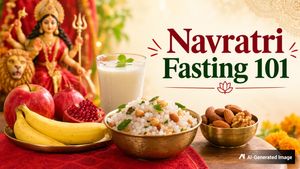 Navratri Fasting 101: What To Eat, What To Skip, And How To Avoid Acidity And Headaches
-
 Navratri Day 7: Maa Kalaratri Puja, Colour, Rituals And Significance
-
 Office To Dandiya Nights: One Quick-Change Outfit Formula For Navratri 2026
-
 As ‘Ranabaali’ Hits Theatres, A Look At Rashmika Mandanna’s ₹1.31 Lakh Ivory Saree For Pre-Release Promotions
-
 Durga Puja Pandals Mumbai 2026: 7 Stunning Celebrations To Explore From Matunga To Juhu
-
 World Spine Day 2026: Is Your Phone Habit Causing Neck Pain? What To Know About Tech Neck


Ladies! This Is The Reason Some Of Us Crave For Junk Food Before Our Periods!

The date of your monthly periods is beginning to approach and you suddenly start to have an irresistible urge to eat all the "sinful" foods in the world!
If you are a woman who can relate with the above example, then you are not alone!
As we may already know, menstruation is a natural process which is experienced by every woman, which starts around the age of 12 and ends around the age of 50.
Every month, the tissues built around the uterine walls to aid conception rupture and flow out of a woman's vagina in the form of blood.

This process is known as her periods and these may last anywhere from 3-7 days.
A lot of women, right from the age they start their puberty up until the time they attain menopause experience a condition known as PMS.
PMS, or, premenstrual syndrome is a group of symptoms which occur a few days before the start of a woman's periods, due to the various hormonal fluctuations occurring in her body.

While PMS symptoms may not be experienced at all by someone, for the other women, it could be rather severe.
The intensity of the premenstrual syndrome can vary from woman to woman.
Some of the common symptoms of PMS are excess hunger, irritability, mood swings, bloating, tender breasts, swelling of the breasts, pelvic pain, fatigue, excess sweating, increase in sex drive, etc.
Now, many women may have noticed that they feel hungry all the time when they are experiencing premenstrual syndrome and it is mostly junk food that they crave for, rather than healthy foods!

Even women who are otherwise on a very healthy diet feel like eating foods rich in sugar and fat during PMS and they would be surprised at their own loss of self-control during this phase.
A recent research study has found the reason why women crave for sugary and fatty foods during PMS. Learn all about it here.
Link Between Junk Food Cravings And PMS In Women
Now, many of us try to follow a healthy lifestyle in order to avoid diseases and stay in shape.
So, we make a conscious effort to maintain a balanced diet which includes low-calorie, healthy foods which are rich in nutrition.

We also make it a point to exercise on a regular basis and avoid foods which are bad for our health.
Now, we know that foods rich in unhealthy fats and sugars can not only make us gain weight, but can also make way for serious health issues like high blood pressure, high cholesterol, heart ailments, etc.
So, during the premenstrual syndrome, when we have an uncontrollable urge to eat junk foods, we may feel frustrated and it may even cause weight gain and digestive issues.
Now, a recent health research has found that just before our periods, during the premenstrual syndrome phase, the stress hormone known as cortisol increases in our body and the serotonin hormone level dips.
This causes a lot of women to crave for sugary and fat-rich foods, as these foods can decrease the cortisol hormone levels and increase serotonin levels temporarily, making women feel good!
So, this is the reason why many women crave for unhealthy foods during their PMS phase.
Disclaimer: The information provided in this article is for general informational and educational purposes only and is not intended as a substitute for professional medical advice, diagnosis, or treatment. Always seek the advice of your physician or a qualified healthcare provider with any questions you may have regarding a medical condition.

 Continue with Google


