



 Click it and Unblock the Notifications



Latest Updates
-
 Deepika Padukone Wears ₹90,000 Gold Kurta Set As Ranveer Singh, Daughter Dua Twin For Baby Devi’s Name Reveal
-
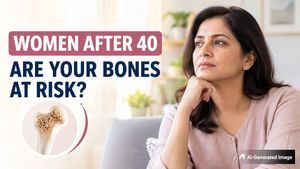 Women, Menopause And Bone Health: Doctor Explains Why Osteoporosis Risk Rises After 40
-
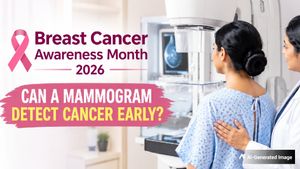 Can Breast Cancer Be Detected Before Symptoms Appear? A Doctor Explains The Role Of Screening
-
 Papankusha Ekadashi 2026: October 21 Or 22? Know The Correct Date, Tithi And Significance
-
 OTT Releases This Week (October 19–25): New Movies And Series On Netflix, Prime Video, JioHotstar And Zee5
-
 Police Commemoration Day 2026: Know The History, Significance And Programmes Planned Across India This Year
-
 Deepika Padukone And Ranveer Singh Announce Second Daughter’s Name On Dussehra, Share Family Photo
-
 Who Was Karthik Sabesh? Tamil Actor Passes Away At 37, Days After Uncle And Composer Deva’s Death
-
 Who Is Ravleen Varghese? Meet The First Malayali Model To Walk The Victoria’s Secret Runway
-
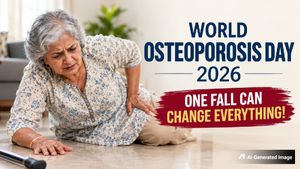 World Osteoporosis Day 2026: A Minor Fall, A Major Fracture — Doctor On Why Older Adults Should Be Careful


World Alzheimer's Day Spcl: See Risks

September 21st is observed as the World Alzheimer's day for focusing on raising the awareness about Alzheimer's and dementia. Alzheimer's organisations give special attention on this day to keep people around the globe alert about Alzheimer's disease, which is the most common form of dementia. The most important risk factors of Alzheimer's disease are age, family history, and heredity. There are many other factors as well, which increase the risk of getting Alzheimer's disease that are generally related to your lifestyle.
The theme for World Alzheimer's Month 2013 is 'Dementia: a journey of caring'. Major activities on this day will be focused on reducing the stigma associated with dementia, which includes educational seminars, workshops and social events. It is important to keep the patients as well as the caregivers aware of the disease. Here are some of the risk factors of Alzheimer's disease. Knowing these may help you identify whether you are at a risk of getting Alzheimer's.

Age: Increasing age is the most common risk factor for Alzheimer's. Your risk increases to a great extent when you reach the age of 65. If you have a genetic predisposition, you are at risk of getting Alzheimer's disease with advancing age. In some rare cases Alzheimer's is found in the age of 40 and 50.
Family history and genetics: Your risk of getting Alzheimer's appears to be more if your parents or sibling has the disease. The risk gene explained in detail so far is apolipoprotein e4 (APOE e4). Family history will definitely leave you in a high risk category of Alzheimer's disease.
Gender: Are you a woman? Then, naturally you are at risk of getting Alzheimer's because women are more likely to develop Alzheimer's disease when compared to men. Longer lifespan and hormonal influences are the culprits here.
Past head trauma: If you have had severe head trauma or repeated head trauma at any point of your life, you are at risk of getting Alzheimer's disease. Deposits that form in the brain may lead to dementia in long-term. This is the reason which keeps boxers at higher risk category.
Lifestyle: Smoking, poor social relationships and lack of exercise has an important role in increasing your risk of getting Alzheimer's. Dietary habits will also influence your chances. Have a close look at your lifestyle and it will let you know whether you are at risk of getting Alzheimer's or not.
Mild cognitive impairment: Do you have problems with memory, language, thinking and judgment? These signs of mild cognitive impairment may keep you at a risk of getting Alzheimer's, especially as the age advances.
Occupation: There are many chemicals and metals that may put you at a high risk of getting Alzheimer's disease. If your workplace keeps you exposed to metals like aluminum, you have to be alert of Alzheimer's.
You may take this opportunity to spread awareness about Alzheimer's among your near and dear ones. At the same time, have a look into your life to see whether you are at risk of getting Alzheimer's.
Disclaimer: The information provided in this article is for general informational and educational purposes only and is not intended as a substitute for professional medical advice, diagnosis, or treatment. Always seek the advice of your physician or a qualified healthcare provider with any questions you may have regarding a medical condition.

 Continue with Google


