




 Click it and Unblock the Notifications


Latest Updates
-
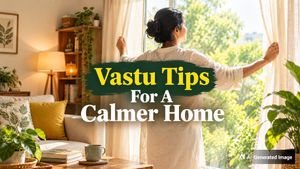 ‘Simple Changes Can Make A Space Feel Lighter And Calmer’: Vastu Expert Gauri Jain On Creating A Positive Home
 -
 ‘The Mask’ Star Jim Carrey Marries Longtime Girlfriend Min Ah In Private LA Ceremony
 -
 Salman Khan Flaunts ₹41 Lakh Jacob & Co. Watch With India-Inspired Design, World Map And Dual-Time-Zone
 -
 Nushrratt Bharuccha’s Bali Trip Takes A Serious Turn After Accident, ‘Chhorii’ Actor Airlifted To Mumbai
 -
 Mahalakshmi Vrat 2026: What To Know About Today’s Udyapan, Rituals And Significance
 -
 Jitiya Vrat 2026: Why Mothers Observe The Nirjala Fast, Paran Timings And Rituals Explained
 -
 Drishyam: The Conclusion — Everything You Need To Remember Before Watching The New Film
 -
 Jantar Mantar Protest On Gandhi Jayanti 2026: Why This Delhi Landmark Is A Hub For Public Demonstrations
 -
 World Smile Day 2026: 5 Ways Smiling May Benefit Your Health And Support Everyday Wellbeing
 -
 Lal Bahadur Shastri Jayanti 2026: 10 Quotes That Reflect His Ideas On Leadership, Peace And Nation-Building


Stress Reduction

What is stress?
A person's response to his environment is known as stress. Without stress a person cannot function. Measurement of stress is in terms of arousal or stimulation. A person's normal level of arousal is affected by adverse external influences.
In medical language it is a term used for a wide range of strong external stimuli, both physiological and psychological, which can cause a physiological response called the general adaptation syndrome. This term was first described by Hans Sely in 1936
Stress is of two kinds :
Eustress: When something changes for the better.
Distress: When something changes for the worse.
Stress has three degrees:
Low: This is distress leading to boredom, fatigue, frustration, or dissatisfaction.
Optimum: This is eustress leading to creativity, problem solving, progress, change, learning, and energetic satisfaction.
High: Esteem, and irrational problem solving.
Some Signs of stress
- Increased heart rate
- Friends' frequent comments to "slow down" or "chill out"
- Consistent insomnia
- Shallow breathing
- Flushed face
- Hands shaking irritability
- Stiff neck
- Extremely cold or warm hands
- Poor appetite, lack of sleep
- Lack of concentration
- Inability to stop thinking about something
- Feelings of helplessness
- Frequent careless mistakes on the job
- Excess weight gain or loss
- ANY thoughts of suicide
Reducing stress.
Identifying the stressors is the first step of reducing stress. Some common causes of stress are:
- Work
- Family
- Health concerns
- Unrealistic expectations
- Cynical and negative attitudes (thinking that things are always going to go badly or end badly)
- Sudden traumatic events.
Other sources of stress are:
- Fear of the new, the unknown
- Feelings of personal insecurity
- Feelings of vulnerability
- Fear of rejection
- Need for approval
- Lack of tolerance for ambiguity
- Fear of conflict
- Fear of taking a risk
- Fear of developing trust
- Fear of inability to cope with changed circumstances
- Low self-esteem
- Feelings of over-responsibility
- Fear of loss of control
- Fear of failure, error, mistakes
- Fear of being judged
- Lack of belief in being good enough''
- Chronic striving to be perfect''
- Chronic guilt
- Unresolved grief over a loss or a series of losses
- Chronic anger, hostility, or depression
- A lack of adequate support within the relationship
- A lack of healthy communication within the relationship
- A sense of competitiveness between the parties involved
- Threats of rejection or disapproval between people
Tips to reduce stress.
Handling stress is very important as a stressed mind cannot function properly. De-stressing the mind and body will lead to utilizing the full potential of a person. Here are some ways to de-stress and relax.
- Delegating or sharing your responsibilities at work and at home
- Avoiding difficult colleagues, family members, and acquaintances
- Learning to be more assertive
- Doing regular exercise
- Not using drink or drugs to cope
- Eating a healthy, balanced diet rich in fruits and vegetables
- Finding humor or absurdity in stressful situations
- Never taking on more than you know you can cope with
- Organizing your time better to get as much done as possible
- Talking to friends or family and sharing your thoughts and fears
- Listening to music or relaxation tapes
- Tensing and then relaxing your muscles, starting at the toes and working up to the head and neck
All these tips definitely help reduce stress. De-stress and relax to enjoy life.
Disclaimer: The information provided in this article is for general informational and educational purposes only and is not intended as a substitute for professional medical advice, diagnosis, or treatment. Always seek the advice of your physician or a qualified healthcare provider with any questions you may have regarding a medical condition.

 Continue with Google

