




 Click it and Unblock the Notifications


Latest Updates
-
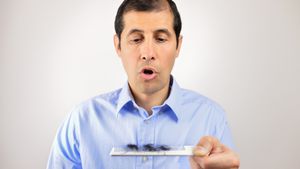 Stop Blaming the Monsoon Entirely for Your Hair Fall, Says This Dermatologist
 -
 Shakira Debuts a New Gaurav Gupta Breastplate, and This Time It's Gold and Banarasi
 -
 Can Hair Oils Prevent Premature Graying or Improve New Hair Growth?
 -
 Can Any Blood Group Donate Organs to Any Patient? A Transplant Expert Explains
 -
 Everyone's Talking About Rahane's Igatpuri Home. Here's Why The Town Itself Is Worth The Trip
 -
 You Don't Need Surgery for Every Sinus Problem: When Is FESS Actually Necessary?
 -
 Who Was Mithu Mukherjee? Veteran Bengali Actress Passes Away At 71
 -
 Ahmedabad Police Flag Fraud Risk Behind Viral 'Rent A Garba Partner' Ads
 -
 Vidya Balan’s Jailer 2 Entry As Kantha: From Silk To Manjulika, A Look At Her Unconventional Roles
 -
 Samay Raina Has Now Denied Dating Rumours With Two Women In Three Months


International Yoga Day 2026: 852 Million People Have Insomnia. Here's What Yoga Offers

Somewhere between the late-night scroll and the 6 a.m. alarm, sleep quietly became the thing most of us are short-changing. A 2025 systematic review published in Sleep Medicine Reviews, which pooled data from 18 high-quality studies covering more than 260,000 people, estimated that 852 million adults worldwide - 16.2% of the global adult population - meet clinical criteria for insomnia, with nearly 415 million experiencing it in severe form. The fallout isn't just tiredness. It's weakened immunity, hormonal imbalance, impaired cognition, elevated cortisol, and a measurably higher risk of cardiovascular disease and diabetes.

This is the gap that Prof. Milind Patre, Associate Dean, Department of Wellness and Yogic Science, MIT World Peace University, Pune, believes yoga is uniquely placed to close - not as an alternative therapy on the fringes of wellness culture, but as what he calls a "science of the inner world", with as much rigour behind it as any laboratory discipline.
Yoga Is A Science, Not A Religion

Patre traces yoga's roots to Sage Patanjali, whom he describes as "the rarest of the rare, a scientist of the inner world". Just as a scientist in the physical sciences moves from hypothesis to experimentation to verified findings, Patanjali's eight-limbed path - Yama, Niyama, Asana, Pranayama, Pratyahara, Dharana, Dhyana, Samadhi - follows its own methodical progression, ultimately aimed at liberation from suffering.
"Yoga is not a religion. It doesn't belong to only Hindu," Patre says. "It's science. Just as electricity is not Christian just because it was discovered by a Christian, Yoga is not Hindu just because it was discovered by a Hindu Sage. It belongs to all."
Why Sleep Deprivation Undermines Everything Else
Health, Patre argues, is not simply the absence of disease; it includes peace of mind, energy, joy, and emotional equanimity. Sleep deprivation erodes all of it. Sleep is the body's most intensive repair cycle: the window in which memory consolidates, inflammation clears, and emotional regulation resets. Pharmaceutical sleep aids, he notes, offer only temporary relief and rarely touch the root cause, which is precisely where he sees an opening for yoga.
How Yoga Works On Sleep - Through The Nervous System
Yoga's effect on sleep isn't singular; it works through several physiological pathways at once.

- Diaphragmatic breathing, a cornerstone of most yoga practice, activates the parasympathetic nervous system - shifting the body out of stress response and into "rest-and-digest" mode, lowering heart rate and cortisol.
- Yoga Nidra ("yogic sleep") guides the practitioner into a state between wakefulness and sleep, allowing the nervous system to unwind without losing consciousness entirely. Even 20 minutes, Patre says, can offer the restorative equivalent of several hours of deep sleep.
- Bhramari Pranayama, a simple conscious-breathing technique, stimulates the vagus nerve directly - a nerve with a well-documented range of effects on heart rate, anxiety, and inflammation.
"Our breath is a direct remote control for our brain chemistry," Patre says.
Bottomline
Patre concluded, "Sleep isn't a reward you earn after everything else on the to-do list is done - it's the foundation everything else stands on. As modern research increasingly confirms what yogic practice has held for centuries, the case for treating rest as seriously as diet or exercise keeps getting stronger. Yoga, in his words, 'quiet, patient, and ancient', may be one of the more elegant ways back to it."
Disclaimer: The information provided in this article is for general informational and educational purposes only and is not intended as a substitute for professional medical advice, diagnosis, or treatment. Always seek the advice of your physician or a qualified healthcare provider with any questions you may have regarding a medical condition.

 Continue with Google

