



 Click it and Unblock the Notifications



Latest Updates
-
 Diwali 2026: Chakli To Nimki, 7 Regional Savoury Snacks That Bring Traditional Indian Flavours To Your Table
-
 Filmmaker Sanjay Gupta Passes Away At 57: ‘Aatish’ To ‘Kaabil’, Look At His Three-Decade Bollywood Journey
-
 Halloween 2026: From Chudail To Yakshi, 5 Mysterious Supernatural Beings That Haunt Indian Folklore
-
 Rashtriya Ekta Diwas 2026: Significance, History And Sardar Vallabhbhai Patel's Role In Uniting India
-
 Survey Finds 68% Of Previously Married Singles Hesitate To Match With Never-Married Partners
-
 Diwali 2026: Complete Five-Day Festival Calendar, Dates, Significance And Celebrations
-
 Weight, Alcohol, Hormones: Pathologist Shares Insights On What Really Shapes A Woman’s Breast Cancer Risk
-
 Diwali 2026: 5 Healthy Homemade Indian Sweets That Go Beyond Traditional Mithai
-
 Stroke In Young Women: Neurologist Explains Warning Signs And Hormonal Risk Factors
-
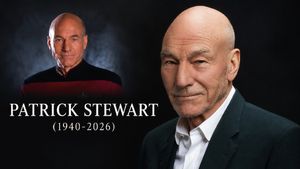 ‘Star Trek’ And ‘X-Men’ Actor Patrick Stewart Passes Away At 86 After Dementia Battle


Being Overweight Not Linked To What You Eat

Being overweight is not necessarily linked to what you eat.
Researchers from University of California, San Francisco have found that neurotransmitter serotonin, known to control appetite and fat build-up, actually does so through two separate signalling channels.
One set of signals regulates feeding, and a separate set of signals regulates fat metabolism.
The team studied a worm, scientifically known as Caenorhabdtis elegans, which shares half of its genes with humans and is often a predictor of human traits.
The signalling pathways contain a series of molecular events activated by neurons in the brain that ultimately "instruct" the body to burn or store fat.
Kaveh Ashrafi, PhD, assistant professor of physiology at UCSF and senior author on the study said that if the "separate-channel" mechanism is also found in humans, weight-loss drugs might be developed to attack just the fat-deposition channel rather than the hunger-dampening pathway that has met with limited success,
"It's not that feeding isn't important. But serotonin's control of fat is distinct from feeding. A weight-loss strategy that focuses only on eating can only go so far. It may be one reason why diets fail," said Ashrafi.
It"s not only environment and little physical activity that impacts development of obesity, but physiological system also coordinates the complex mechanisms that regulate food intake and energy expenditure.
This physiological system is thought to involve genes that operate in various tissues such as fat, muscle, and brain. In fact, the genetic contribution to body weight is estimated to be between 40 and 70 percent
The researchers studied the microscopic C. elegans worm with the help of RNA interference, or RNAi, which allowed them to inactivate hundreds of genes one at a time to determine the effect of these gene inactivations on serotonin's actions on fat regulation.
The team looked at more than 250 genes to identify those that underlie serotonin's effects on fat and feeding.
They found that serotonin controls feeding by docking with receptors on neurons that are distinct from those that control fat. In turn, these fat- controlling neurons send signals to sites of fat storage to rev up metabolism.
Ashrafi said that various weight-loss drugs have been developed to boost serotonin and thereby suppress appetite. But the cutback in eating tends to be short-term – often a matter of days, based on animal research.
The researchers studied the microscopic C. elegans worm with the help of RNA interference, or RNAi, which allowed them to inactivate hundreds of genes one at a time to determine the effect of these gene inactivations on serotonin's actions on fat regulation.
"Obesity and thinness are not solely determined by feeding behaviour," said the scientists
"Rather, feeding behaviour and fat metabolism are coordinated but independent responses of the nervous system to the perception of nutrient availability," they added.
The research is being reported online June 3 by the journal "Cell Metabolism" and in the print edition
Disclaimer: The information provided in this article is for general informational and educational purposes only and is not intended as a substitute for professional medical advice, diagnosis, or treatment. Always seek the advice of your physician or a qualified healthcare provider with any questions you may have regarding a medical condition.

 Continue with Google


